Renaissance Castles in Europe
Renaissance castles were built when Europe stopped needing fortresses and started wanting palaces. From the late 15th century, ideas from Italy changed how kings and nobles built: symmetry, wide windows, classical columns and grand staircases replaced arrow slits and thick walls. Below are the Renaissance castles we cover, with tickets, opening hours and practical tips for each.


Château de Chenonceau

Château de Chambord

Castello Sforzesco

Egeskov Castle

Frederiksborg Castle

Kronborg Castle

Château d’Ancy-le-Franc

Clos de Vougeot Castle

Château de Chantilly

Wiltz Castle
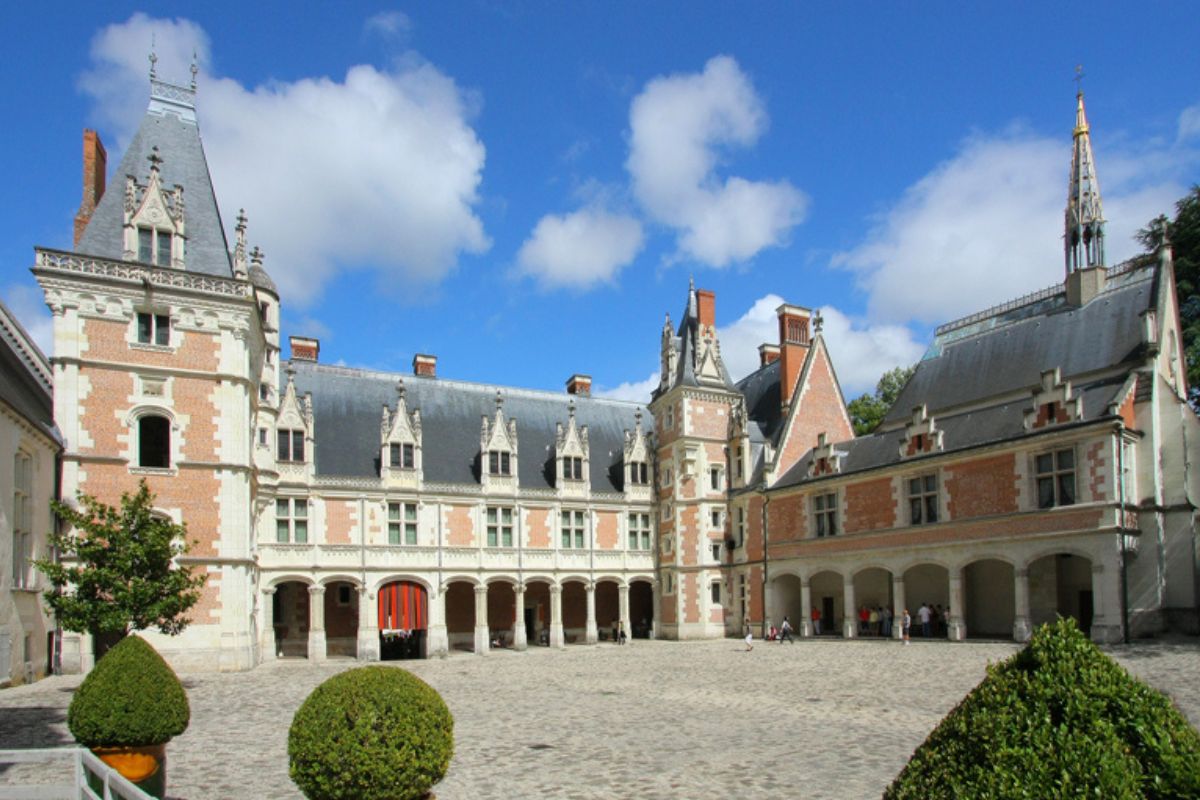
Château de Blois

Rosenborg Castle
What makes a castle Renaissance?
A Renaissance castle still looks like a castle from a distance, with towers, moats and steep roofs, but those features had become decoration rather than defence. Inside, the rooms were built for living and for showing off: long galleries, painted ceilings, open loggias and staircases designed to impress guests. Gardens were laid out in geometric patterns as part of the design.
France led the way after its kings came back from the Italian wars full of new ideas. The Loire Valley is the best place to see the result. Château de Chambord, begun in 1519 for François I, has a famous double spiral staircase that is often linked to Leonardo da Vinci. Château de Blois shows the shift in one building, with its open spiral staircase in the François I wing, and Château de Chenonceau spans the river Cher on a row of arches.
In Denmark, King Christian IV built in the Dutch Renaissance style, with red brick, sandstone trim and copper spires. Frederiksborg Castle in Hillerød, Rosenborg Castle in Copenhagen and Kronborg Castle in Helsingør, the setting of Hamlet, together form one of the best Renaissance groups in northern Europe.
Planning a Renaissance castle trip
The two easiest clusters to combine are the Loire Valley and the area around Copenhagen. In the Loire, Château de Blois and Château de Chambord are about 20 km apart and Château de Chenonceau is under an hour further, so three châteaux in one day is realistic by car. Around Copenhagen, Rosenborg Castle is in the city centre and both Frederiksborg Castle and Kronborg Castle are reachable by regional train, which makes a two-day plan easy without a car.
Many of these castles are open all year, but winter hours are shorter and some close on Mondays or public holidays. Check the opening hours on each castle page before you go, and book online in summer for Chambord and Chenonceau, which are among the busiest châteaux in France.
Renaissance castles by country
 France
 Denmark
 Germany
 Belgium
 Italy
 Croatia
 Luxembourg
Frequently asked questions
What is a Renaissance castle?
A Renaissance castle is a residence built roughly between 1490 and 1630 in the style that spread from Italy, with symmetry, large windows, classical details and grand staircases. Towers and moats were often kept, but as decoration rather than for defence.
Where are the best Renaissance castles in Europe?
The Loire Valley in France has the largest group, including Chambord, Chenonceau and Blois. Denmark has a strong second group around Copenhagen with Frederiksborg, Rosenborg and Kronborg.
What is the difference between a medieval and a Renaissance castle?
A medieval castle was built first of all for defence, with thick walls, small windows and a keep. A Renaissance castle was built for comfort and prestige, so it has open courtyards, galleries and gardens. See our medieval castles for comparison.
Can you visit several Renaissance castles in one day?
Yes. In the Loire Valley, Blois and Chambord are about 20 km apart, and Chenonceau can be added the same day by car. Around Copenhagen, Rosenborg, Frederiksborg and Kronborg can be combined by train in one long day or two relaxed days.
Which Renaissance castle should I visit first?
For scale and architecture, Château de Chambord is the classic choice. If you prefer interiors and gardens, Château de Chenonceau is the most rewarding, and in Denmark, Frederiksborg Castle combines both with the Museum of National History inside.
Other castle styles
Last updated: 11 October 2026