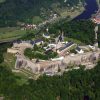
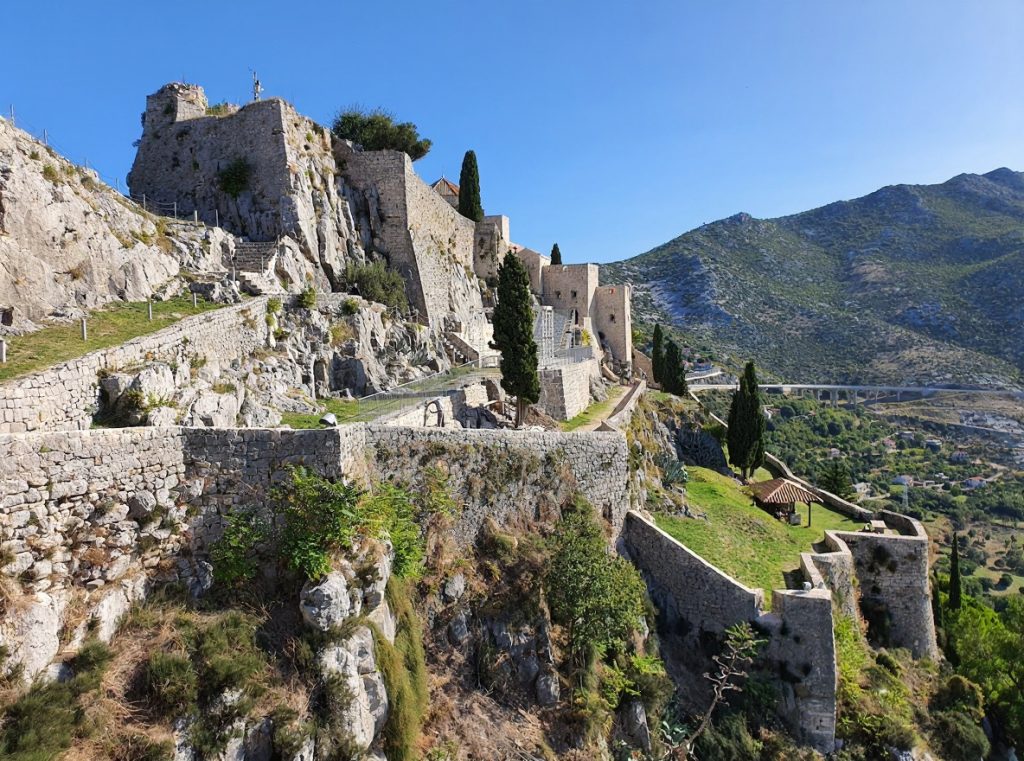
Commanding the mountain pass between Mosor and Kozjak, Klis Fortress has guarded the gateway to Dalmatia for more than two millennia. The ancient Illyrian tribe Dalmatae built the original stronghold, which later served as royal castle and seat of many Croatian kings. It developed into a large fortress during the Ottoman wars in Europe. The fortress served as a major source of defense in Dalmatia, especially against the Ottoman Empire, because of its location on a pass that separates the mountains Mosor and Kozjak. From its rocky perch above the village of Klis, the fortress offers sweeping views across Split, the surrounding islands, and the Adriatic beyond.
Plan your visit to Klis Fortress
Location of Klis Fortress
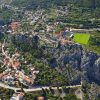
Klis Fortress sits above the village of Klis, near Split, Croatia, at Trg Mejdan 10, 21231 Klis. The fortress lies about 15 kilometres from Split, roughly 20 minutes by car. Local buses connect the village to the city, while the more adventurous can cycle the winding road that climbs into the mountains. The fortress sits on an imposing cliff at the mountain pass between the Kozjak and Mosor mountains, in a uniquely strategic position. The site controls the ancient route linking the Mediterranean coast with the Balkan interior. Today both old and new roads to the Croatian hinterland still thread through this historic pass, just as armies, merchants and travellers have done for centuries.
History of Klis Fortress
The Illyrians founded the site in the 2nd century BC, and the Romans annexed it in 9 AD. The Romans referred to the site as Andetrium or Anderium, later calling it Clausura. After Roman rule declined, the fortress emerged as a Croatian stronghold. Duke Mislav of the Duchy of Croatia made Klis Fortress the seat of his throne in the middle of the 9th century. He expanded the fortress while building a church and the first Benedictine monastery in Croatia in the valley below. Prince Trpimir mentioned the court as his property in a document from 852. It became the centre of the Early Croatian Littoral or Klis County.
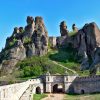
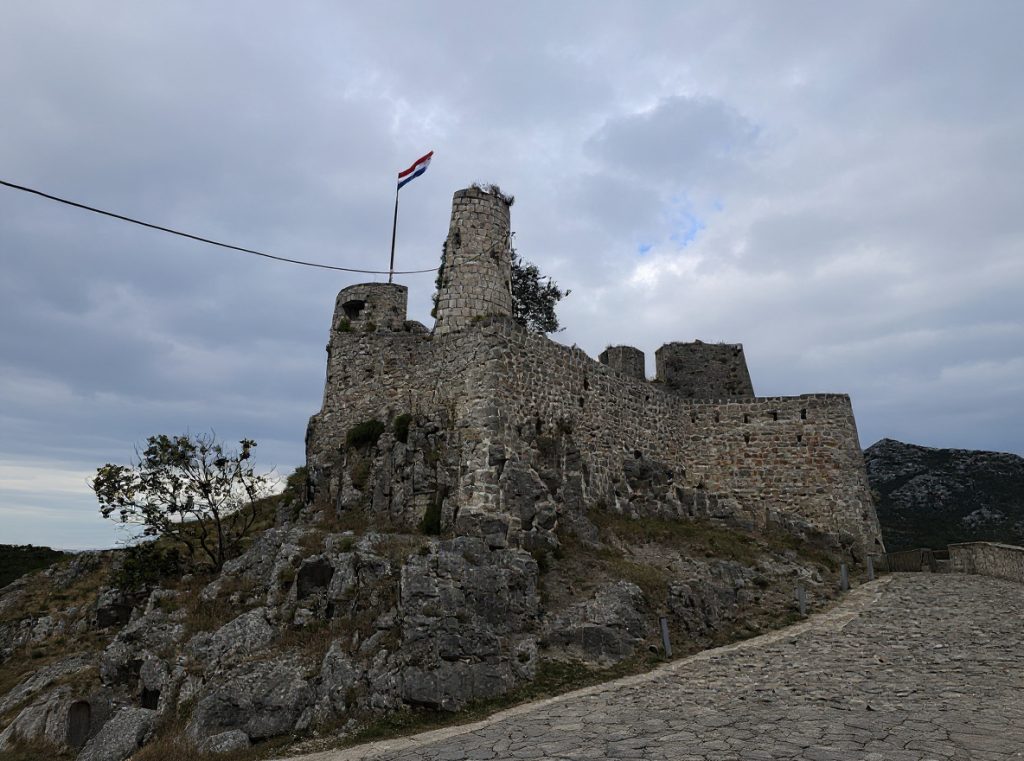
The fortress earned lasting fame through its resistance to Ottoman conquest. Defenders fought almost alone against the Ottomans, and for more than two decades defended the fortress against Ottoman attacks. Petar Kružić served as one of the commanding officers of Klis Fortress. The Croats resisted attack for 25 years before finally succumbing to the Ottomans in 1537. For 111 years, the Ottomans controlled Klis and battled the Venetians, who controlled nearby Split. The fortress finally fell to the Venetians in 1648. In 1669, after more than a century under Ottoman rule, the Republic of Venice besieged and seized Klis Fortress. The Venetians then restored and enlarged the fortress. Austrians seized the fortress in 1797 and the French controlled it from 1805 to 1813. The Austrians held it again until the end of the Austro-Hungarian empire in 1918. Austrian builders constructed the main gate at the lower end of the complex in the 1820s. From here a path twists up to the second gate, which served as the main entrance in the Middle Ages. Its current form also comes from the Austrians.
Current status
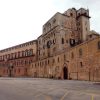
Today, Klis Fortress contains a museum where visitors to this historic military structure can see an array of arms, armour, and traditional uniforms. One of only three preserved Ottoman mosques on the territory of Croatia exists in the fortress. Builders raised it shortly after the Ottoman conquest of Klis in year 1537. The fortress opens daily to the public, with paid admission that includes access to the museum and interpretation centre at Mejdan Square. Visitors can explore the multiple gates that successive rulers built, then walk along the ancient walls integrated into the rocky ridge, and climb the towers for commanding views. The site has also attracted international attention as a filming location for popular television productions.
The fortress stands as a monument to resilience, its weathered stones bearing witness to countless sieges and conquests. Croatian cultural organisations support its preservation, so this sentinel of the Dalmatian frontier continues to watch over the pass it has guarded for two thousand years. Whether approached from the winding road below or glimpsed from Split across the valley, Klis Fortress remains an imposing presence on the Dalmatian landscape.
Castles near Klis Fortress
Frequently asked questions
Was Klis Fortress used in Game of Thrones?
Yes, Klis Fortress served as the city of Meereen in season four of Game of Thrones. The fortress appears in scenes where Daenerys Targaryen takes control of the slave city.
How long does it take to explore Klis Fortress?
Most visitors spend 1.5 to 2 hours exploring the fortress, walking along the ramparts, visiting the museum and enjoying the panoramic views over Split. Allow extra time if you are combining it with the Olive Museum at Stella Croatica.
Can I buy tickets to Klis Fortress online?
No, tickets for Klis Fortress can only be purchased on site at the entrance. There is no advance booking system for individual visitors.
What does the ticket to Klis Fortress include?
One ticket covers entry to Klis Fortress, the Interpretation Centre on Mejdan Square, the Stella Croatica ethno agro park and the Olive Museum. According to Stella Croatica, the combined pass is valid from 1 April to 31 October and can be used on different days within that window.
Is there parking at Klis Fortress?
Yes, there is free parking available at the fortress entrance, with a small car park directly below the entrance and an overflow car park nearby. During peak season parking can fill up quickly, so arriving early in the day is recommended.
Popular right now
Featured listings