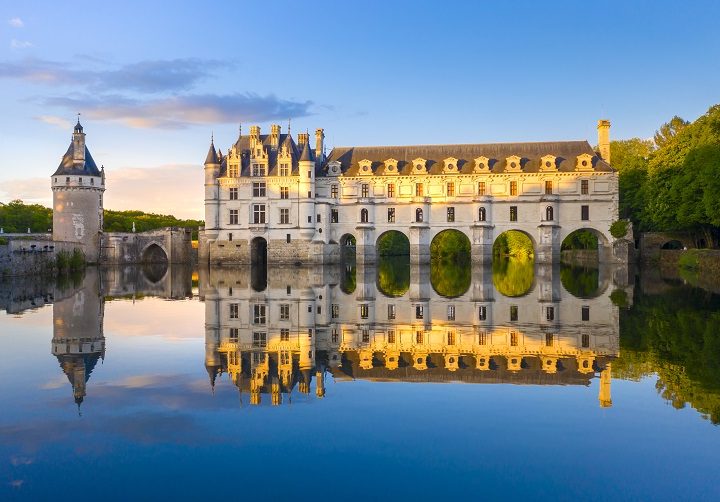
The Château de Chenonceau, often referred to as the “Ladies’ Castle”, stands as a testament to the elegance and grandeur of French Renaissance architecture. Situated gracefully over the River Cher, this iconic castle has captured the imaginations of historians, architects, and tourists alike. Renowned for its breathtaking beauty and historical significance, the Château de Chenonceau has been a pivotal player in France’s cultural and political landscape.
Plan your visit to Château de Chenonceau
Can’t wait to visit the château? Book your Château de Chenonceau tour online.
Location of the Château de Chenonceau
The Château de Chenonceau, nestled in the commune of Chenonceaux in the Indre-et-Loire department, is located in the Loire Valley, approximately 230 kilometers southwest of Paris. People often call the Loire Valley the “Garden of France” and celebrate its stunning landscapes. They also praise its historic towns and abundance of chateaux. Positioned strategically over the Cher River, the castle reflects majestically on the water’s surface. This enchanting setting enhances its allure, making it one of the most visited castles in France.
History of the Château de Chenonceau
The history of the Château de Chenonceau is rich and multifaceted. Several influential women who have shaped its destiny characterize it. Constructed in the 13th century, the original manor house underwent a significant transformation in 1513 when Thomas Bohier, Chamberlain to King Charles VIII of France, and his wife Katherine Briçonnet undertook its renovation. Their vision laid the foundation for the stunning château seen today.
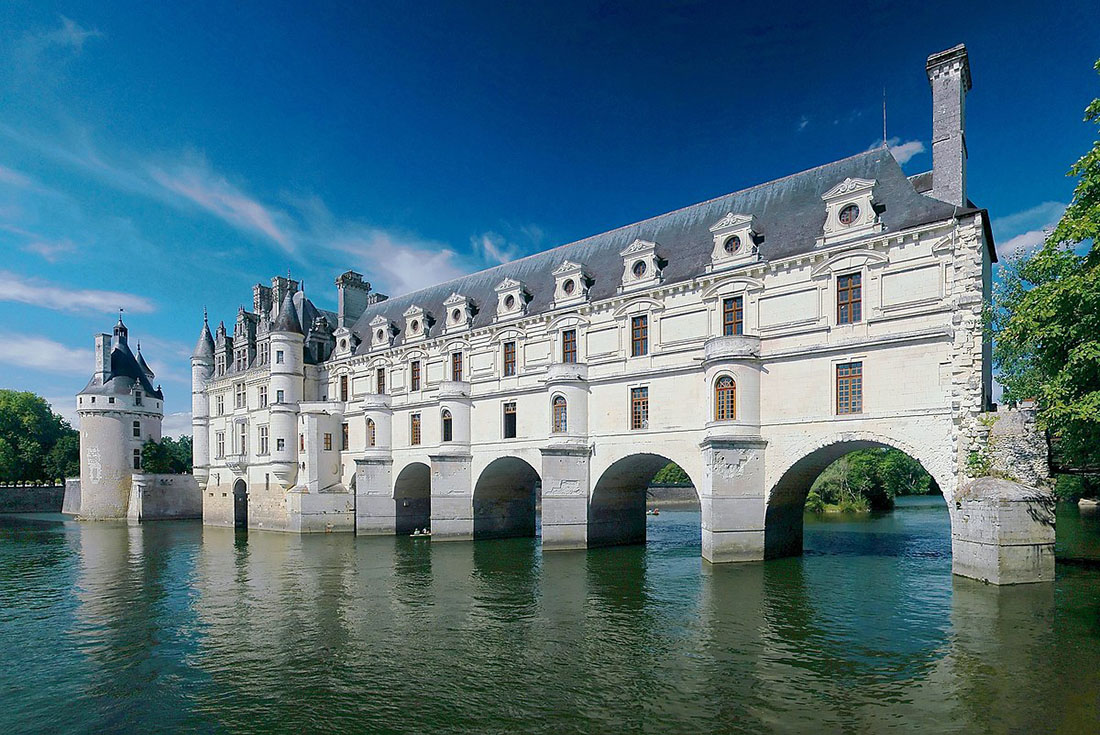
After Bohier’s death, the château was seized by King Francis I due to unpaid debts. Upon his death, it was passed to his son, King Henry II, who gifted it to his mistress, Diane de Poitiers. Diane, known for her keen interest in architecture and gardening, commissioned the construction of the arched bridge that spans the Cher River, linking the château to its beautiful gardens.
Following Henry II’s death, his widow, Catherine de’ Medici, forcibly took over the château from Diane de Poitiers. Catherine added her own touches, including the two-story gallery atop the bridge, transforming the château into a place of celebration and grandeur. It was during her tenure that the château witnessed numerous lavish parties and became a center of cultural activity.
Throughout the centuries, the Château de Chenonceau continued to change hands, each owner contributing to its architectural and artistic enhancements. The château avoided destruction during the French Revolution because it functioned as a bridge and hospital.
Current Status
Today, the Château de Chenonceau stands as a well-preserved monument of historical and architectural significance. They meticulously maintain the Château de Chenonceau and open it to the public, attracting over a million visitors each year. Its interiors boast an impressive collection of Renaissance furniture and tapestries. You will also find masterpieces by renowned artists such as Rubens, Le Primatice, and Van Dyck. Each room, from the grand gallery to the intimate bedchambers, showcases opulent lifestyles. The château offers a glimpse into the lives of its former inhabitants.
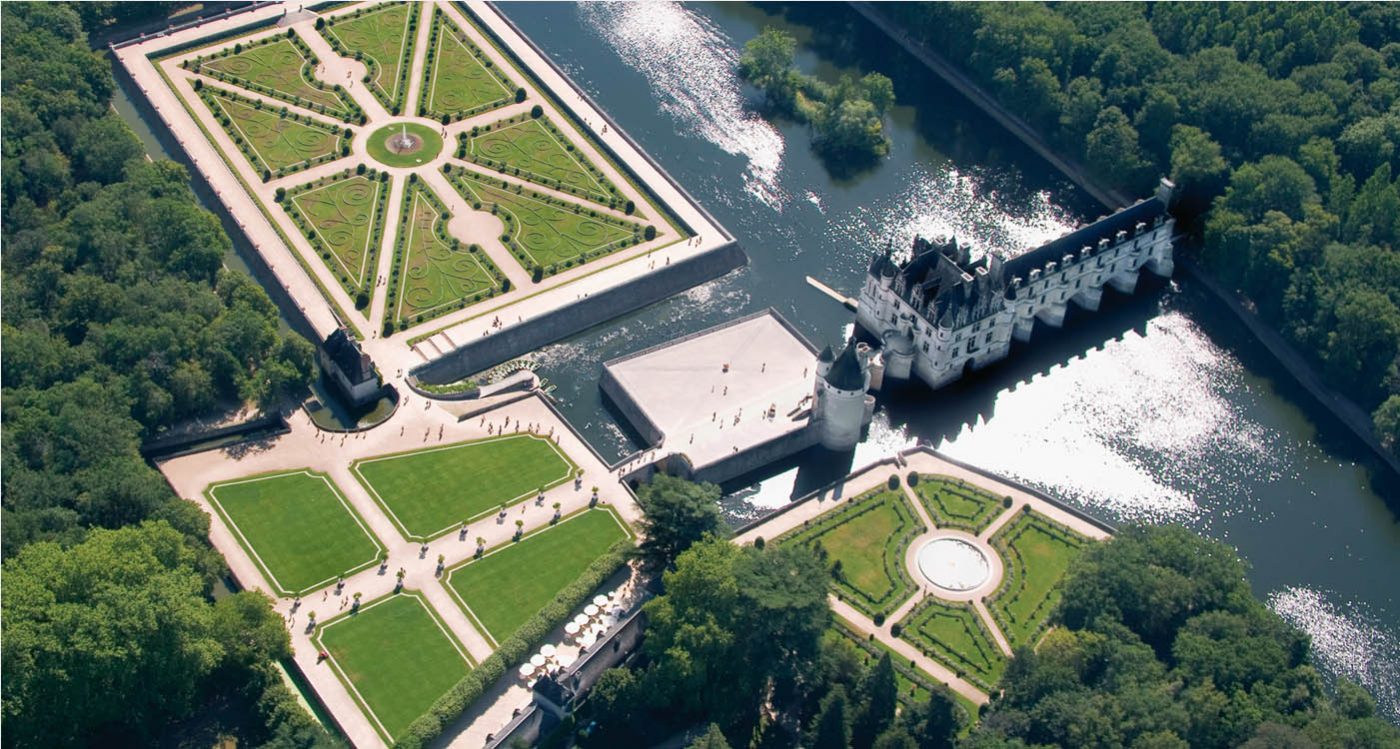
The gardens of the châteauare equally captivating. The garden of Diane de Poitiers and the garden of Catherine de’ Medici are prime examples of Renaissance landscaping, featuring meticulously manicured lawns, intricate flowerbeds, and elegant fountains. Visitors can also explore the labyrinth and the lush green surroundings that add to the château’s charm.
In addition to its historical and aesthetic appeal, the Château de Chenonceau continues to serve as a venue for cultural events, exhibitions, and concerts, keeping its vibrant legacy alive. The château’s reflection on the Cher River, combined with its architectural splendor, creates an unforgettable experience for all who visit.
In conclusion, the Château de Chenonceau is more than just a castle. It is a living museum that offers a journey through time, showcasing the grandeur of the French Renaissance. The château also highlights the indelible mark of the women who shaped its history. We encourage you to visit this magnificent château. Immerse yourself in its beauty and history, making it one of France’s crown jewels.
Castles near Château de Chenonceau
Frequently asked questions
Can I visit Château de Chenonceau without booking in advance?
Yes, tickets can be purchased at the entrance without advance booking. However, if you want an audioguide in July or August, advance reservation is required as units are limited and often run out by mid-morning.
How do I get to Château de Chenonceau from Paris by train?
Take a TGV from Paris Montparnasse to Saint-Pierre-des-Corps (Tours), then a TER regional train to Chenonceaux station. The journey takes about 1 hour 40 minutes total, and the château entrance is a 400-metre walk from the station.
Is Château de Chenonceau accessible for wheelchair users?
The gardens and ground-floor rooms, including the Long Gallery over the Cher, are accessible via ramps. The upper royal apartments and chambers require stairs and there is no lift, so upper floors are not accessible.
What is included in the Château de Chenonceau ticket price?
The ticket includes access to the château, the gardens, the Dome Building, and the carriage exhibition at the farm. Audioguides cost an additional €5 and are available in multiple languages.
When is Château de Chenonceau least crowded?
Weekday mornings (arrive before 10:00) or late afternoons (after 16:00) are quietest. Avoid weekends, July and August, and French school holiday periods when visitor numbers peak, particularly between 11:00 and 14:30.
Featured listings