On a commanding hill in western Ukraine’s Lviv Oblast, Pidhirtsi Castle rises above the Styr River valley as a Renaissance palace wrapped in military fortifications. Grand Crown Hetman Stanisław Koniecpolski commissioned architect Andrea dell’Aqua and engineer Guillaume le Vasseur de Beauplan to build this palace between 1635 and 1640. The castle served leisure rather than defence, a departure from other fortifications in the region. Today it ranks as the most valuable of the palace-garden complexes in the eastern borderlands.
Plan your visit to Pidhirtsi Castle
Tue 11:00–15:30
Wed–Sun 10:00–16:30Wed–Sun 10:00–18:00 (till 17:30 ticket office), Mon–Tue closed
Location of Pidhirtsi Castle
Pidhirtsi Castle sits in the village of Pidhirtsi in Lviv Oblast, eighty kilometres east of Lviv. The structure occupies the north side of the Voronyaki hills, at an altitude of 399 metres above sea level. It overlooks the Styr River valley in a prominent location where travellers can see it from great distances. Visitors can reach the castle from Lviv by car, public transport, or with tourist groups. The village of Pidhirtsi lies in Zolochiv Raion. The castle’s elevated position has made it a landmark in the region since builders finished construction. The park around the castle belongs to the monuments of landscape art of national importance.
History of Pidhirtsi Castle
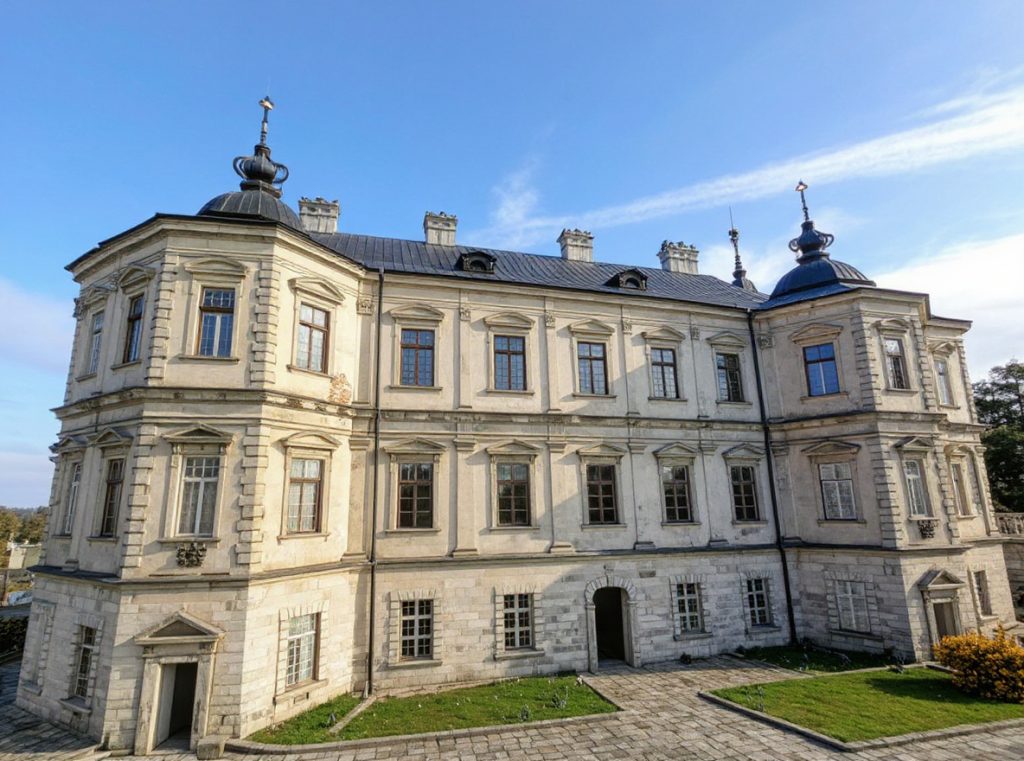
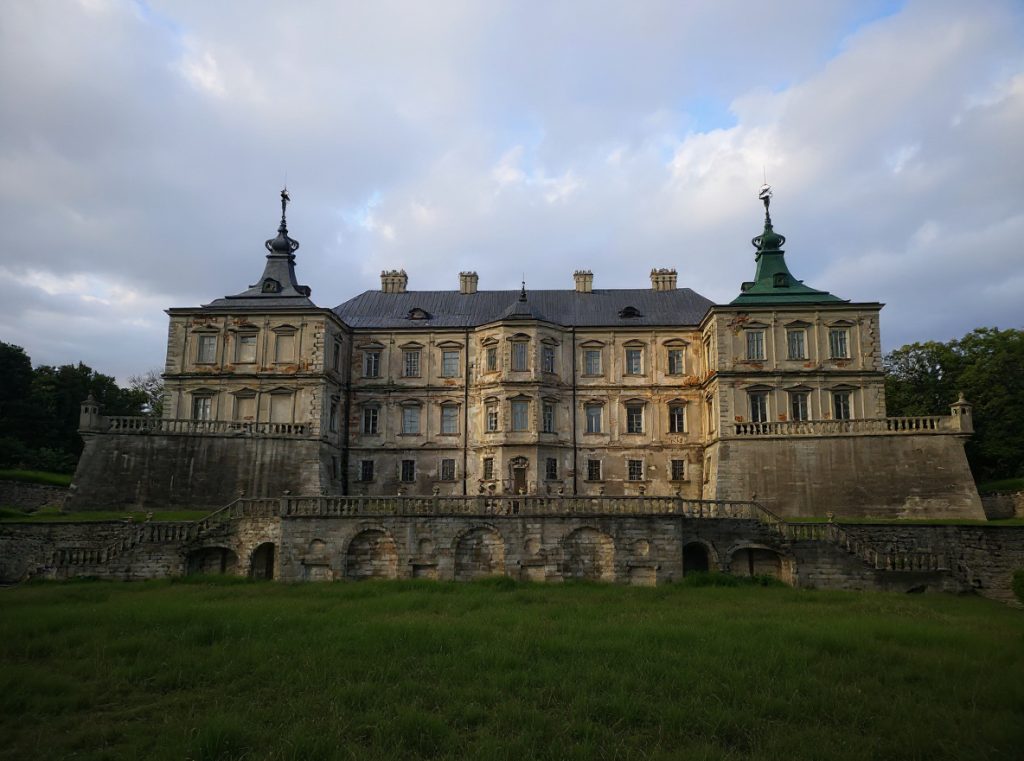
Stanisław Koniecpolski, Polish crown hetman who owned the settlement, ordered the construction between 1635 and 1640. Architect Andrea del Agua took five years to complete the castle, which he began in 1635. The castle takes the form of an open square nearly 100 metres per side, with three floors. A moat and drawbridge guard the castle, along with fortified walls with bastions. Its western part served as an official residence for guests. The eastern wing remained private, reserved for the owner and servants. In the 17th century, vineyards and parterres in the Italian style surrounded it.
In 1682, Stanisław Koniecpolski, grandson of the original builder, bequeathed the castle with surrounding estates to Jakub Ludwik Sobieski. Stanislaw Rzewuski bought the castle in 1720 and housed his collections of books, weapons, and paintings there. Eight years later, his son began a large-scale reconstruction which included adding additional levels to make the castle three storeys high. The castle contained a massive library and archives. During the 18th century it became the first palace museum in Ukraine. Workers named large and spacious halls according to the colour of wall coverings or collections kept inside: Golden, Yellow, Chinese, Mirror, Crimson, Knight’s.
Pidhirtsi Castle survived several sieges during the Polish-Soviet War. After World War II and the annexation of this region from Poland to Ukraine, officials turned the fortification into a tuberculosis sanatorium. Then a devastating fire in 1956 brought further destruction. The fire lasted for three weeks, leaving behind only walls. The last owner, Roman Vladyslav Sanhushko, took many valuable artefacts abroad before the Red Army arrived in 1939. Museums in Poland and Ukraine now scatter the collection among their holdings.
Current status
In 1997 authorities gave the devastated castle to the Lviv Art Gallery, which now gradually restores it. Today, it forms part of the Lviv National Art Gallery. The Lviv Art Gallery owns the castle and opens it to visitors, although it remains in poor condition. The basement, which holds a “ghost residence,” requires a ticket, though the church remains free to visit. Visitors explore the remaining fortifications and glimpse the palace’s former grandeur through its damaged halls. The Roman Catholic Church of the Exaltation and St. Joseph, which Waclaw Rzewuski built as a tomb in 1752-1766, stands nearby. Students from Lviv Polytechnic University and Vienna Polytechnic carry out restoration work.
The castle draws visitors interested in Renaissance architecture and Ukraine’s complex history. It forms part of the Golden Horseshoe of Lviv tourist route, surprising in its combination of Renaissance architecture with Baroque elements, rich history and mystical legends. The castle complex endures as a monument to the cultural heritage of the eastern borderlands, where Polish, Ukrainian and wider European influences met. From its hilltop, the palace commands views across the same valley its first owner surveyed nearly four centuries ago. Back then he sought to build a place of rest that the location’s strategic importance would never quite allow.
Castles near Pidhirtsi Castle
Frequently asked questions
Is Pidhirtsi Castle fully restored inside?
No, Pidhirtsi Castle suffered a fire in 1956 and remains partly ruined. Only a few rooms are accessible; most interiors are still undergoing restoration by Lviv National Art Gallery.
Can I visit Pidhirtsi Castle with other nearby castles?
Yes, Pidhirtsi is part of the Golden Horseshoe route with Olesko and Zolochiv castles. Many visitors combine all three on a day trip from Lviv by car or organised tour.
What can I see inside Pidhirtsi Castle?
The castle features a small exhibition on its history and access to the basement. Much of the interior was destroyed by fire, but the Renaissance exterior and fortifications are well preserved.
Is Pidhirtsi Castle haunted?
Local legend speaks of a woman in white, said to be the spirit of Maria Zhevuska, whose husband killed her out of jealousy. The basement is sometimes called the 'ghost residence'.
How do I get to Pidhirtsi Castle without a car?
From Lviv bus station No. 2, take a bus to Brody, then transfer to a Zolochiv-bound bus and get off at Pidhirtsi village. The journey takes around 2–2.5 hours each way.
Featured listings