
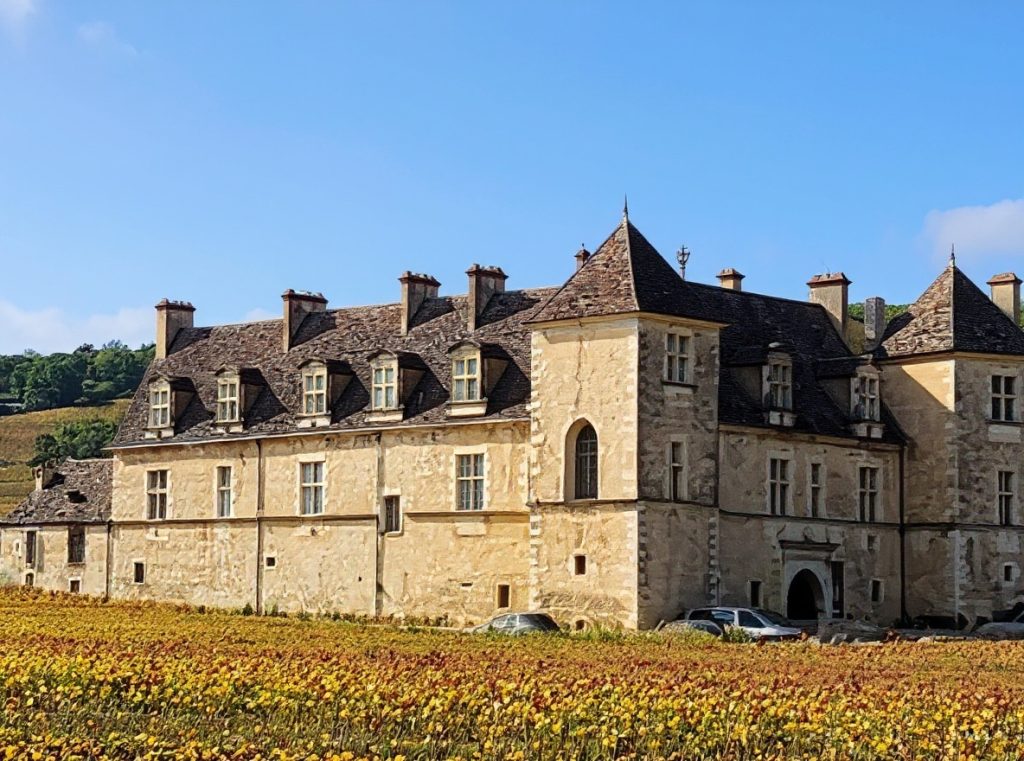
Set within 51 hectares of celebrated Grand Cru vineyards along Burgundy’s Route des Grands Crus, Clos de Vougeot Castle combines medieval winemaking heritage with Renaissance elegance. Cistercian monks from the Abbey of Cîteaux constructed its cellars and vat house during the 12th century, because the estate originated as a monastic winemaking center. The château itself, a Renaissance mansion with square towers, rose from these monastic foundations in 1551. Today the Confrérie des Chevaliers du Tastevin uses it as their headquarters. UNESCO recognizes it as a World Heritage Site within the Climats de Bourgogne.
Plan your visit to Clos de Vougeot Castle
Sat 09:30–17:00
Sun 09:30–18:00Apr–Oct: daily 09:30–18:00 (Sat to 17:00); Nov–Mar: daily 10:00–17:00. Closed 24, 25, 31 Dec and 1 Jan.
Location of Clos de Vougeot Castle
The château sits in Vougeot, a small commune in Burgundy’s Côte-d’Or department, between Dijon and Beaune. Visitors will find it on Rue de la Montagne in the village of Vougeot. The estate occupies the heart of the Route des Grands Crus, so travelers touring Burgundy’s wine country can access it easily. The château lies approximately 20 kilometres south of Dijon and 15 kilometres north of Beaune. Vougeot’s compact size means the castle dominates the landscape. A three-kilometre stone wall still surrounds the vineyard plots, just as the monks built it centuries ago. Major roads connect the site to both regional centres, so visitors can reach it by car without difficulty. The N74 runs close to the eastern boundary of the estate. Because the château occupies such a central position on the wine route, most Burgundy itineraries include it naturally. The building rises from flat vineyard land, so its towers appear visible from some distance across the vines.
History of Clos de Vougeot Castle
Monks from the Abbey of Cîteaux built the cellar and winery during the 12th century to support Burgundy’s growing viticultural tradition. These Cistercian vignerons established the cuverie (vat house) with its four giant wine presses and the Grand Cellier, an ingeniously constructed above-ground cellar. The structures they created formed the nucleus of what would become the château. The monks completed the vineyard and built a wall around it by 1336. Dom Jean Loisier, the 48th Abbot of Cîteaux, constructed the Renaissance mansion with square towers in 1551. This elegant residence contrasted sharply with the austere monastic buildings already on the site.
During the French Revolution, authorities seized all vineyard possessions from the church and sold them to private buyers. In 1818, Julien-Jules Ouvrard bought the château and vineyards. After Ouvrard’s death, his heirs put the property up for sale in 1889. Six Burgundy wine merchants bought it then, subdividing the vineyard for the first time in over 700 years. Wine-merchant Léonce Bocquet acquired the buildings in 1889. He restored the château in keeping with the architectural styles of the time, though his commitment nearly bankrupted him. During World War II, the château suffered significant damage.
Current status
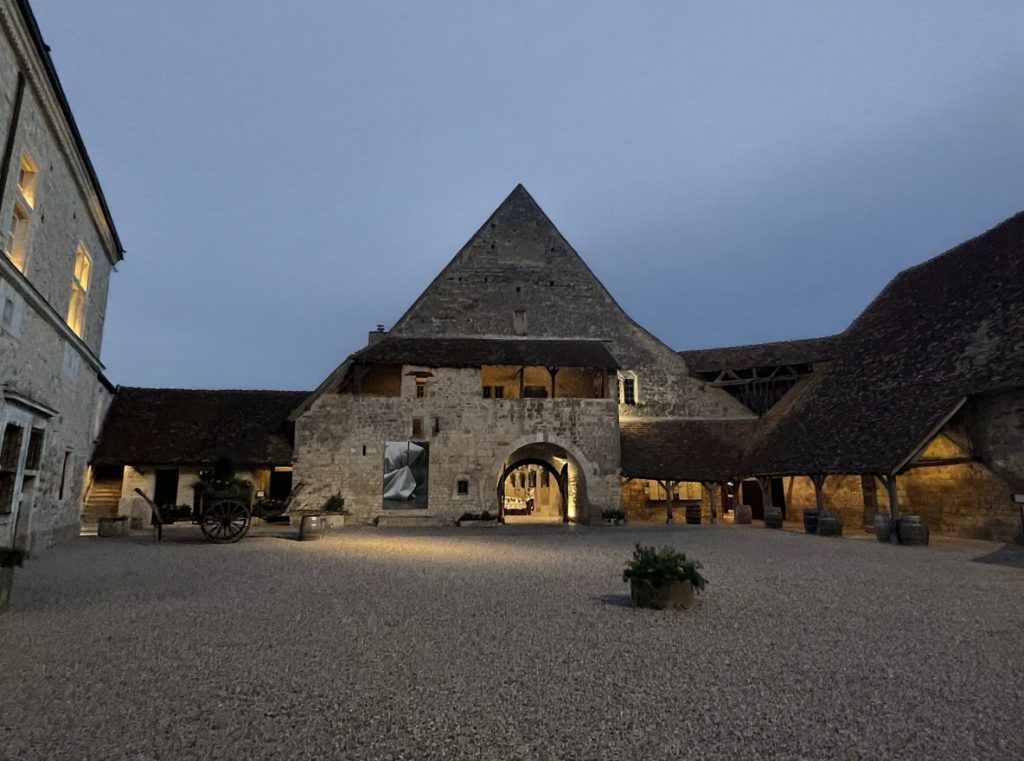
In 1944, the owners entrusted the property to the young Confrérie des Chevaliers du Tastevin, which undertook its restoration. The state listed it as a historic monument in 1949. Since 2015, the château has served as headquarters of the Climats du vignoble de Bourgogne, a UNESCO World Heritage Site. Visitors can choose self-guided tours using leaflets in French, English and German. Alternatively, they can join guided tours at 10:30 am, 2:30 pm and 4:30 pm. During visits, guests access the 12th-century vat house, the Petit Cellier and the Grand Cellier where a film by the Confrérie des Chevaliers du Tastevin narrated by Pierre Arditi plays. They also see the well in the Renaissance wing.
The château hosts tours, pop-up restaurants, sporting events, wine-themed gatherings and cultural events throughout the year. La Table de Léonce, named for the man responsible for the 19th-century restoration, offers tasting lunches with paired wines. Although the château no longer produces wine, it remains a symbol of almost a thousand years of Burgundian history. The Confrérie des Chevaliers du Tastevin calls it their Chief of Order. The brotherhood holds formal banquets called “chapitres” in the ancient cellars, inducting new members at these prestigious evening ceremonies. Visitors from across the world arrive to walk through rooms where medieval monks once turned grapes into wine. They then pass into Renaissance chambers where abbots once lived. The château proves that patience and devotion can shape a landscape.
Castles near Clos de Vougeot Castle
Frequently asked questions
What can I see at the Château du Clos de Vougeot?
The château features 12th-century Cistercian wine cellars with historic wine presses, a Renaissance château built in 1551, and exhibitions about the Confrérie des Chevaliers du Tastevin. Self-guided visits include touchscreens and a 15-minute film about the estate's history.
Does the Château du Clos de Vougeot still produce wine?
No, the château no longer produces wine, though it remains a symbol of Burgundy's winemaking heritage. It now serves as the headquarters of the Confrérie des Chevaliers du Tastevin and hosts receptions and cultural events.
Are guided tours of the Château du Clos de Vougeot available in English?
Yes, guided tours in English are offered daily at 11:30 and 15:30 by reservation. French tours run at 10:30, 14:30 and 16:30 (weekends only for the latter).
Is the Château du Clos de Vougeot accessible by public transport from Dijon?
Yes, you can take bus line 113 from Dijon (about 25 minutes) or the train to Vougeot–Gilly-lès-Cîteaux station (14 minutes). The château is located 21 km south of Dijon along the Route des Grands Crus.
Can I visit the Château du Clos de Vougeot without a guided tour?
Yes, self-guided visits are available using leaflets in French, English and German, plus touchscreens throughout the château. Self-guided tickets cost €9 for adults and €4 for students and children aged 8–16.
Featured listings