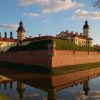
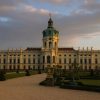
Water-filled moats surround Nesvizh Castle on a gentle hill in central Belarus, where it served as the ancestral seat of the powerful Radziwiłł magnate family for more than four centuries. Italian architect Giovanni Maria Bernardoni designed this Renaissance-Baroque fortress, which transformed medieval fortifications into an elegant residential palace. In 2005, UNESCO inscribed the castle, church, and surrounding landscape on the World Heritage List. The complex influenced architectural development across Central Europe and Russia, while its ten interconnected buildings and extensive parks remain among Belarus’s most visited cultural treasures.
Plan your visit to Nesvizh Castle
Location of Nesvizh Castle
Nesvizh Castle sits in the town of Nesvizh in the Minsk Region of central Belarus. The castle lies roughly 120 kilometres southwest of the capital city of Minsk. It stands at an elevation of about 183 metres above sea level on a gentle hill. The castle overlooks a series of artificial lakes and ponds that form part of its defensive and aesthetic design. The Radziwiłłs chose this location for its natural defences. Builders originally constructed the castle on a peninsula formed by the Usha River, now integrated into the park’s water features. Visitors can reach the site easily via regional roads from Minsk. Public buses make the journey in roughly three hours. A vast English-style landscape park spanning over 90 hectares surrounds the complex. This makes it one of the largest such parks in Europe. The town of Nesvizh itself offers additional historical buildings, though the castle remains its primary attraction.
History of Nesvizh Castle
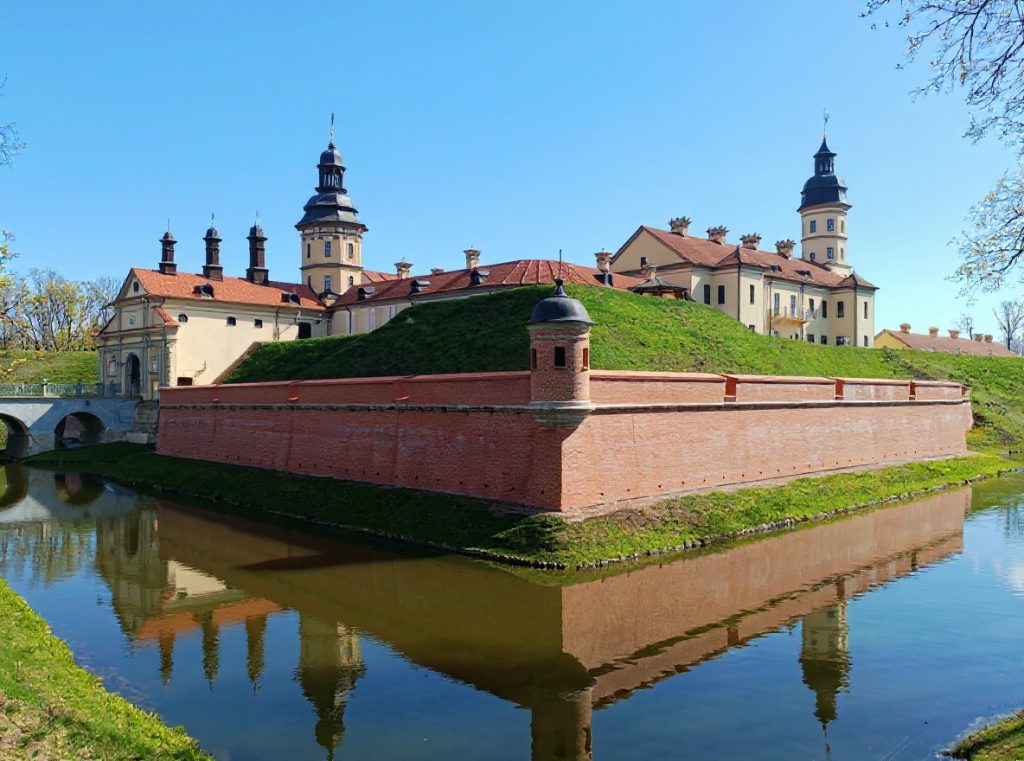
The estate passed to the Radziwiłł magnate family in 1533, when authorities awarded it to Mikołaj Radziwiłł and his brother Jan Radziwiłł after the extinction of the Kiszka family. Construction of the stone castle officially began on May 7, 1583, under Prince Mikołaj Krzysztof Radziwiłł, nicknamed “Sierotka.” The Marshal of Lithuania, Voivode of Trakai-Vilnius and castellan of Šiauliai, started construction of an imposing square three-storey château. Although the works relied on a pre-existing structure of a medieval castle, workers entirely turned the former fortifications into a renaissance-baroque house. Construction finished by 1604, and builders added several galleries half a century later. The family designed the fortress as an impregnable stronghold with bastions, ramparts, and moats.
A 20-metre stone rampart and a deep moat with water surrounded Nesvizh Castle. It became one of the most powerful and impregnable fortresses of the Grand Duchy of Lithuania. Defenders placed 30 guns on the bastions, while a princely palace stood opposite the entrance gate. Next to it an arsenal and a kamenitsa with a three-storey watchtower completed the defences. During the Great Northern War in 1706, Swedish forces under Charles XII sacked the castle. After the devastation of the Swedes, workers carefully restored the castle. They completed the restoration only in 1758. Russian troops occupied the town in 1764 and 1768. In 1772 authorities transferred the renowned library of approximately 10,000 volumes to St Petersburg. The castle remained in the family’s possession until the onset of World War II. In 1939, the invading Red Army expelled the Radziwiłł family from the castle.
Current status
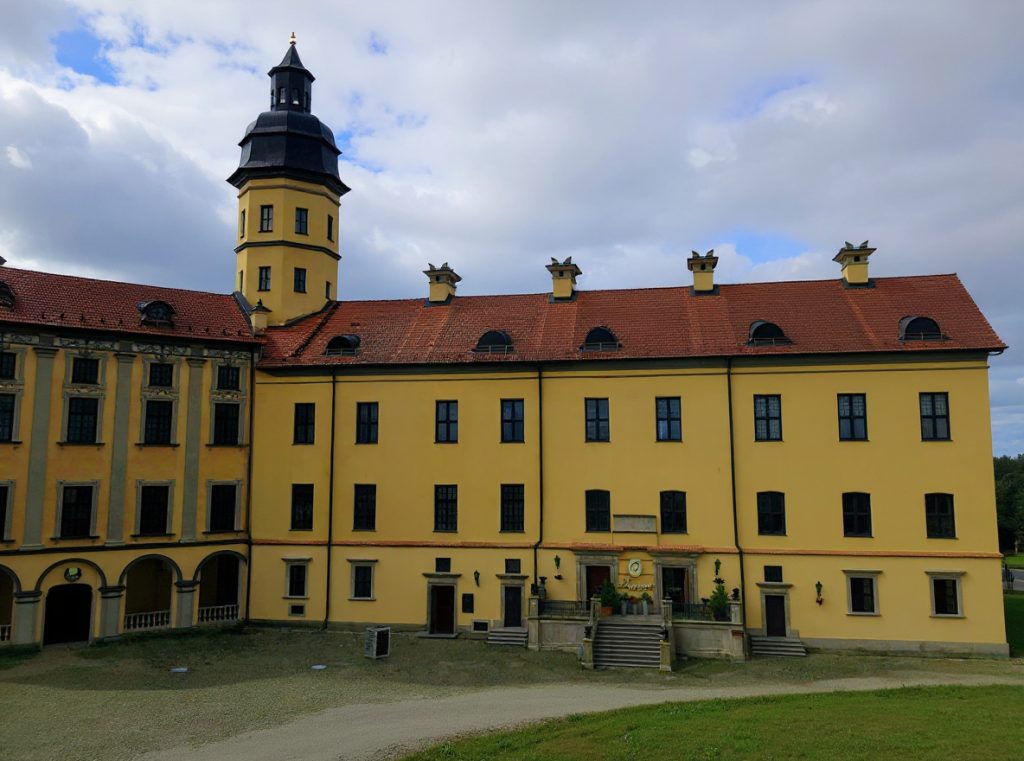
In Soviet times, authorities used the château as a sanatorium, while the park gradually fell into neglect. In 1994, officials designated the castle complex the national historical and cultural reserve. The site underwent extensive rebuilding and restoration from 2004 to 2012. Today the National Historical and Cultural Museum-Reserve “Nesvizh” manages the complex and welcomes visitors year-round. The museum presents opulently restored interiors with period furniture, chandeliers, and family portraits that evoke aristocratic life across the centuries. Exhibitions display hunting trophies, ceremonial weapons, and personal collections that once belonged to the Radziwiłłs. The castle hosts cultural events, theatrical performances, and seasonal festivals that bring its halls to life.
The surrounding parkland offers peaceful walks along tree-lined avenues, across ornamental bridges, and around reflective ponds where swans glide. The castle has ten interconnected buildings, which developed as an architectural whole around a six-sided courtyard. The palaces and church became important prototypes marking the development of architecture throughout Central Europe and Russia. Nesvizh Castle is also famous for the Corpus Christi Church, one of the oldest Baroque structures in Eastern Europe. Visitors wander through gilded reception rooms, libraries, and private chambers where centuries of European history unfolded. Water still fills the ancient moats, while stone towers still guard the corners. Legends still whisper through courtyards where one of Europe’s great dynasties once held court.
Castles near Nesvizh Castle
Frequently asked questions
Is Nesvizh Castle a UNESCO World Heritage Site?
Yes, Nesvizh Castle was inscribed on the UNESCO World Heritage List as an outstanding example of Central European palace architecture. The complex represents the Radziwiłł family's 16th-century residence and combines Renaissance, Baroque and later architectural styles.
Can I visit the grounds of Nesvizh Castle for free?
Yes, walking around the castle park, lakes and exterior grounds is free of charge. You only need to purchase a ticket (21 BYN for adults) to enter the palace interior and view the museum exhibitions.
How long does it take to get from Minsk to Nesvizh Castle?
Direct buses from Minsk Central Bus Station take 2.5 to 3 hours depending on traffic and stops. By car the journey is around 1.5 to 2 hours covering approximately 118 km southwest of Minsk.
Do I need to book tickets in advance for Nesvizh Castle?
Advance booking is recommended during peak season due to high demand, with excursions bookable up to 45 days ahead. You can also purchase tickets on arrival at the palace box office (until 18:00) or the information centre (until 17:30).
What is the architectural significance of Nesvizh Castle?
Built by the Radziwiłł family from 1582, the castle pioneered the new Italian bastion fortification system in Belarus. The palace combines multiple architectural styles including Renaissance, Baroque, Rococo, Classicism and Neo-Gothic from centuries of rebuilding.
Featured listings