
Commanding the narrowest point of the Øresund Strait between Denmark and Sweden, Kronborg Castle rises as one of Northern Europe’s most significant Renaissance fortresses. For centuries, this formidable stronghold controlled the gateway to the Baltic Sea, where every passing vessel paid tribute to the Danish Crown. The castle earned immortal fame as Elsinore in William Shakespeare’s Hamlet, yet its true history proves equally dramatic. Since 2000, UNESCO has recognised Kronborg as a World Heritage Site, celebrating its architectural splendour and its profound role in European history.
Plan your visit to Kronborg Castle
Location of Kronborg Castle
Kronborg Castle sits on the extreme northeastern tip of Zealand at Helsingør. The Øresund Strait narrows to just four kilometres wide at this point. This strategic position gave Denmark control over all maritime traffic between the North Sea and the Baltic for over four centuries. The castle faces Sweden across the water. Visitors can clearly see Helsingborg on the opposite shore because the distance is so short. Trains run directly from Copenhagen to Helsingør Station approximately every 20 minutes. The journey takes under an hour. From the station, a ten-minute walk leads through the historic harbour town to the castle gates. Ferries from Sweden arrive at the terminal beside the station. The address is Kronborg 2C, 3000 Helsingør, and public parking is available near Nordhavnsvej.
History of Kronborg Castle
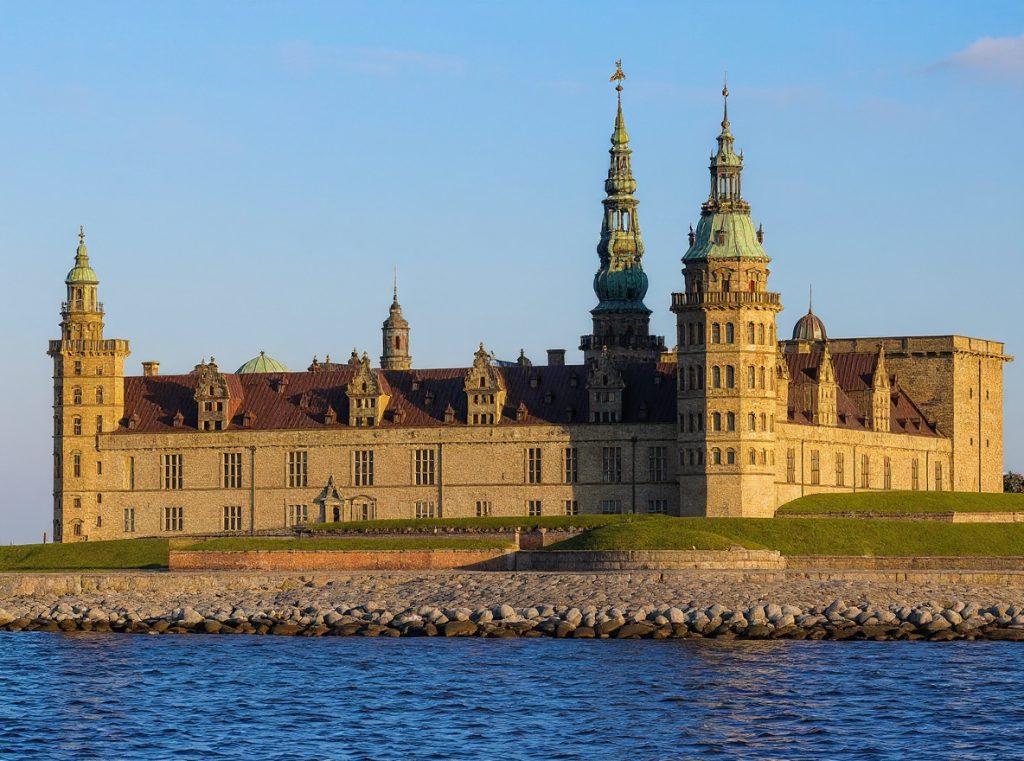
In the 1420s, King Eric of Pomerania built the original fortress called Krogen (meaning “the Hook”) on this vital site. He introduced the Sound Dues in 1429, forcing all ships entering or leaving the Baltic to pay tolls at the fortress. These revenues enriched the Danish treasury enormously. At times the tolls constituted up to two-thirds of state income during the 16th and 17th centuries. Between 1574 and 1585, King Frederik II transformed the medieval fortress into a magnificent Renaissance castle. Flemish architects Hans Hendrik van Paesschen and Anthonis van Obbergen designed the sumptuous new residence. Workers covered red brick with sandstone and crowned towers with copper spires. The king’s grand ballroom and lavish chambers symbolised Denmark’s wealth and power throughout Europe.
In 1629, a catastrophic fire destroyed most of the interior, though the chapel survived the flames. King Christian IV immediately rebuilt his father’s castle, preserving the Renaissance style while adding baroque elements. The restoration maintained the castle’s grandeur. It stands today much as it appeared in the early 1600s as a result. Swedish forces occupied Kronborg in 1658 during the Danish-Swedish wars and plundered treasures including the famous fountain. Denmark regained the castle in 1660 after pressure from European powers. Christian V fortified Kronborg further in 1690 with advanced bastions, but royals ceased using it as a residence. From 1785 until 1923, the military used the castle as barracks. Soldiers finally departed in 1991, ending Kronborg’s last military function.
Current status
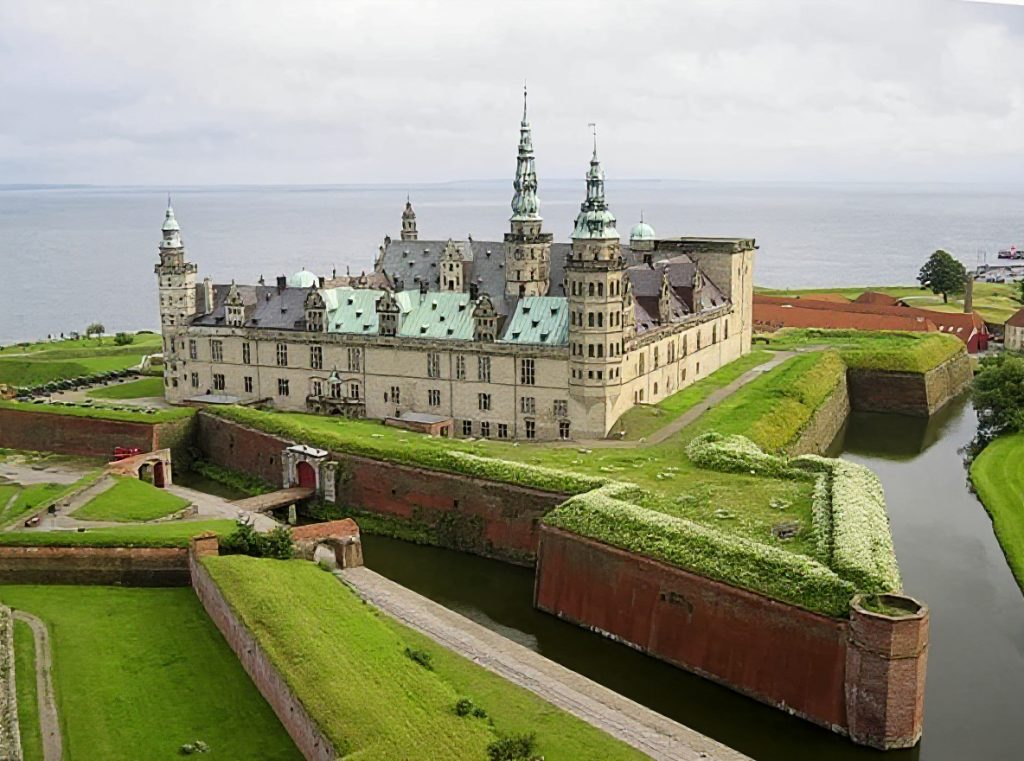
Today, the National Museum of Denmark administers Kronborg Castle, welcoming over 300,000 visitors annually. The castle opens year-round, charging admission though children enter free. Visitors explore Frederik II’s spectacular ballroom and view the remarkable tapestries commissioned in the late 16th century. They also descend into the atmospheric casemates beneath the fortifications. These underground passages, barely lit by flickering lamps, house the legendary figure Holger the Dane. His statue symbolises Denmark’s mythical protector. The castle also presents special exhibitions and hosts cultural events throughout the year. These include theatrical performances that honour its Shakespearean connection.
Kronborg forms part of Kulturhavn Kronborg, a cultural harbour area that includes the Danish Maritime Museum and Kulturværftet. Visitors can access the castle’s bastions, moats, and star fortifications without charge. However, the inner palace and casemates require tickets. Guided tours led by knowledgeable hosts bring centuries of drama to vivid life. From the towers, visitors enjoy commanding views across the Sound toward Sweden. Ships still pass through the strait that once filled Denmark’s coffers. The ancient walls echo with royal celebrations, forbidden loves, and brutal conflicts that shaped Northern Europe. Kronborg endures as a symbol of Renaissance achievement and Danish cultural heritage, where history resonates powerfully in every stone.
Castles near Kronborg Castle
Frequently asked questions
Is Kronborg Castle the real Hamlet's castle?
Kronborg Castle is the setting Shakespeare chose for his play Hamlet, calling it Elsinore. Hamlet himself is a fictional character, but the castle is very real and has been a royal fortress since the 1420s.
What is included in a ticket to Kronborg Castle?
Your ticket includes access to the castle halls, the grand ballroom, the Renaissance chapel, and the underground casemates where the statue of Holger the Dane rests. Daily introductions and some guided tours are also included during certain periods.
Can you visit Kronborg Castle from Copenhagen as a day trip?
Yes, Kronborg Castle makes an excellent day trip from Copenhagen. The train journey takes under an hour, and you can combine the castle visit with exploring the charming town of Helsingør.
Are there guided tours available at Kronborg Castle?
Yes, free daily introductions (15 minutes) are offered year-round. Longer themed guided tours run on weekends and during summer, covering topics like Hamlet, the castle queens, and Kronborg's secrets.
What are the casemates at Kronborg Castle?
The casemates are a network of dark underground passages and rooms beneath the castle, originally used to house soldiers during sieges. They also hold the famous statue of Holger the Dane, a legendary warrior said to awaken if Denmark is threatened.
Featured listings