
The Château de Chambord is widely regarded as one of the most magnificent castles in Europe. Its stunning architecture and grand scale embody the pinnacle of French Renaissance design. King Francis I originally conceived this remarkable château, located in the Loire Valley, as a hunting lodge. Over time, it has come to symbolize the artistic and cultural achievements of 16th-century France. As you explore its history and current status, you will find that the Château de Chambord offers a unique glimpse into the grandeur and elegance of a bygone era.
Plan your visit to Château de Chambord
Can’t wait to visit the château? Book your Château de Chambord tour online.
Location of Château de Chambord
The Château de Chambord lies in the heart of the Loire Valley, approximately 15 kilometers east of Blois, in the Loir-et-Cher department of France. This region, known for its stunning landscapes and rich history, is also home to numerous other historic châteaux. Furthermore, UNESCO has designated the Loire Valley as a World Heritage Site, celebrating its architectural heritage and natural beauty. Additionally, the Château de Chambord lies within an expansive park and hunting reserve spanning over 5,000 hectares, making it one of Europe’s largest enclosed parks. Consequently, the surrounding area provides a picturesque backdrop, significantly enhancing the château’s majestic presence.
History of Château de Chambord
The construction of the Château de Chambord began in 1519 under the orders of King Francis I, who intended it to serve as a symbol of his power and a retreat for hunting. The design of the château is often attributed to Domenico da Cortona. However, Leonardo da Vinci is also believed to have influenced its architectural plans. The château’s construction was an ambitious project, involving the efforts of thousands of workers over several decades.
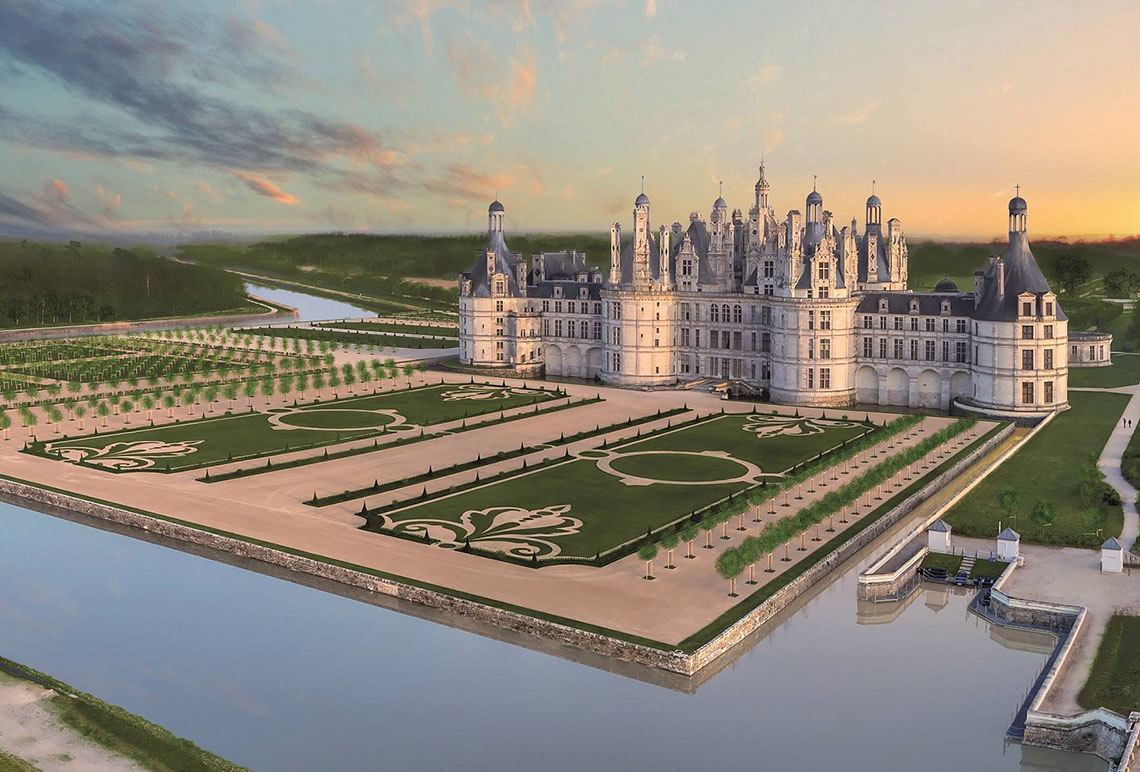
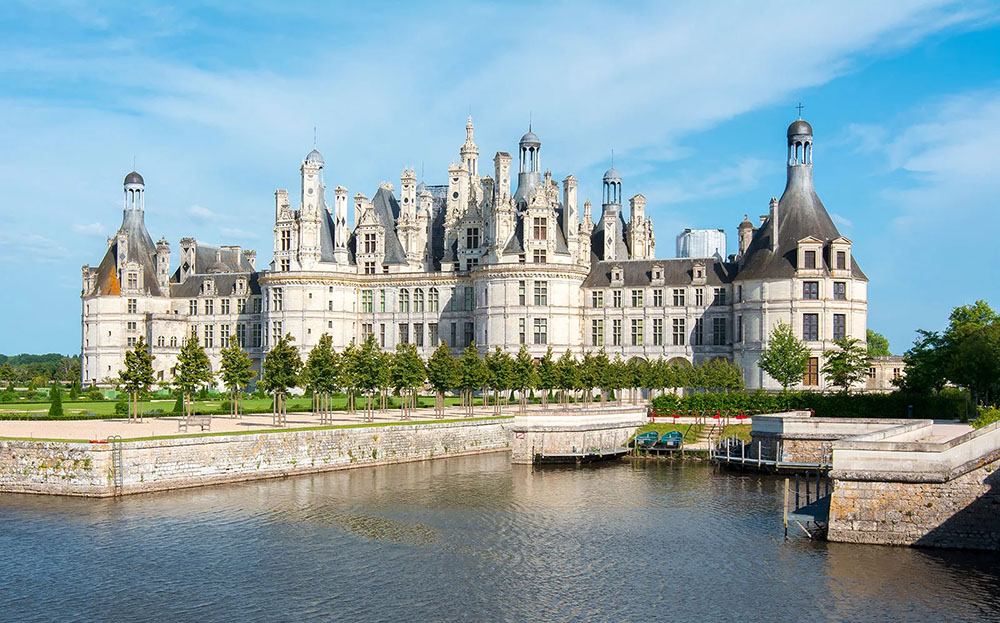
Originally conceived as a hunting lodge, the château’s design reflects a blend of traditional medieval structures and innovative Renaissance elements. The central keep is surrounded by four massive bastions, which are reminiscent of a fortress. The intricate stone carvings exemplify Renaissance artistry. The famous double-helix staircase is another highlight of this artistry. King Francis I used the château as a hunting retreat and a venue for entertaining guests, although he spent only a small portion of his reign there.
After Francis I’s death in 1547, the château saw intermittent use by various French monarchs. King Louis XIV, known as the Sun King, frequently visited Chambord, further enhancing its grandeur by adding new rooms and gardens. However, after the French Revolution, the château fell into a period of neglect. Efforts to restore and preserve this historic landmark took place during the 19th and early 20th centuries, culminating in its classification as a historic monument in 1840.
Current status
Today, the Château de Chambord stands as a testament to the artistic and architectural achievements of the French Renaissance. Meticulous restoration and maintenance have allowed visitors to experience the château’s grandeur much as it was during the height of its glory. The château is open to the public year-round, attracting over 700,000 visitors annually.
The château’s interior features period furnishings, artworks, and tapestries that provide insight into the opulent lifestyle of the French court. The double-helix staircase, one of the château’s most famous features, continues to captivate visitors with its ingenious design, which allows two people to ascend or descend without ever crossing paths. The rooftop terrace offers panoramic views of the surrounding park and countryside, further enhancing the visitor experience.
In addition to its historical and architectural significance, the Château de Chambord serves as a cultural hub. It hosts a variety of events, exhibitions, and performances throughout the year. The expansive grounds, including the park and hunting reserve, are also accessible to the public. These areas offer opportunities for outdoor activities such as hiking, cycling, and wildlife observation.
The Château de Chambord remains an enduring symbol of French heritage. Anyone interested in the rich history and culture of Europe must visit it. As you explore its halls and grounds, you will feel transported back to a time of grandeur and elegance. The artistry and innovation of the Renaissance continue to inspire awe and admiration.
Castles near Château de Chambord
Frequently asked questions
Can I visit Château de Chambord without booking in advance?
Yes, you can purchase tickets on arrival at the château. Online tickets allow you to skip the ticket-office queue, which can be useful during busy periods.
Is Château de Chambord free for children?
Yes, entry is free for all visitors under 18. EU residents aged 18–25 also enter free, but must collect a ticket at the château ticket office with valid ID.
How do I get to Château de Chambord by public transport?
From Blois train station, take Rémi bus line 2 to Chambord (around 25 minutes). The bus runs twice daily Monday to Friday; check schedules in advance as service is limited.
What are the opening hours of Château de Chambord?
The château is open 9:00–18:00 from late March to late October, and 9:00–17:00 from late October to late March. It is closed on 1 January, 25 December, and some Mondays in January–March.
Can I explore the park at Château de Chambord for free?
Yes, the 5,440-hectare park is open to the public year-round free of charge. Only the château interior and formal French gardens require a paid ticket.
Featured listings