
The Best Castles to Visit in Scotland: Historic Strongholds Worth Exploring
Scotland’s landscape holds some of Europe’s most striking fortifications, where centuries of clan warfare, royal intrigue and strategic defence have left a legacy written in stone. From dramatic clifftop ruins to intact royal residences, these castles tell the story of a nation shaped by conflict and pride. Each fortress reveals something different about Scottish history, whether it’s the struggles for independence, the power of rival clans or the country’s enduring connection to the British crown.
Which Scottish Castles Should You Visit?
The best castles in Scotland include Edinburgh Castle for royal history, Stirling Castle for medieval grandeur, Eilean Donan for photogenic island views, Urquhart Castle for Loch Ness scenery and Dunnottar Castle for dramatic coastal clifftop ruins. These five represent different aspects of Scotland’s castle heritage, from functioning royal fortresses to romantic ruins that capture the country’s wild beauty.
Your choice depends on what draws you most: intact interiors with crown jewels and great halls, atmospheric ruins perched above crashing waves, or remote Highland settings that look unchanged since clan chiefs commanded their territories. Scotland offers all of these, often within reasonable travelling distance of each other.
Edinburgh Castle: Scotland’s Royal Heart
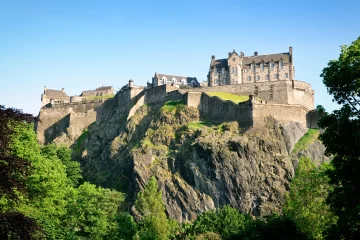
Edinburgh Castle dominates the capital from its volcanic rock perch, visible from nearly every corner of the city. The site has been fortified since at least the 12th century, though parts of the current structure date from the 16th century onwards. It served as a royal residence, military garrison and state prison throughout its long history. The Honours of Scotland, the oldest crown jewels in Britain, are on display here, in the Crown Room.
Today you’ll walk through multiple periods of Scottish history in one visit. The Great Hall retains its medieval hammer-beam roof, while St Margaret’s Chapel from the 12th century is the oldest surviving building in Edinburgh. The castle still fires the One O’Clock Gun every day except Sunday, a tradition that began in 1861. For anyone interested in Scotland’s royal past and military heritage, this fortress provides the most comprehensive introduction, though it does get extremely busy during summer.
Stirling Castle: Where Mary, Queen of Scots, Was Crowned
Stirling Castle sits on a crag that controlled the route between the Lowlands and Highlands for centuries. Mary, Queen of Scots, was crowned in the castle’s Chapel Royal in 1543, when she was just nine months old. The castle’s Royal Palace and Great Hall represent some of Scotland’s finest Renaissance and medieval architecture.
The castle has been meticulously restored, with interiors recreated to show how they appeared during the Renaissance court. Tapestries hang in the Queen’s Inner Hall, woven using 16th-century techniques. The view from the castle walls takes in the Wallace Monument and the sites of the battles of Stirling Bridge and Bannockburn, making this fortress central to understanding Scotland’s wars of independence. It’s less crowded than Edinburgh but equally significant historically.
Eilean Donan Castle: The Highland Icon
Eilean Donan Castle occupies a small island where three sea lochs meet in the western Highlands. A fortification has stood here since medieval times, and the castle changed hands between various clans before being destroyed in the 18th century. What you see today is a 20th-century reconstruction.
Despite its relatively modern restoration, the castle remains true to its medieval layout and captures the romantic vision of a Highland stronghold perfectly. The setting alone makes it worthwhile: mountains rise behind while the waters of Loch Duich, Loch Long and Loch Alsh surround it. Inside, you’ll find clan memorabilia and period furnishings that illustrate Highland life. The castle appears in many films and photographs, making it perhaps Scotland’s most recognizable fortress after Edinburgh, and it delivers on that promise when you visit in person.
Urquhart Castle: Ruins Above Loch Ness
Urquhart Castle perches on a headland jutting into Loch Ness, offering views across Scotland’s most famous stretch of water. The castle saw action during the Wars of Independence in the late 13th and early 14th centuries and was later held by various clans. It was destroyed in 1692 to prevent its use by enemy forces, leaving the dramatic ruins that stand today. The tower house, though roofless, still dominates the site.
You’re visiting for the combination of history and landscape here. The Grant Tower provides panoramic views up and down the loch, and on calm days the reflections in the water are exceptional. The visitor centre includes a short film and displays of artefacts found during excavations. While you probably won’t spot the monster, you will understand why this location was strategically important for centuries. The ruins are substantial enough to give you a real sense of the castle’s former scale and strength.
Dunnottar Castle: Clifftop Drama
Dunnottar Castle sits on a rocky headland south of Aberdeen, accessible only via a steep path down and then up from the mainland. The dramatic coastal setting, with cliffs dropping to the North Sea on three sides, made it nearly impregnable. The current ruins include buildings from various periods, though the site was fortified much earlier. During the 17th century, the castle played a role in the dramatic history of the Scottish crown jewels.
The walk to reach the castle is part of the experience: the approach reveals just how isolated and defensible this position was. Once inside the ruins, you can explore the remains of multiple buildings, including a chapel, great hall and various residential quarters spread across the headland. The sea crashes against the cliffs below, and seabirds circle overhead. It’s one of Scotland’s most photogenic ruins, particularly striking in stormy weather when the waves are at their most powerful. The location feels genuinely remote despite being relatively accessible from Aberdeen.
Glamis Castle: Royal Residence and Legend
Glamis Castle has been the seat of the Earls of Strathmore and Kinghorne for centuries. The castle was the childhood home of Queen Elizabeth The Queen Mother. The pink sandstone structure, with its pointed turrets and towers, evolved from a medieval hunting lodge into the baronial residence you see today. Shakespeare set Macbeth here, though the historical king had no real connection to this particular castle.
Unlike many Scottish castles, Glamis remains a lived-in family home, which gives it a different atmosphere from ruins or museum pieces. The state rooms contain fine furniture, paintings and tapestries accumulated over centuries. The grounds include formal Italian gardens and a nature trail through the estate. Guided tours take you through the castle’s history, including some of its ghost stories. This is your chance to see how Scottish nobility actually lived, in a building that seamlessly blends different architectural periods into a coherent whole.
Cawdor Castle: Medieval Core with Highland Gardens
Cawdor Castle, northeast of Inverness, centres on a medieval tower house with later additions that created a comfortable residence. The Cawdor family has held the castle for centuries, making it one of Scotland’s longest continuously inhabited strongholds. Like Glamis, it has a Macbeth connection through its name, though Shakespeare’s accuracy was questionable. The castle contains a medieval kitchen, a drawbridge and thick-walled towers.
The interior strikes a balance between medieval fortification and domestic comfort, with family portraits, rare tapestries and well-preserved rooms that show how the castle evolved over six centuries. Three separate gardens surround the castle, each with a distinct character: the Flower Garden, the Wild Garden and the Walled Garden. The Big Wood, an ancient surviving woodland, offers walking trails. Cawdor feels less formal than many grand castles, partly because the family still lives here when it’s closed to visitors, giving it an authentic, slightly informal character that’s quite appealing.
Castle Stalker: Island Tower in Loch Laich
Castle Stalker rises from a tidal islet in Loch Laich, a small sea loch off Loch Linnhe. This four-storey tower house dates from the 15th century. The castle changed hands several times through wagers, feuds and forfeitures, typical of Highland clan politics. After falling into ruin, it was bought in 1965 by Lieutenant Colonel Stewart Allward, who restored it, and his family still owns it today.
Access is limited to occasional boat trips during summer, making a visit more of a special event than a casual stop. The tower house is compact but well-preserved, giving you an authentic sense of how a minor clan chief would have lived. The isolation of the island location, surrounded by mountains and water, captures the essence of Highland castle building: defensive strength combined with control of water routes. Even if you don’t visit the interior, the view from the shore is remarkable, especially at high tide when the castle appears to float.
Planning Your Castle Visits in Scotland
Scotland’s castles spread across the country, from the Borders to the far north. Edinburgh and Stirling make logical starting points if you’re basing yourself in central Scotland, both easily reached by train from Glasgow or Edinburgh. The Highland castles require more planning: Eilean Donan is on the main route to Skye, while Urquhart fits into a circuit around Loch Ness. Dunnottar requires a specific trip unless you’re touring the northeast coast. Renting a car gives you the most flexibility, particularly for reaching places like Castle Stalker or the estates around Inverness.
Summer brings the longest days and best weather, but also the heaviest crowds at Edinburgh and Stirling. Spring and autumn offer better light for photography and fewer visitors, though you’ll need to check opening times as some castles reduce their hours or close entirely in winter. Some Highland castles close or open only on certain days in winter. If you’re interested in the interiors rather than just the exteriors, prioritize the inhabited castles like Glamis and Cawdor, which maintain their furnishings and offer guided tours. For atmospheric ruins and dramatic landscapes, head to Dunnottar or Urquhart. Most people find that mixing both types creates the most satisfying trip.
Frequently asked questions about best castles in scotland
What is the most visited castle in Scotland?
Edinburgh Castle is the most visited castle in Scotland. Its central location in the capital city, combined with its role as the repository for the crown jewels and its prominence in Scottish history, draws visitors from around the world throughout the year.
Can you stay overnight in Scottish castles?
Several Scottish castles operate as hotels, including Dalhousie Castle near Edinburgh and others throughout the country. These range from luxury five-star experiences to more modest accommodations, allowing visitors to sleep within historic walls. However, the most famous tourist castles like Edinburgh and Stirling are museums that close to the public each evening.
How many castles does Scotland have in total?
Scotland has a very high concentration of castles, with estimates varying depending on how you define a castle versus a fortified house or tower. Many are ruins, some are private residences, and only a portion are open to the public. This gives Scotland one of the highest densities of castles per square kilometre in Europe.
Which Scottish castle has the best views?
Dunnottar Castle offers perhaps the most dramatic views, perched on cliffs above the North Sea with waves crashing below. However, Urquhart Castle’s position on Loch Ness and Eilean Donan’s mountain-and-water setting are equally impressive for different reasons. The “best” view depends on whether you prefer coastal drama or Highland scenery.