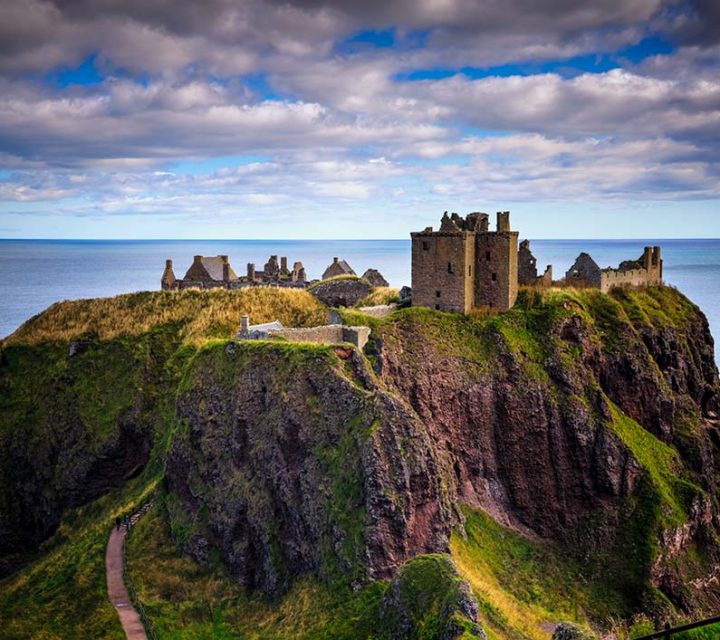
Dunnottar Castle, a majestic fortress steeped in history, stands proudly on the rugged northeast coast of Scotland. Overlooking the North Sea from its imposing cliff-top perch, the castle offers a dramatic and awe-inspiring sight to visitors. Moreover, renowned for its strategic importance and its role in Scotland’s tumultuous past, Dunnottar Castle has become a symbol of resilience and heritage. Additionally, its scenic beauty and the rich tapestry of stories woven into its ancient stones often captivate visitors.
Plan your visit to Dunnottar Castle
Can’t wait to visit the castle? Book your Dunnottar Castle tour online.
Location of Dunnottar Castle
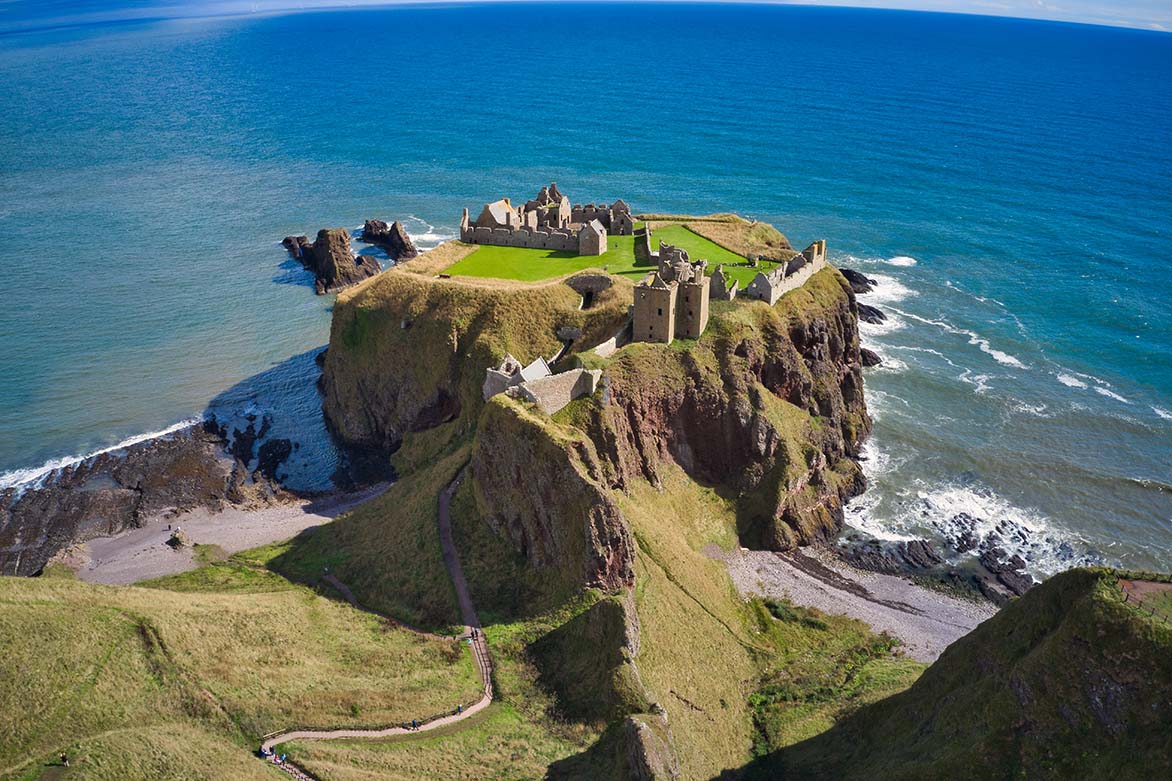
Located approximately two miles south of Stonehaven in Aberdeenshire, Dunnottar Castle occupies a promontory that is almost entirely surrounded by steep cliffs. This unique geographical positioning provided the castle with a natural defense, making it a formidable stronghold throughout its history. Moreover, the surrounding landscape, characterized by rolling hills and the relentless waves of the North Sea, enhances the castle’s mystique and allure. A well-maintained path facilitates access to the site. Winding up from the car park to the cliff’s edge, it offers breathtaking views along the way.
History of Dunnottar Castle
The history of Dunnottar Castle dates back to the early Middle Ages. Additionally, evidence suggests a Pictish fort existed as early as the 3rd century. The current structure began to take shape in the 14th century. This was under the direction of Sir William Keith, the Great Marischal of Scotland. Dunnottar’s strategic significance was highlighted during the Wars of Scottish Independence. The castle served as a defensive stronghold against English forces.
One of the most notable events in the castle’s history occurred in the 17th century during the English Civil War. Dunnottar Castle became the hiding place for the Scottish Crown Jewels, known as the Honours of Scotland. A small group of defenders safeguarded these precious artifacts within the castle’s walls from Oliver Cromwell’s invading army. They smuggled the Honours out and hid them in a nearby church until the threat had passed, ensuring their preservation for future generations.
Throughout its history, Dunnottar Castle has witnessed numerous sieges, battles, and moments of political intrigue. Its walls have withstood the test of time, bearing silent witness to the ebb and flow of Scotland’s fortunes. The castle remained a prominent seat of power for the Earls Marischal until the 18th century when it fell into disuse and partial ruin following their involvement in the Jacobite uprisings.
Current status
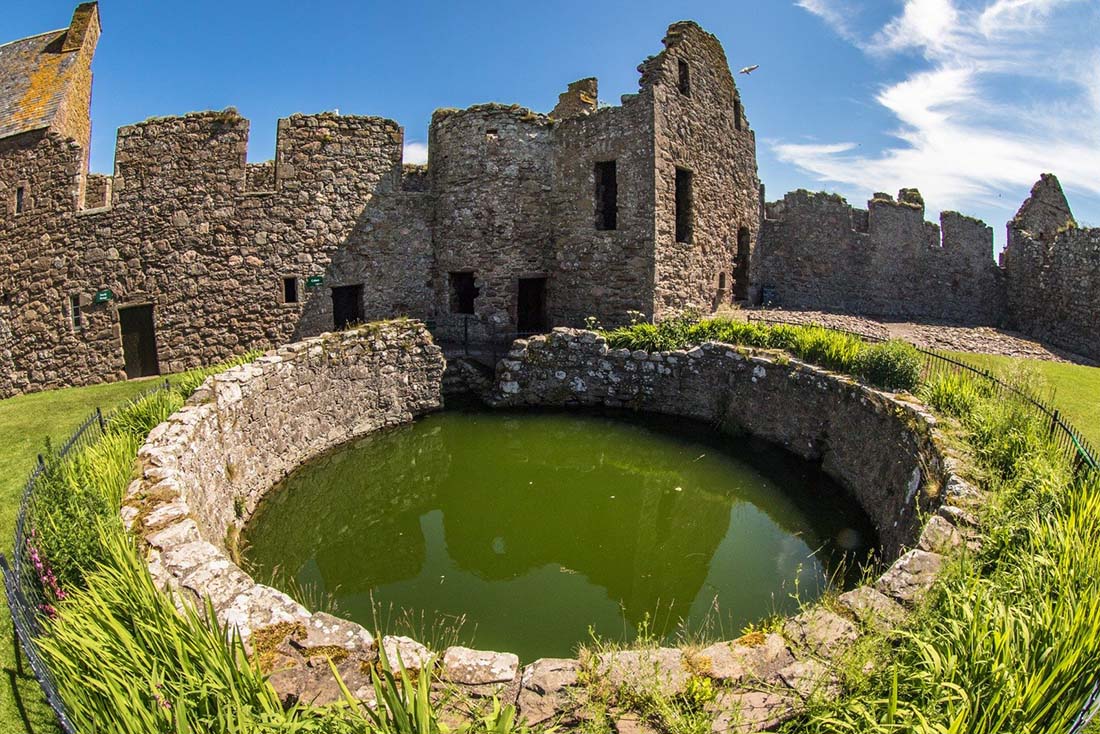
Today, Dunnottar Castle stands as a picturesque ruin. Thousands of visitors come annually to explore its storied past and scenic surroundings. The Dunecht Estates manage the castle. They have made efforts to preserve and maintain the site for public enjoyment. While much of the structure has succumbed to time, several key areas remain accessible. These include the keep, the barracks, and the chapel.
Efforts have been made to enhance the visitor experience. Additionally, informative displays and guided tours provide deeper insights into the castle’s rich history. The natural beauty of the site, combined with its historical significance, attracts tourists, historians, and photographers. Furthermore, the castle’s dramatic location often strikes visitors. Perched high above the crashing waves, it offers panoramic views of the coastline.
In recent years, Dunnottar Castle has also gained recognition as a filming location, further cementing its place in popular culture. Its atmospheric ruins have served as the backdrop for various movies and television series, adding a modern dimension to its ancient legacy.
Castles near Dunnottar Castle
Frequently asked questions
How many steps are there at Dunnottar Castle?
From the car park to the castle entrance involves 17 uneven steps, then 48 more steps into the main castle area. The ruins themselves have numerous additional steps and uneven ground throughout.
Can you visit Dunnottar Castle without paying?
Yes, you can walk along the coastal paths and clifftop viewpoints for free without entering the castle grounds. However, a paid ticket is required to access the ruins themselves and explore the interior.
Is Dunnottar Castle open in winter?
Yes, Dunnottar Castle is open year-round except 25–26 December and 1–2 January. Winter hours (October–March) are shorter, 10:00–16:30 or dusk, and the castle may close at short notice in bad weather for safety.
What did Dunnottar Castle protect during the English Civil War?
Dunnottar Castle famously protected the Honours of Scotland (the Scottish Crown Jewels) from Oliver Cromwell's army in the 1650s. The regalia were smuggled out and hidden at nearby Kinneff Church until the Restoration.
Is Dunnottar Castle wheelchair accessible?
No, Dunnottar Castle is not wheelchair accessible due to the steep clifftop location and 65 uneven steps from the car park to the interior. The castle grounds have cobblestones, grass, and varying levels throughout.
Featured listings