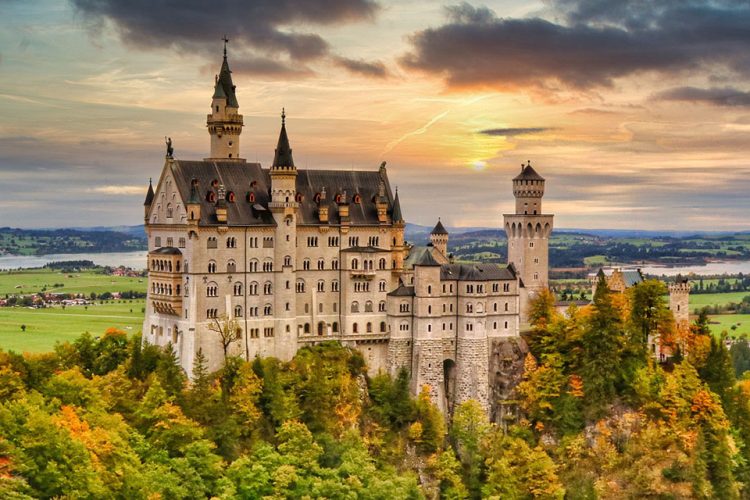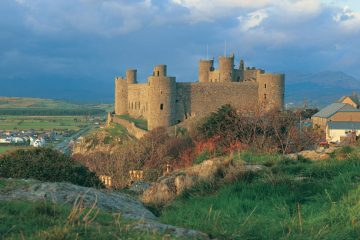

Near Nairn in the Scottish Highlands, Cawdor Castle stands among beautiful gardens and ancient woodland. The castle began as a medieval fortress and later became an elegant family home. Today, visitors can explore its historic rooms, colourful gardens and peaceful woodland trails. A famous holly tree lies at the heart of its unusual history. The castle also has a fascinating connection to Shakespeare’s Macbeth.
Plan your visit to Cawdor Castle
Location of Cawdor Castle
Cawdor Castle stands approximately 5 miles southwest of Nairn and 13 miles northeast of Inverness. You will find it near Cawdor Village in Nairnshire, Scotland. Inverness Airport lies just 7 miles away.
Visitors arriving from Inverness can follow the A96 towards Nairn. From there, local roads and signposts lead towards Cawdor Village and the castle. The journey takes you through the beautiful Scottish countryside.
You can also reach Nairn by train. From the station, a taxi offers the easiest way to reach the castle. Public transport connections to Cawdor Village are limited.
The castle overlooks the Cawdor Burn, a small stream that flows into the River Nairn. Ancient trees, rolling fields and nearby moorland create a peaceful setting. The surrounding landscape makes the castle a popular destination for visitors exploring the Highlands.
History of Cawdor Castle
The origins of the medieval fortress
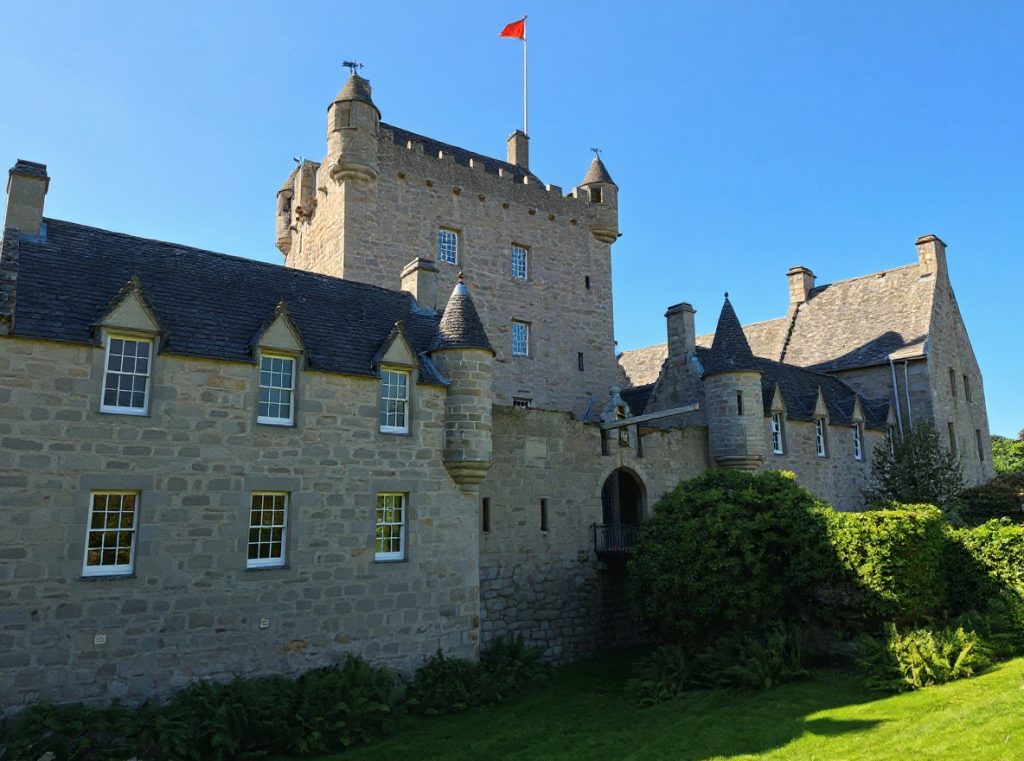
The history of Cawdor Castle dates back to the late 14th century. The Thanes of Cawdor, powerful local landowners, built the castle as a private fortress. Its position above the Cawdor Burn provided natural protection.
The first castle featured a strong rectangular tower house. It had four storeys, an attic and a single entrance. Thick stone walls helped protect the family from possible attacks.
In 1454, King James II granted William Calder, 6th Thane of Cawdor, permission to strengthen the castle. The royal licence allowed him to improve its defences. The exact date of the original tower remains uncertain.
Over the following centuries, the owners expanded the building and improved its rooms. The castle gradually changed from a defensive fortress into a comfortable family residence.
The legend of the holly tree
One of Cawdor Castle’s most unusual features is an ancient holly tree inside its tower. A local legend explains how the tree became part of the building.
According to the story, the Thane of Cawdor received instructions in a dream. He placed a chest of gold on a donkey and allowed it to wander. The animal eventually stopped beneath a holly tree. The Thane then chose that spot for his new castle.
The builders supposedly constructed the tower around the tree. Its remains still stand in the castle’s Tree Room.
Modern scientific tests suggest that the holly tree died around 1372. The construction of the tower may have blocked its sunlight. Although nobody can prove the legend, the ancient tree remains a remarkable attraction.
The Campbell family takes ownership
A major change came in 1510. Muriel Calder, the young heiress of Cawdor, married Sir John Campbell of Muckairn. Their marriage brought the castle into the Campbell family.
The Campbell family continued to develop the property. During the 16th and 17th centuries, they added new rooms and improved the living spaces.
Sir Hugh Campbell made particularly important changes during the 1660s. He expanded parts of the castle and modernised its interior. Local masons James and Robert Nicolson also contributed to building work during this period.
The family kept many of the castle’s medieval features. These included its thick walls, narrow staircases and impressive defensive entrance. The iron yett, a heavy iron gate, remains another famous feature. According to tradition, it originally came from nearby Lochindorb Castle.
The castle during Scotland’s turbulent history
Cawdor Castle witnessed centuries of conflict in the Scottish Highlands. The Battle of Auldearn took place nearby in 1645. Almost a century later, the Jacobite Rising brought further unrest to the region.
The Battle of Culloden in 1746 ended the final Jacobite Rising. Although fighting reached the surrounding countryside, Cawdor Castle survived with little damage.
The Campbells of Cawdor had some sympathy for the Jacobite cause. However, the family spent much of the 18th century on its estates in Wales. Relatives and estate managers looked after Cawdor during their absence.
The family returned regularly during the 19th century. They improved the castle and developed its gardens. These changes helped preserve the historic building while making it more comfortable.
Cawdor Castle and Shakespeare’s Macbeth
William Shakespeare gave Cawdor Castle an unexpected place in literary history. In his famous tragedy Macbeth, the main character becomes Thane of Cawdor.
However, the real King Macbeth lived during the 11th century. The present castle did not exist during his lifetime. There is no historical evidence that Macbeth ever lived in this building.
Shakespeare’s play nevertheless made the name Cawdor famous around the world. The connection continues to attract visitors interested in Scottish history and literature.
Current status of Cawdor Castle
A historic family home
Cawdor Castle remains a private family home with strong links to the Campbell family. More than 23 generations of the Cawdor family have shaped its history.
Unlike many Scottish castles, Cawdor never fell into ruin. Its owners continued to care for the building throughout the centuries. As a result, visitors can still experience the atmosphere of a historic family residence.
Today, Cawdor Castle welcomes visitors as a five-star Scottish attraction. It offers much more than medieval architecture. The property combines historic rooms, impressive gardens and outdoor activities.
Exploring the castle’s historic rooms
Visitors can explore 12 principal rooms inside Cawdor Castle. These rooms display historic furniture, paintings, tapestries, ceramics and sculptures.
The Tapestry Bedroom is one of the main highlights. It contains rare Flemish tapestries, including hangings made for the room in 1682.
Another popular attraction is the Tree Room. Here, visitors can see the ancient holly tree beneath the medieval tower.
The Old Kitchen also offers a fascinating glimpse into daily life. The household used this kitchen from around 1640 until 1938. Its large fireplace and historic features reveal how castle life changed over time.
Each room tells a different part of the family’s story. Together, they show how the castle developed over several centuries.
The three gardens of Cawdor Castle
The beautiful gardens are among Cawdor Castle’s main attractions. Visitors can explore three separate gardens, each with its own character and history.
The Walled Garden is the oldest garden at Cawdor. It originally served as a kitchen garden. Today, it features decorative planting, symbolic designs and a maze with more than 1,200 holly plants.
The Flower Garden lies south of the castle. Sir Archibald Campbell created its original layout around 1710. Colourful flowers, formal paths and carefully arranged plants make it especially attractive during summer.
The Wild Garden offers a quieter experience among tall trees and woodland plants. The 5th Earl of Cawdor introduced several unusual species during the 1960s. Some plants came from distant regions, including Tibet.
Each garden offers a different experience. Visitors can enjoy formal flowerbeds, quiet woodland paths and attractive views of the historic castle.
Cawdor Big Wood and outdoor activities
Beyond the gardens lies Cawdor Big Wood, an extensive area of ancient woodland. The estate offers more than 10 miles of marked nature trails.
Individual walking routes range from short, gentle paths to longer trails of around five miles. Visitors can discover old trees, small streams and a wide variety of wildlife.
The estate also features a nine-hole golf course surrounded by attractive parkland. Families can visit the woodland play area, while the Courtyard Café serves drinks, cakes and light meals.
Visitors will also find shops selling gifts and Scottish products. The wider Cawdor Estate offers traditional outdoor activities, including salmon fishing on the River Findhorn.
Opening times and visitor information
Cawdor Castle normally opens to visitors from late April until early October. Opening dates and admission prices may change each year.
Visitors can explore the castle, gardens and grounds during the seasonal opening period. However, some historic rooms have narrow stairs and uneven floors. These features can make access difficult for people with limited mobility.
Check the official Cawdor Castle website before planning your visit. You will find current opening times, ticket prices and travel information.
Cawdor Castle offers a memorable journey through Scottish history. Its medieval tower, family collections and beautiful gardens make it a special place to explore. Whether you love castles, nature or Shakespeare, this Highland landmark has something to offer.
Castles near Cawdor Castle
Frequently asked questions
Is Cawdor Castle connected to Shakespeare's Macbeth?
The castle is linked to the title Thane of Cawdor from Macbeth, but the play's events did not occur here. The central tower was built around 1370, centuries after the historical Macbeth, and King Duncan was not murdered at Cawdor.
Can you see the tree inside Cawdor Castle?
Yes, the castle was built around an ancient holly tree in the 14th century. The preserved tree remains visible in a vaulted room in the basement, and radiocarbon dating confirms it was already mature in 1372.
Is Cawdor Castle still a family home?
Yes, Cawdor Castle remains the private home of the Cawdor family, who have owned it since the 14th century. The Dowager Countess Cawdor uses it as her winter residence, which is why the castle closes to visitors from October to April.
What gardens can you visit at Cawdor Castle?
Cawdor has three distinct gardens: the Walled Garden (dating from around 1620) with a holly maze and thistle garden, the Flower Garden beside the castle, and the Wild Garden with rare Tibetan plants. The estate also includes nature trails through the ancient Cawdor Big Wood.
Does Cawdor Castle have facilities for children?
Yes, there is a Woodland Playpark installed in 2021, suitable for children of all ages. The estate also has nature trails, a golf course, and a café, making it a family-friendly day out.
Featured listings