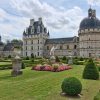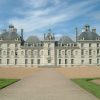

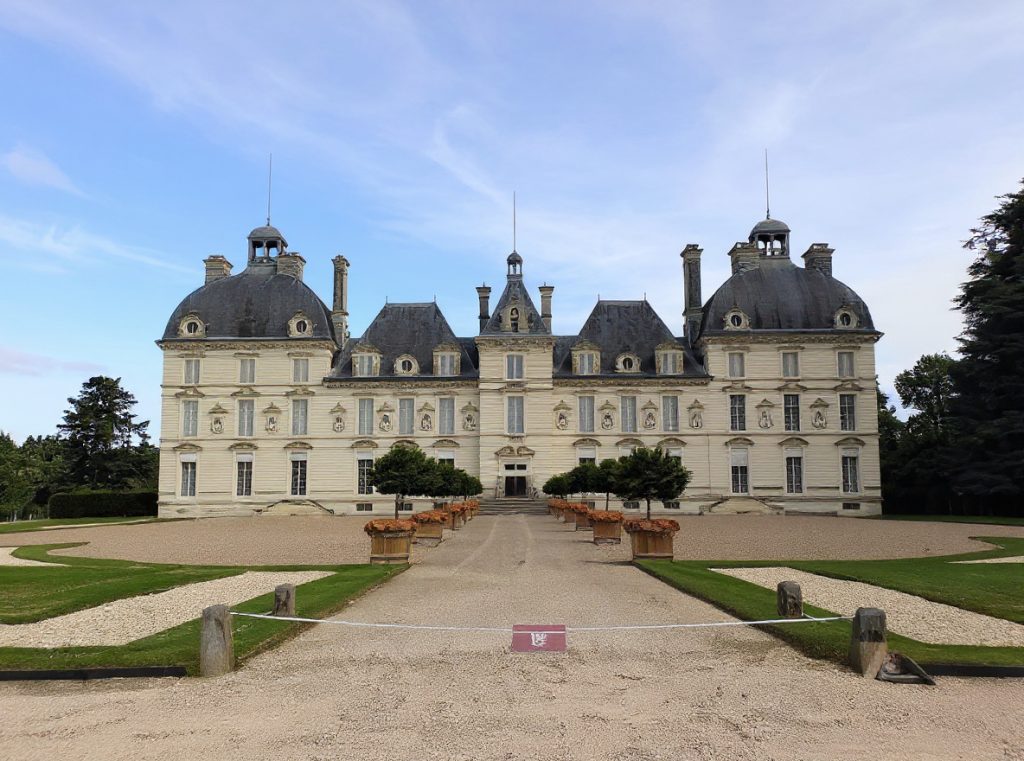
Builders raised Château de Cheverny from luminous white Bourré stone, creating a perfect example of French classical architecture in the Loire Valley. The estate has remained in the same family for over six centuries. This continuity allowed the family to preserve its original 17th-century character. Architect Jacques Bougier designed this symmetrical residence between 1625 and 1634. Henri Hurault and his wife Marguerite Gaillard de la Morinière commissioned a modern home to replace a medieval fortress. The château opened to visitors in 1922 and still serves as the family residence of the de Vibraye descendants today.
Plan your visit to Château de Cheverny
Location of Château de Cheverny
Château de Cheverny sits in the commune of Cheverny in the Loir-et-Cher department, within the Centre-Val de Loire region. The estate lies about 15 kilometres south of Blois and 20 kilometres from the larger Château de Chambord. Visitors arriving from Paris travel approximately two hours by car via the A10 motorway, then regional roads through the Sologne countryside. The château stands on the Avenue du Château in the village centre. Travellers can easily reach it from surrounding Loire Valley towns. Free parking awaits guests near the entrance, and the site welcomes visitors every day of the year without advance booking.
History of Château de Cheverny
Jean Hurault purchased the land in 1392, establishing his noble family’s connection to this site. The Huraults served the Dukes of Orléans and later French kings as financiers and military officers. Diane de Poitiers, mistress of Henri II, briefly owned the property in the 16th century while she oversaw construction at Château de Chenonceau. Philippe Hurault bought back the estate and built the current château.
Henri Hurault, Comte de Cheverny, began construction in 1625 after his wife Marguerite demolished the existing Renaissance fortress. Jacques Bougier created a design that signalled the emerging Louis XIII classical style, with rigid symmetry softened by contrasting roof elements. These elements included domes and bell towers. Craftsmen used stone from the Bourré quarries, which hardens and whitens with age. Artist Jean Mosnier painted interiors, while Gilles Guérin carved sculptures. Cabinetmaker Hevras Hammerber crafted woodwork. The family completed the residence in 1634.
The château passed through Hurault hands for the next century and a half. After the French Revolution stripped the family of much wealth, they sold the estate around 1802. Anne-Victor-Denis, Marquis de Vibraye and Hurault descendant, reclaimed the ancestral property in 1825. His great-nephew Philippe de Vibraye made history in 1922 when he opened Cheverny to the public. It became among the first private châteaux in France to share its heritage with visitors. The estate survived both world wars without damage. Its peaceful history preserved original furnishings and decoration.
Current status
Charles-Antoine and Constance de Vibraye own and operate the estate today, living with their family in the right wing. The National Heritage foundation manages the château, which receives about 350,000 guests annually. Seventeen rooms display original 17th-century furniture, tapestries from the Gobelins workshops, and paintings including works from the school of Raphael. The King’s Bedchamber retains its authentic oak ceiling from 1630. Other apartments showcase Empire-style decoration commemorating Napoleon’s Egyptian campaigns.
Six themed gardens surround the château, including a French-style orchard created in 2020. The 100-hectare park features an English landscape design with formal elements. A permanent exhibition explores how Hergé used Cheverny as inspiration for Marlinspike Hall in The Adventures of Tintin comics. The estate maintains a working kennel with hunting hounds, continuing a tradition the Marquis de Vibraye established in 1850. Visitors explore interiors, stroll through gardens, watch feeding demonstrations, and enjoy seasonal events throughout the year.
The château opens daily from 10:00 to 17:00 in winter months, with extended hours in summer. Visitors can purchase admission tickets on-site. These tickets grant access to various combinations of château rooms, gardens, and special exhibitions. This living monument demonstrates how a noble family adapted their ancestral home to modern tourism while preserving centuries of history within its luminous white walls.
Castles near Château de Cheverny
Frequently asked questions
What ticket includes at Château de Cheverny?
The standard €15.50 adult ticket includes the furnished château interior, six themed gardens, and the dogs' feeding ceremony at the kennels. Add €5 for the Tintin exhibition, which extends the visit to around 2 hours 15 minutes.
Is Château de Cheverny open in winter?
Yes, the château is open every single day of the year including Christmas Day, New Year's Day, and 1 May. Winter hours (October–March) are 10:00–17:00; the château is heated during winter months.
How do I get to Château de Cheverny from Paris?
Take a train from Paris Austerlitz to Blois-Chambord station (approximately 1.5 hours). From Blois, bus line 4 runs to the château (€3.20, limited departures) or take a taxi (around €25, 20 minutes).
What is the connection between Château de Cheverny and Tintin?
The château inspired Hergé's Moulinsart Hall (Marlinspike Hall) in the Tintin comics. A permanent 700 m² exhibition called 'The Secrets of Marlinspike Hall' is housed on the estate and can be visited with an upgraded ticket.
Can I combine Château de Cheverny with other Loire châteaux?
Yes, Cheverny is 15 km from both Château de Chambord and Blois, making it easy to visit multiple sites in one day. The Cheverny–Chambord cycle route is a popular 15 km ride through the Loire Valley.
Popular right now
Featured listings