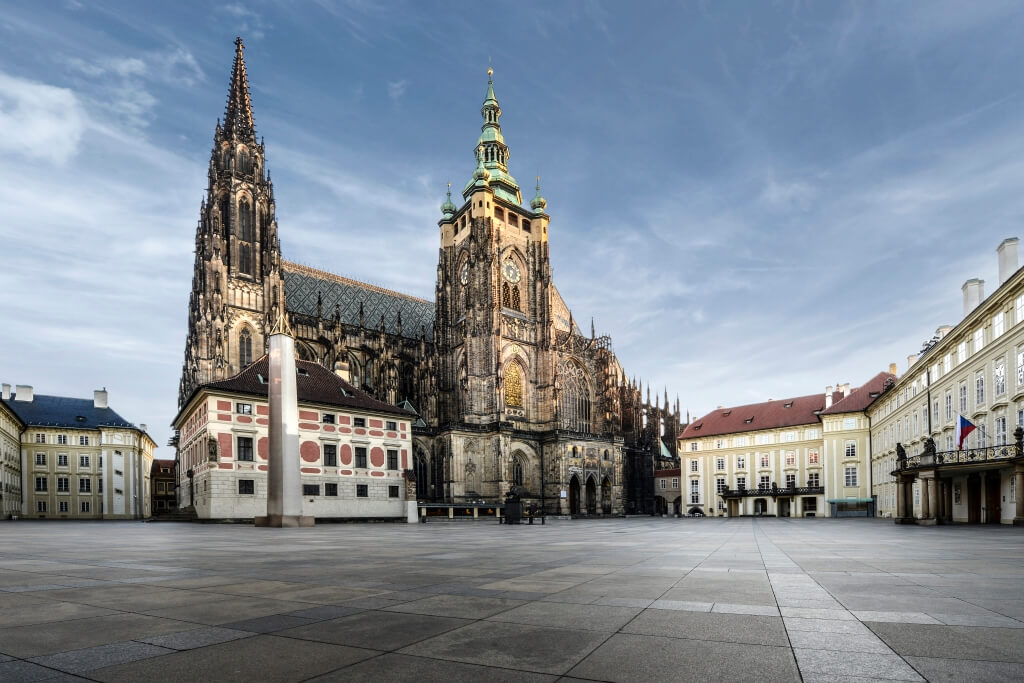
The Largest Castles in Europe: Monumental Fortresses That Defined Power
Europe’s grandest castles command attention not just through their beauty, but through their sheer scale. These vast complexes sprawl across hilltops and riverbanks, their walls enclosing entire districts of courtyards, palaces, churches and gardens. Built by emperors, kings and archbishops who ruled over territories stretching across continents, these fortresses needed size to match their owners’ ambitions.
What Are the Largest Castles in Europe by Area?
The largest castle in Europe is Prague Castle in the Czech Republic, covering approximately 70,000 square metres and holding the Guinness World Record as the largest ancient castle complex in the world. Other contenders for Europe’s largest castles include Windsor Castle in England, Malbork Castle in Poland and the sprawling complex of Buda Castle in Hungary, each covering tens of thousands of square metres.
The definition of “largest” depends on how you measure. Some castles cover massive ground areas within their walls, whilst others tower vertically with layer upon layer of fortifications. The truly vast medieval complexes often served as administrative centres for entire kingdoms, containing not just defensive structures but entire communities within their boundaries.
Prague Castle: A Royal City Within Walls
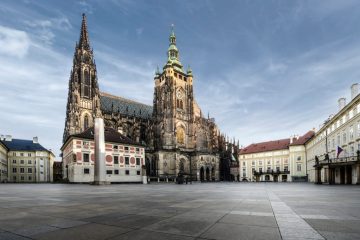
When Bohemian princes established their seat of power above the Vltava River in the ninth century, they began building what would become the world’s largest castle complex. Prague Castle evolved over more than a thousand years into a sprawling compound that housed kings, emperors and presidents. The complex includes Gothic St Vitus Cathedral, the Old Royal Palace, the Romanesque Basilica of St George, and the charming Golden Lane with its tiny medieval houses.
Today you can wander through centuries of architectural history within these walls, from Romanesque foundations to Baroque palaces. The castle remains the official residence of the Czech president, though large sections open to visitors who come to explore its museums, galleries and gardens. The changing of the guard ceremony draws crowds who gather in the vast courtyards, giving a sense of the enormous scale of this complex that essentially forms its own district overlooking Prague’s old town.
Windsor Castle: The Longest-Occupied Royal Fortress
William the Conqueror chose a chalk hill above the Thames in the 1070s for a motte-and-bailey fortification that would grow into the world’s largest inhabited castle. Windsor Castle has a floor area of about 45,000 square metres and has served as a royal residence for nearly a millennium. The castle’s footprint encompasses St George’s Chapel, where many English monarchs are buried, the State Apartments with their Baroque ceilings and Renaissance art, and the Round Tower that dominates the skyline for miles around.
The castle’s size reflects its dual role as fortress and palace. Entire sections were rebuilt and expanded by different monarchs over the centuries. Visitors today walk through rooms still used for state occasions, and the scale of the complex becomes clear when you realise it takes hours to properly explore just the publicly accessible sections of this working royal residence.
Malbork Castle: The Teutonic Knights’ Red Brick Colossus
The Teutonic Knights transformed their fortress on the banks of the Nogat River into the administrative heart of a crusading state. Malbork Castle became the world’s largest brick castle. The complex divides into three sections: the High Castle with its monastery and chapel, the Middle Castle containing the Grand Master’s Palace, and the Lower Castle with workshops and stores that supplied the entire order.
The castle’s size reflected the Teutonic Knights’ ambitions as rulers of Prussia. They needed space for their military headquarters, administrative offices, treasury and living quarters for hundreds of knights and servants. Today’s visitors discover a meticulously reconstructed complex following wartime damage, with vast halls like the Grand Refectory where knights dined beneath stunning vaulted ceilings, and corridors that seem to stretch endlessly through this red brick fortress that once served as the centre of the Teutonic Order’s administration.
Buda Castle: A Palatial Complex Above the Danube
The limestone plateau overlooking the Danube became home to a vast royal complex. Buda Castle sprawls across Castle Hill, its Baroque palaces combining with medieval fortifications to create an extensive complex. The castle district includes not just the royal palace but an entire neighbourhood of churches, townhouses and government buildings that formed the heart of the Hungarian kingdom.
What makes Buda Castle remarkable is how it combines defensive strength with palatial elegance across its vast area. The medieval walls still encircle the district, whilst the palace buildings contain multiple museums including the Hungarian National Gallery and the Budapest History Museum. Walking from one end of the castle district to the other takes considerable time, passing baroque squares, Gothic church ruins and viewpoints overlooking the Danube that reveal why Hungary’s rulers chose this hilltop for their seat of power.
Château de Versailles: When a Hunting Lodge Became a City
Louis XIV transformed a hunting lodge into one of the largest palace complexes in Europe, a deliberate display of absolute royal power. Château de Versailles grew to encompass vast palace buildings surrounded by extensive gardens. The Sun King moved his entire court here, creating a self-contained world where thousands of courtiers, servants and officials lived within the palace precincts, entirely dependent on royal favour.
The scale of Versailles served a political purpose: overwhelming visitors with French grandeur whilst keeping the nobility close and controllable. The palace’s endless galleries, including the famous Hall of Mirrors, demonstrated that France possessed resources to spend on beauty as well as war. Today’s visitors struggle to see everything in a single day, from the royal apartments to the Grand Trianon to Marie Antoinette’s hamlet, each section revealing how this vast complex functioned as both palace and propaganda.
Hohensalzburg Fortress: The Alps’ Largest Medieval Stronghold
Perched high above Salzburg on Festungsberg hill, Hohensalzburg Fortress grew over the centuries into one of Europe’s largest and best-preserved medieval castles. The prince-archbishops of Salzburg expanded the fortress because they ruled as both spiritual and temporal lords over a territory bordering Bavaria.
The fortress’s size allowed defenders to stockpile supplies for extended resistance. Within its walls you’ll find state rooms decorated with late Gothic woodwork, torture chambers, military museums and the Golden Hall, the archbishops’ grand festive hall. The complex includes everything needed for self-sufficiency: wells, granaries and arsenals. Its bulk dominates Salzburg’s skyline, a reminder that medieval power required not just defensive strength but the ability to house entire administrative and military establishments within protected walls.
Alhambra: A Moorish Palace City in Granada
The Nasrid rulers created their stronghold above Granada, building a palace-fortress complex of remarkable scale. The Alhambra combined military fortifications like the Alcazaba citadel with exquisite palace buildings where water, light and geometry created spaces of extraordinary beauty. The complex functioned as a self-contained city with mosques, baths, gardens, workshops and housing for thousands of courtiers and soldiers.
What makes the Alhambra remarkable among Europe’s largest castles is how its scale serves aesthetic as well as defensive purposes. The Court of the Lions, the Hall of the Ambassadors and the Generalife gardens each occupy substantial areas, creating a progression through different zones that takes hours to experience fully. The fortress walls encircle the hilltop, enclosing a complexity of buildings that represent the final flowering of Islamic Spain.
Practical Tips for Visiting Europe’s Largest Castles
These vast castle complexes require planning to see properly. Most visitors need several hours to explore the main sections, and you could easily spend a full day at places like Prague Castle or Versailles. Arrive early in the morning to avoid crowds, particularly during summer, and check the castle websites for special opening times or areas that may be closed for state functions. Wear comfortable shoes because you’ll cover several kilometres walking through courtyards, up staircases and along ramparts.
Consider focusing your visit on specific sections rather than rushing to see everything. Prague Castle allows you to choose different ticket circuits, while at Windsor Castle it pays to check the calendar, as St George’s Chapel is closed to visitors on Sundays and the State Apartments can close for royal events. If you’re visiting multiple large castles in one region, like combining Malbork with the Royal Castle in Warsaw or visiting both Windsor and the Tower of London, allow separate days rather than trying to see two major complexes in one trip. Autumn and spring offer the best balance of decent weather and manageable crowds for these popular sites.
Frequently asked questions about largest castles in europe
Which European castle has the largest floor area?
Prague Castle holds the Guinness World Record as the largest ancient castle complex, covering approximately 70,000 square metres of buildings and grounds. Windsor Castle is the largest castle in the world that is still lived in, with a floor area of about 45,000 square metres.
How long does it take to tour the largest castles?
Most visitors need several hours for a thorough visit to Europe’s largest castle complexes, though you could easily spend six to eight hours at sites like Versailles or the Alhambra if you include the gardens. Prague Castle typically requires half a day to see the main sections without feeling rushed.
Were these large castles ever captured in battle?
Rarely by direct assault, as their size made them hard to storm. Malbork was handed over to the Polish king in 1457 by unpaid mercenaries, while Swedish troops seized Prague Castle in a surprise attack in 1648 and carried off much of its art collection.
Can you stay overnight in any of Europe’s largest castles?
Windsor Castle remains a working royal residence so overnight stays aren’t possible, but some sections of large castle complexes like Buda Castle have hotels nearby or within the castle district. The size of these fortresses means accommodation often exists within or immediately adjacent to the castle walls, particularly in places where the castle forms an entire district rather than a single building.