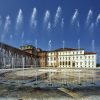
The town of Venaria Reale sits on the outskirts of Turin, where the Palace of Venaria stretches across one of the largest royal residences in Europe. Duke Charles Emmanuel II of Savoy commissioned this grand complex in 1658 as a hunting base in the heathlands north of Turin. He renamed the area Venaria from the Latin Venatio Regia, meaning “Royal Hunt.” Construction officially began in 1659 under architect Amedeo di Castellamonte and ended in 1675. The palace suffered structural damage during the French Siege of Turin, though it survived. Today this UNESCO World Heritage Site spans 80,000 square meters with 60 hectares of gardens. It exemplifies Baroque art at its finest.
Plan your visit to Palace of Venaria
Tue–Fri 09:30–17:00
Sat–Sun 09:30–18:30
Location of Palace of Venaria
The palace sits in Venaria Reale, near Turin in the Metropolitan City of Turin within the Piedmont region of northern Italy. Visitors will find it at Piazza della Repubblica 4, 10078 Venaria Reale, approximately 10 kilometers from Turin’s center. Public transport options include the Torino Dora-Ceres railway line to Venaria station on Viale Roma. GTT buses 72, 11, and VE1 also serve the palace, while bus 11 departs from Porta Nuova station for a 46-minute journey. The palace complex forms part of the Circuit of Royal Residences that surrounds Turin. From Piazza della Repubblica, the monumental Clock Tower provides the main entrance into the palace grounds. The surrounding landscape offers dramatic views of the snow-capped Alps beyond the extensive gardens.
History of Palace of Venaria
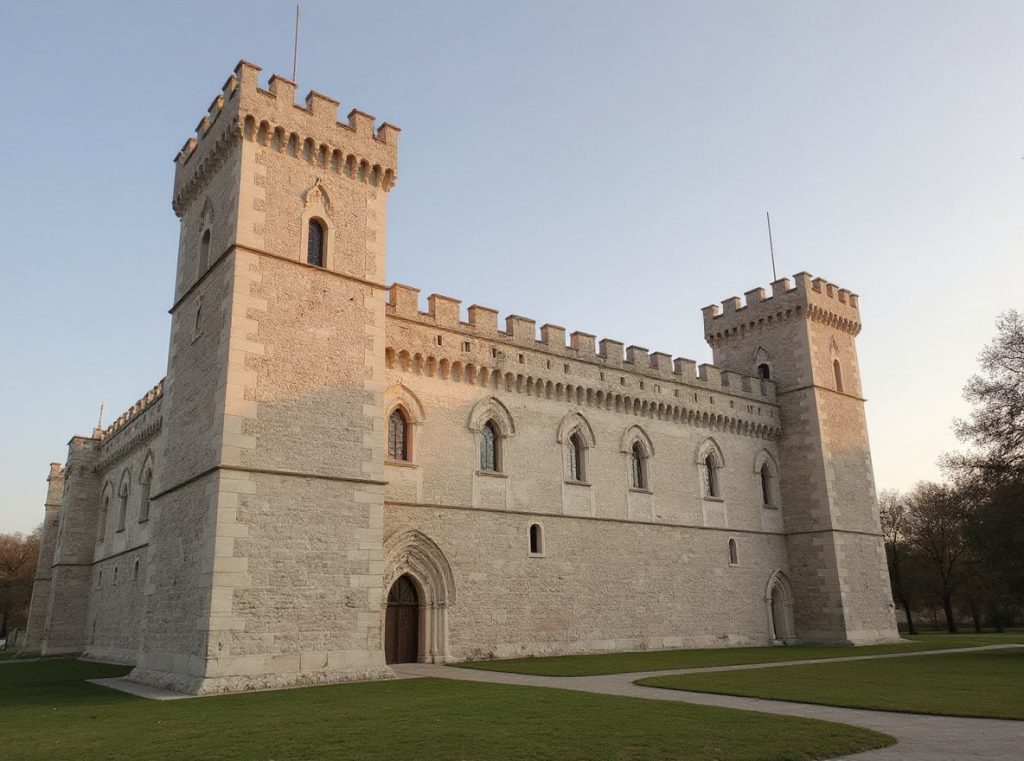
Duke Charles Emmanuel II envisioned a splendid hunting lodge as part of a grander scheme called the Garland of Delights. This series of luxurious residences and hunting lodges would encircle Turin. Architect Amedeo di Castellamonte began work in 1659 when he created the initial structure known as the Palace of Diana. The palace expanded with pavilions, a grand façade, and landscaped gardens. Its opulent Baroque decorations reflected the power and prestige of the House of Savoy. Starting in 1699, architect Michelangelo Garove received the project to build an even more grandiose palace. After the Savoyard victory, Victor Amadeus II entrusted Filippo Juvarra in 1716 to enlarge it further. The façades received renovation in the French style, transforming the palace into a Baroque masterpiece. Architect Benedetto Alfieri later demolished the old clock tower and rebuilt it in 1739. He erected the Belvedere wing in 1751, then added galleries, stables, and indoor riding halls through 1761. Despite these enhancements, the palace gradually declined in prominence during the late 1700s. It ceased functioning as a royal residence during the Napoleonic period. Napoleon’s arrival led to the palace’s conversion into military barracks in the early 19th century. Workers leveled the gardens to create a square for military exercises. After military forces left in 1978, minimal upkeep occurred until major restoration began in 1996.
Current status
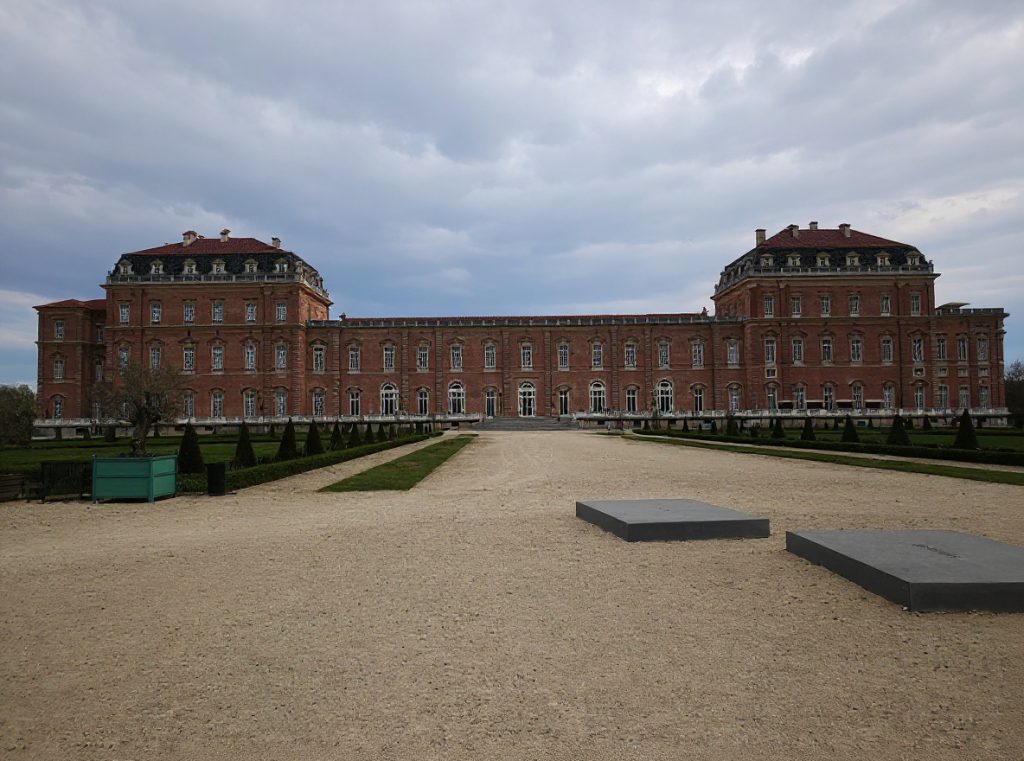
The palace reopened to the public in October 2007 after completing the European Union’s largest cultural restoration project to date. After two centuries of neglect and decay and eight intense years of restoration, La Venaria Reale has become one of Italy’s five most visited cultural sites. The palace received 1,048,857 visitors in 2017, making it the sixth most visited museum in Italy. The monumental palace now showcases universal Baroque treasures including the elegant Hall of Diana designed by Amedeo di Castellamonte. Visitors also see the solemn Great Gallery and the Church of St. Uberto. Today it hosts a permanent display, major exhibitions, artistic performances, concerts, conferences, and entertainment programs. UNESCO declared La Venaria Reale part of World Heritage, so it anchors the Circuit of Royal Residences of Piedmont. The palace connects to Turin’s Museum District. It operates Tuesday through Friday from 9:30 AM to 5:30 PM, extending to 7:00 PM on weekends and holidays. Beyond its museum functions, the complex continues to evolve as a cultural destination. Visitors explore rooms where Savoy monarchs once lived, walk through restored gardens, and experience the grandeur that once defined European royal power.
Castles near Palace of Venaria
Frequently asked questions
How much does it cost to visit the Palace of Venaria?
The 'All in a Palace' ticket (palace, gardens and exhibitions) costs €25 for adults. Reduced tickets are €10 for visitors aged 6–20 and students under 26, and children under 6 enter free.
What can I see at the Palace of Venaria?
The palace includes lavishly decorated Baroque state apartments, the Diana Gallery, and the Juvarra stables. The formal French gardens feature geometric parterres, the Fountain of the Stag, and contemporary art installations.
How do I get to the Palace of Venaria from Turin city centre?
Take the Venaria Express shuttle bus from Piazza Castello or Piazza Vittorio Veneto (about 40 minutes). Alternatively, take the SFM train from Porta Susa to Reggia di Venaria station (13 minutes), then walk 10 minutes to the palace entrance.
Is the Palace of Venaria open on Mondays?
No, the palace is closed on Mondays. It is open Tuesday to Friday 09:30–17:00 and Saturday to Sunday 09:30–18:30, with ticket offices closing one hour before.
Should I book tickets for the Palace of Venaria in advance?
Yes, advance booking is recommended, especially at weekends, to secure your preferred time slot. Tickets can be purchased online from the official website or at the entrance, subject to availability.
Popular right now
Featured listings