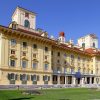
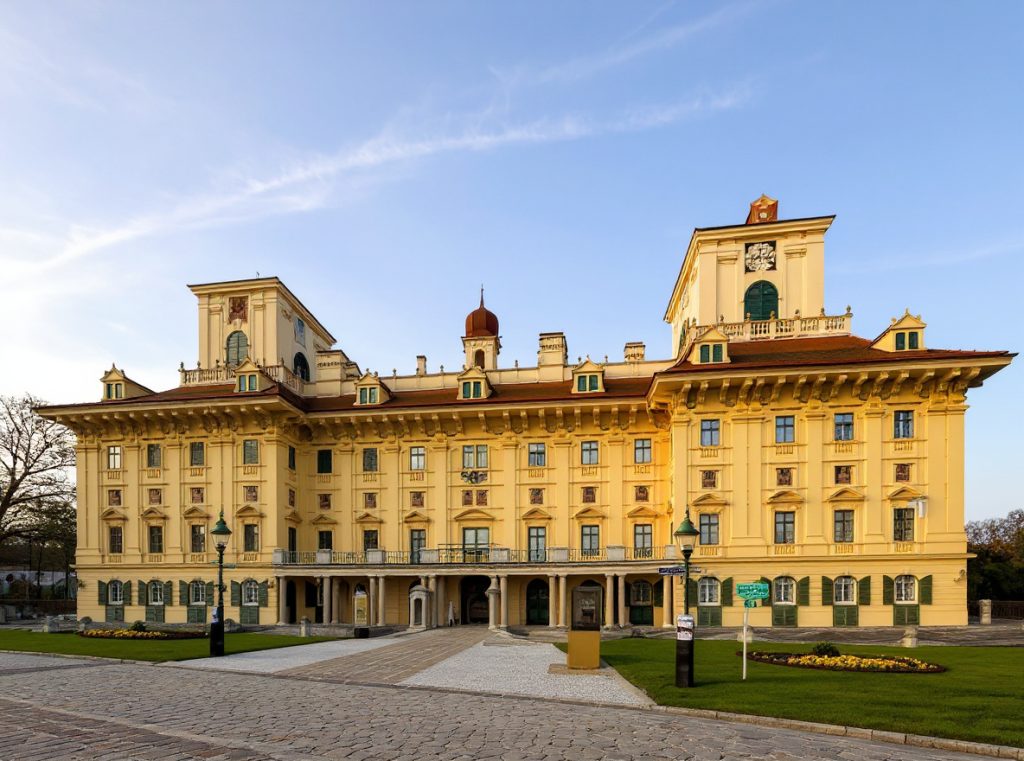
Esterházy Palace Eisenstadt commands the heart of Austria’s Burgenland capital with its grand Baroque facade and centuries of aristocratic heritage. Medieval builders originally raised the structure as a fortress in 1390. Successive architectural transformations evolved this fortified residence into one of Austria’s most magnificent Baroque palaces. For over three hundred years, the palace served as the principal seat of the powerful Hungarian Esterházy dynasty. The palace gained lasting cultural renown as the workplace of composer Joseph Haydn. He directed music here for four decades and premiered many of his masterworks in the acoustically celebrated Haydnsaal.
Plan your visit to Esterházy Palace Eisenstadt
Sat–Sun 10:00–16:00May–Sep daily 10:00–16:00; Apr & Oct Wed–Sun; Nov–Mar Sat–Sun only (Mon–Fri guided tours only in German)
Location of Esterházy Palace Eisenstadt
The palace sits prominently at Esterhazyplatz in central Eisenstadt, the capital city of Burgenland state. Eisenstadt lies approximately forty kilometers south of Vienna. This location makes the palace easily accessible from Austria’s capital. Visitors traveling by train can reach Eisenstadt Bahnhof, then walk fifteen minutes or take bus lines 281, 284, or 285 directly to the palace. Regional bus line 200 connects Vienna Central Station to Eisenstadt Esterházystraße, a five-minute walk from the palace entrance. The palace occupies a central position in the small city, surrounded by historic streets and parks. Behind the main building stretches an extensive landscaped park featuring an orangery, greenhouse, and the Leopoldinentempel. The location reflects the family’s strategic importance during Habsburg rule, when Eisenstadt marked a crucial border region between Austria and Hungary.
History of Esterházy Palace Eisenstadt
Medieval builders erected the original fortress on this site in 1390. They constructed defensive walls for protection during turbulent times. In 1364, the powerful Kanizsai family acquired the property and substantially developed it. King Louis I of Hungary purchased the castle in 1371. The estate changed hands again in 1622 when Nikolaus Esterházy gained control, pledging the property as security before his son Ladislaus formally purchased it from Emperor Ferdinand III in 1649. This acquisition proved decisive, as the Esterházy family retained ownership for over three centuries.
Prince Paul I Esterházy transformed the medieval fortress into a Baroque palace between 1663 and 1672. He commissioned Italian architect Carlo Martino Carlone to oversee the ambitious reconstruction. Carlone designed the main facade and central courtyard that define the palace today. Italian sculptor Andrea Bertinalli created decorative columns for the ground floor. The builders dug a four-meter-deep moat around the completed palace. Access came only via drawbridge. Paul I also established the Haydnsaal during this baroque phase, creating a ceremonial hall renowned for its acoustics.
Joseph Haydn entered the Esterházy service in 1761. This began an association that lasted until 1803. As chapel master and composer, Haydn composed and premiered numerous works at the palace. Prince Nikolaus I, an enthusiastic patron, promoted Haydn to musical director of all palace events. The composer found creative freedom under Esterházy patronage, though the family divided their time between Eisenstadt and their grander palace at Eszterháza. In the late eighteenth century, architects modified the Haydnsaal during a classicist reconstruction phase.
The nineteenth century brought further architectural changes. Prince Esterházy commissioned French architect Charles Moreau to redesign much of the palace in neoclassical style. Moreau left the central section unchanged, however.
Current status
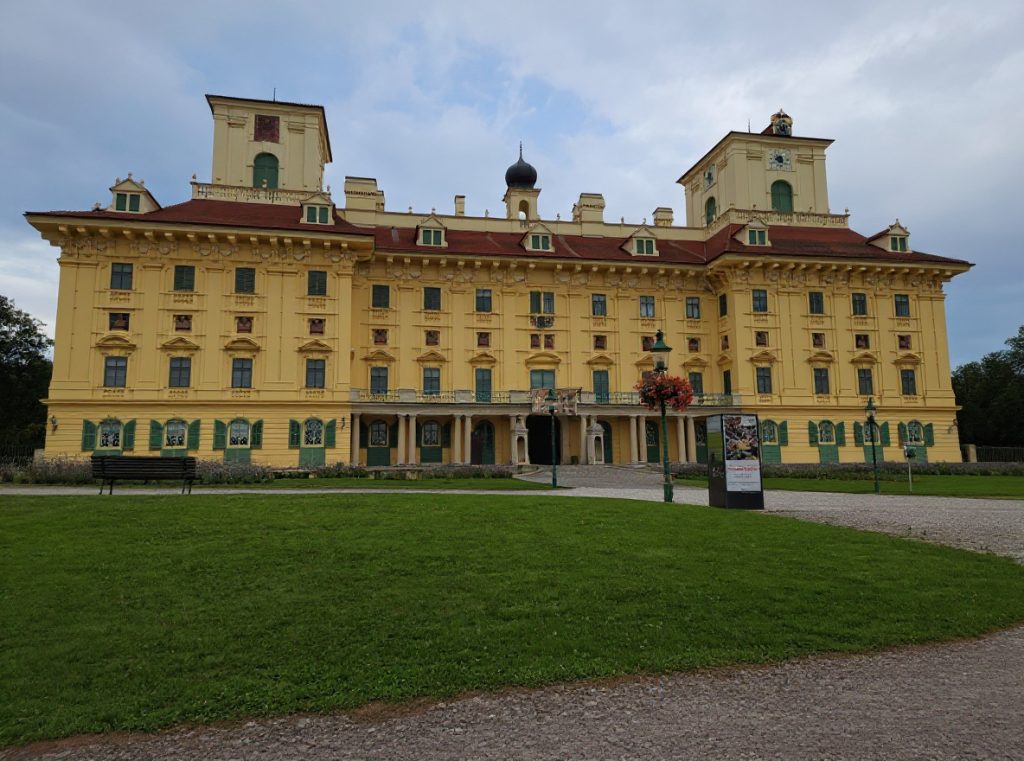
The Esterházy Foundation currently owns and manages the palace. Princess Melinda Esterházy established the foundation before she died in 2014. Schloss Esterházy Management GmbH operates the day-to-day visitor services and cultural programming. The palace opens daily from 10:00 AM to 4:00 PM, welcoming tourists to explore its historic state rooms, exhibitions, and grounds. Between 1969 and 2009, the Burgenland state government leased large portions of the building, though this arrangement has since concluded.
Visitors can tour approximately seven rooms showcasing palace history and aristocratic life. Some of the 256 total rooms house provincial government offices, however. The ground floor hosts “Haydn explosiv,” a multimedia exhibition tracing the composer’s genius from his Eisenstadt beginnings through his late works. The first floor features the exhibition “Highlights of Esterházy Palace.” This exhibition displays treasures including the world’s largest surviving neoclassical silver tableware service. The palace also contains Austria’s largest wine museum, celebrating the region’s viticultural traditions.
The Haydnsaal remains the palace’s crown jewel. It has hosted over one hundred concerts annually since 2017. The Classic.Esterházy series and Herbstgold festival blend classical music with jazz, Balkan sounds, gastronomy, and wine. The palace chapel, decorated with frescoes and containing relics of St. Constantine, exemplifies the family’s Catholic devotion and political influence. The historic park behind the palace offers peaceful walks among baroque plantings, eighteenth-century grottoes, fountains, and the Leopoldinentempel containing a Canova sculpture.
Golden light filters through tall windows into rooms where princes once governed and Haydn’s music first echoed. The palace functions as both museum and living cultural venue. Its yellow Baroque walls shelter centuries of artistic achievement and aristocratic memory in the heart of Burgenland.
Castles near Esterházy Palace Eisenstadt
Frequently asked questions
What are the opening hours of Esterházy Palace Eisenstadt?
From May to September the palace is open daily 10:00–16:00. In April and October it opens Wednesday to Sunday, and from November to March only on Saturdays, Sundays and holidays (weekday visits require joining a guided winter tour in German).
How much are tickets to Esterházy Palace Eisenstadt?
Adult admission is €19 for a self-guided palace ticket or €25 with a guided tour. Reduced tickets (seniors, students) are €16 or €21 with a tour; a family ticket (2 adults and up to 3 children) costs €44 or €60, and children under 6 enter free.
What is the Haydn Hall at Esterházy Palace Eisenstadt?
The Haydn Hall is a Baroque concert hall within the palace, famous for its exceptional acoustics. Composer Joseph Haydn worked at Esterházy Palace for 30 years and regularly performed in this hall, which remains a venue for concerts today.
Can I visit Esterházy Palace Eisenstadt without a guided tour?
Yes, from May to September you can visit the palace independently any day. In April and October self-guided visits are possible Wednesday to Sunday, and from November to March only on weekends; weekdays in winter are guided-tour-only.
How do I get to Esterházy Palace Eisenstadt from Vienna?
Direct trains depart hourly from Vienna Hauptbahnhof to Eisenstadt and take about 1 hour. From Eisenstadt station the palace is a 15-minute walk, or you can take a local bus to Eisenstadt Domplatz closer to the palace.
Popular right now
Featured listings