Commanding a limestone hill above the Czarna Przemsza River, Będzin Castle rises as one of southern Poland’s most striking medieval fortresses. The stone castle became operational as early as 1348, though a wooden fort existed on the site from the 11th century. The Tatar invasion destroyed that wooden fort in 1241. King Kazimierz the Great built the stone fortress to secure the Polish-Czech border and protect the vital trade route from Kraków to Wrocław. The fortress stands today as a vivid reminder of medieval military architecture. It also shows the strategic importance of this border region.
Plan your visit to Będzin Castle
Tue 10:00–17:00
Wed 09:00–17:00
Thu 12:00–18:00
Location of Będzin Castle
Będzin Castle sits in the town of Będzin in southern Poland, approximately 30 kilometers from Katowice. The castle occupies a hill overlooking the left bank of the Czarna Przemsza River. Visitors can reach Będzin by rail or road from major cities in the Silesian region. The castle’s hilltop position offers panoramic views across the surrounding Dąbrowa Basin. The fortress anchors the historic center of Będzin, with the castle hill connected to the medieval town below. Its elevated site made it visible for miles. As a result, it warned potential invaders of the defensive strength protecting this frontier.
History of Będzin Castle
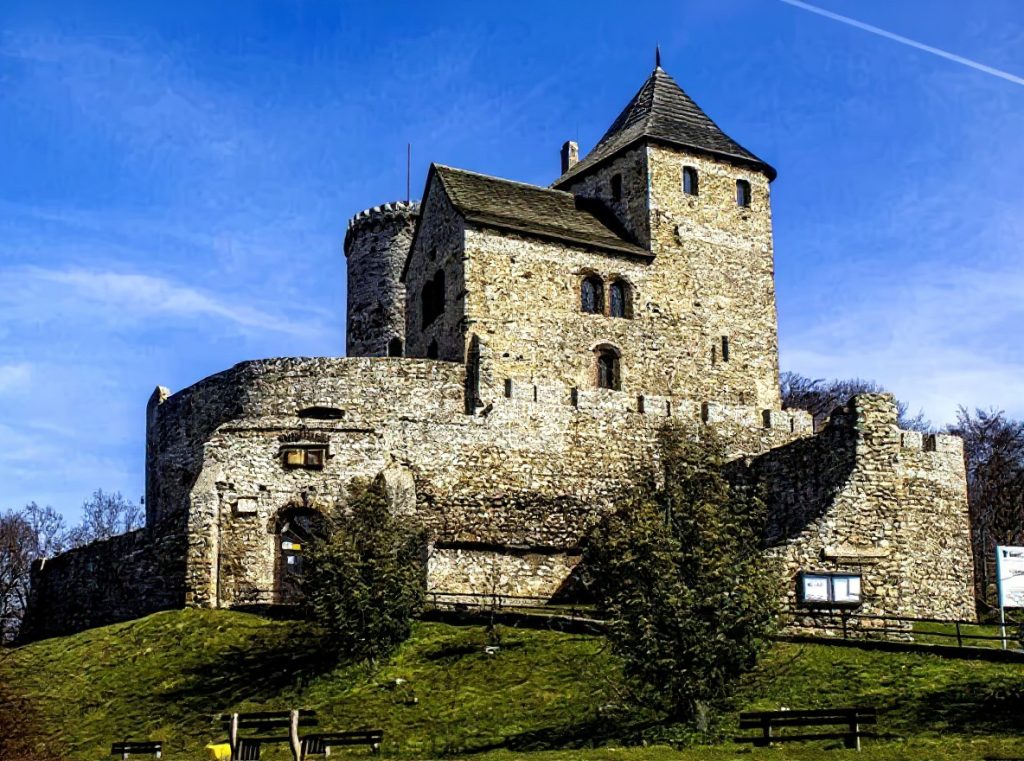
Records first mention the castle in 1301 and 1349, when a burgrave named Wiernek held the position. The castle served as a military outpost on the southwestern border of the Kingdom of Poland. It formed the westernmost fortification meant to hold off invasions from Bohemian or Silesian lands into Lesser Poland. Charles IV, Holy Roman Emperor, visited the castle in 1364. In 1448, King Kazimierz granted Będzin to Piotr Szafraniec, the subcamerarius of Kraków. In 1588, guards held Maximilian III, Archduke of Austria, prisoner here after his defeat in the War of the Polish Succession. That same year, the castle hosted negotiations between Holy Roman Empire and Polish envoys. These talks led to the 1589 Bytom-Będzin pact that confirmed Sigismund III Vasa as Poland’s lawful king. The castle fell into disrepair in the late 16th century. A fire in 1616 and damage during The Deluge in 1657 caused further destruction. After the partitions of Poland, Będzin came under Prussian control. The Hohenzollern family then took ownership of the castle. In 1825, a piece of stone crushed a passerby, so officials ordered demolition. Authorities declared the castle a monument before workers began, though.
Current status
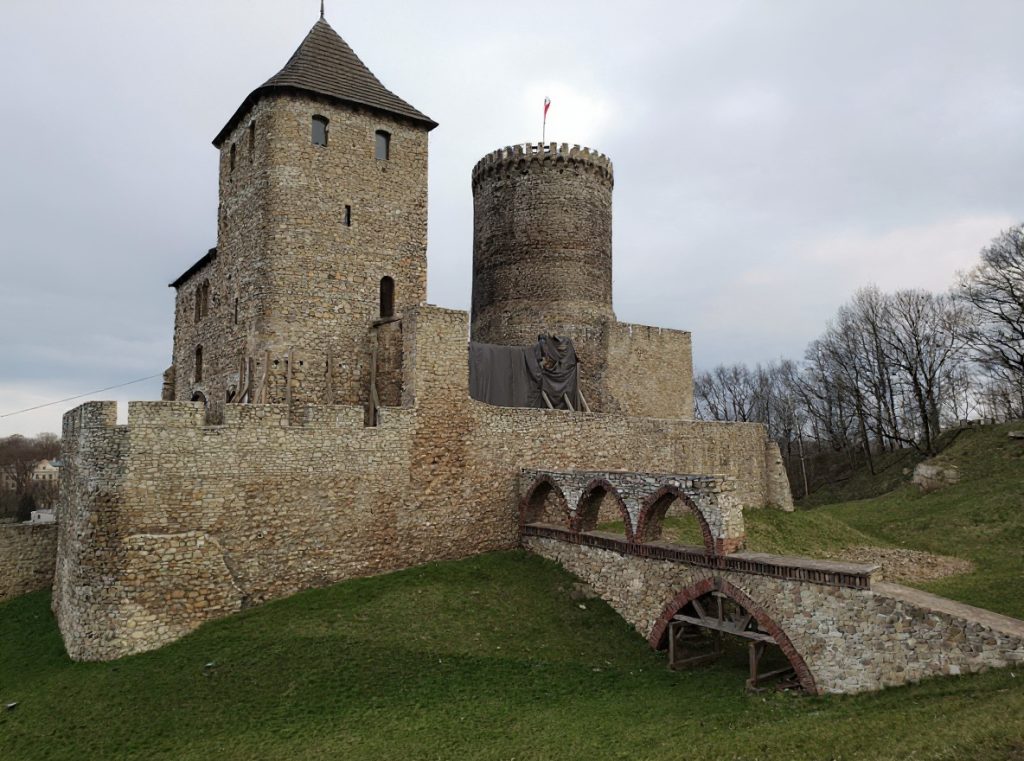
Local societies established the Zagłębie Museum in the castle in 1956. The museum opened to mark the 600th anniversary of Będzin receiving town rights. The museum houses several collections: armament from medieval to World War II times, the history of Będzin Castle, other castles founded by Casimir the Great on the Eagle Nests Trail, and the military history of the Będzin region. Two castle halls present weapons and armor development from the 16th century to the early 20th century. The castle welcomes visitors throughout the year, with exhibitions spread across multiple floors of the fortress. Beyond its role as a museum, the castle serves as a cultural venue for medieval reenactments and historical events. These events bring its turbulent past to life. The twin towers — one cylindrical, one square — remain the castle’s most recognizable features. They stand as symbols of resilience across seven centuries of Polish history.
Castles near Będzin Castle
Frequently asked questions
What can I see inside Będzin Castle?
The castle houses the Zagłębie Museum with permanent exhibitions of weaponry and armour from medieval times to the 20th century. The ground floor features exhibits on the history of Będzin from its origins to the 20th century.
Is entry to Będzin Castle free on certain days?
Yes, admission to the castle's permanent exhibitions is free on Wednesdays. On other days, tickets cost 25 zł for adults and 20 zł for reduced admission.
How do I get to Będzin Castle from Kraków?
From Kraków, take a train or bus to Katowice, then connect to a local train or bus to Będzin (total journey around 2 hours). Będzin Miasto station is a short walk from the castle.
Can I climb the tower at Będzin Castle?
During the summer season, visitors can access the tower's viewing point for panoramic views of the Zagłębie region. Check opening times as tower access may be seasonal.
What else is there to see near Będzin Castle?
Castle Hill forms a walking route with the nearby Będzin Underground tourist route and the town's medieval walls. The castle is also part of the Eagles' Nests Trail of medieval fortifications.
Popular right now
Featured listings