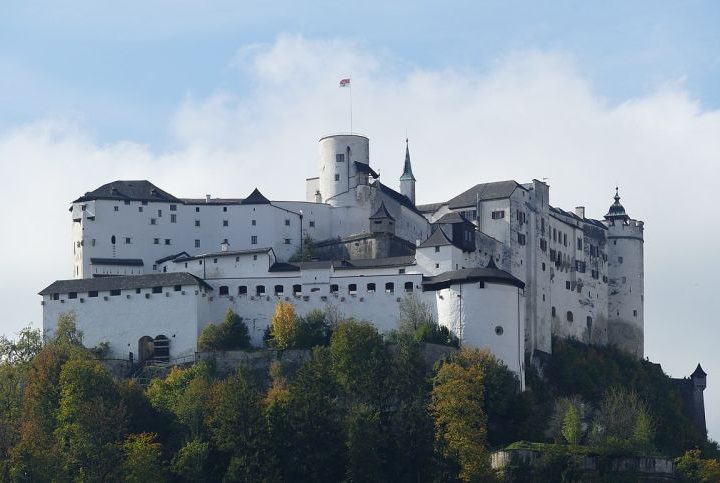
Fortress Hohensalzburg stands as one of the largest and best-preserved medieval castles in Europe. Your journey through this historic fortress will transport you back to a time of knights, archbishops, and grand architecture. Situated atop the Festungsberg hill, this imposing structure has been a symbol of power and resilience for centuries, offering a remarkable glimpse into the region’s storied past.
Plan your visit to Fortress Hohensalzburg
Can’t wait to visit the fortress? Book your Fortress Hohensalzburg tour online.
Location of Fortress Hohensalzburg
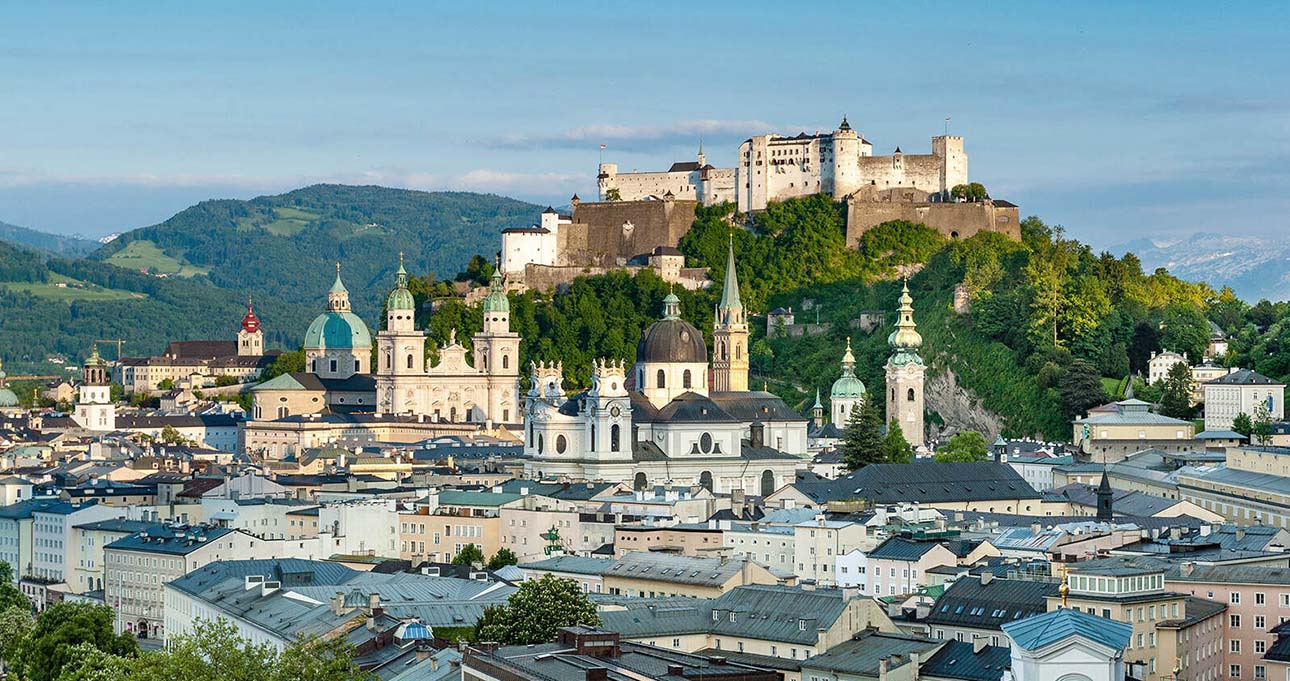
Fortress Hohensalzburg is strategically located in Salzburg, Austria. Perched majestically above the city, it commands stunning views of the surrounding landscape, including the Salzach River and the Alps. The fortress can be accessed via a funicular railway, which departs from the heart of Salzburg’s Old Town, or by a more traditional walking path that offers a scenic ascent. Its elevated position not only provided military advantages but also ensures that it remains a prominent landmark visible from various points within the city.
History of Fortress Hohensalzburg
Fortress Hohensalzburg’s history dates back to 1077 when Archbishop Gebhard von Helfenstein ordered its construction. Originally a refuge for the archbishop and a stronghold against threats, it has seen many expansions. In the late Middle Ages, it was significantly enlarged and fortified, showcasing the archbishops’ growing power and wealth.
Throughout the centuries, Fortress Hohensalzburg played a crucial role in regional conflicts and power struggles. It remained unconquered, a testament to its formidable defenses. During the Peasants’ War in the early 16th century, the fortress provided a safe haven for the archbishops. In the 17th century, the Thirty Years’ War saw further fortifications added, enhancing its military capabilities.
The 19th century brought about a shift in the fortress’s function. As military technology advanced and the political landscape of Europe evolved, Fortress Hohensalzburg’s strategic importance diminished. It transitioned into a symbol of cultural heritage, with efforts made to preserve and restore its historic structures. In the 20th century, it was used as a barracks and a prison during both World Wars, further embedding its significance in Austria’s history.
Current status
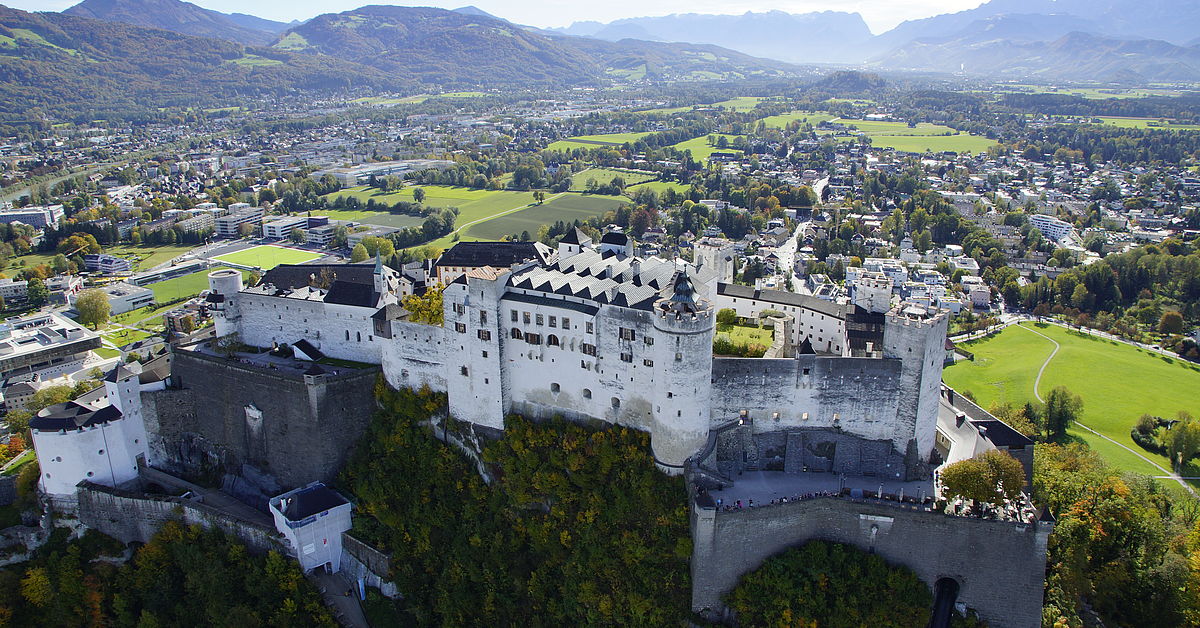
Today, Fortress Hohensalzburg stands as a major tourist attraction and a cultural treasure. Additionally, you will find that its well-preserved state offers a comprehensive look into medieval life and architecture. The fortress houses several museums, including the Fortress Museum, displaying artifacts about the fortress’s history and cultural heritage. Moreover, the Marionette Museum and the Rainer Regiment Museum offer insights into Salzburg’s artistic and military history.
The fortress encourages visitors to explore the various rooms and halls, such as the Golden Hall, the Golden Chamber, and the Chapel of Archbishop Leonhard von Keutschach. These areas showcase intricate Gothic and Renaissance architecture, along with stunning views of Salzburg and the surrounding mountains from the observation towers.
Fortress Hohensalzburg also hosts a variety of cultural events throughout the year. You will find that its historic ambiance provides a unique backdrop for concerts, exhibitions, and festive celebrations. The annual Salzburg Festival often includes performances held within the fortress, attracting visitors from around the world.
Castles near Fortress Hohensalzburg
Frequently asked questions
Is Fortress Hohensalzburg open year-round?
Yes, Fortress Hohensalzburg is open 365 days a year. However, the funicular undergoes maintenance in mid-January and early November, during which only the footpath and outdoor areas are accessible.
What is the difference between the Basic and All-Inclusive tickets for Fortress Hohensalzburg?
The Basic ticket (€15.50) includes the funicular, courtyards, museums and Panorama Tour. The All-Inclusive ticket (€19.20) adds the Princes' Rooms and Magic Theatre.
Can I walk up to Fortress Hohensalzburg instead of taking the funicular?
Yes, a steep footpath from Festungsgasse takes about 15–20 minutes. Footpath tickets are €3 cheaper and still include the funicular ride down.
Does the Salzburg Card cover Fortress Hohensalzburg?
Yes, the Salzburg Card includes one fortress visit and a return ride on the funicular. It also covers unlimited public transport in Salzburg.
How long does the Festungsbahn funicular take to reach Fortress Hohensalzburg?
The funicular covers 198.5 metres in 54 seconds. It runs every 10 minutes throughout the day during normal operating hours.
Featured listings