Perched atop a limestone crag high above the Argeș River valley, Poenari Castle commands one of the most dramatic defensive positions in the Romanian Carpathians. This ruined castle in Romania was a home of Vlad the Impaler, the historical figure behind the Dracula legend. The citadel is situated on top of a mountain and accessed by climbing 1,480 concrete stairs. Unlike the more famous Bran Castle, Poenari holds genuine historical ties to the 15th-century Wallachian prince who became Europe’s most feared ruler.
Plan your visit to Poenari Castle
Location of Poenari Castle
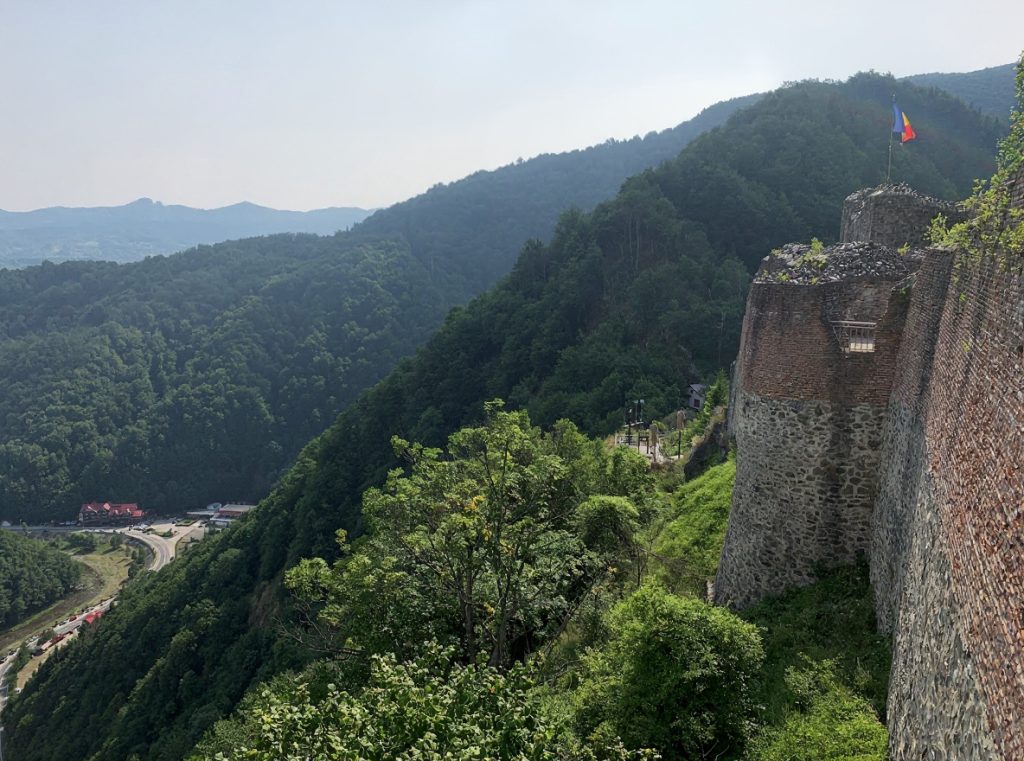
Poenari Castle sits in Arefu, Argeș County, Romania, roughly 100 miles northwest of Bucharest in the foothills of the Făgăraș Mountains. The castle is located on the right side of the Transfăgărăşan road in Argeş County, on a cliff near the Făgăraş Mountains. At an altitude of 850 metres, protected by steep slopes, the fortress was part of a chain of fortifications defending the northern border of Wallachia. Visitors must climb the 1,480 concrete steps through a beech forest to reach the summit—a journey that typically takes 30 to 45 minutes. The famous Transfăgărășan mountain highway, built in the 1970s, now passes directly below the castle crag, and the nearby Vidraru Dam created an artificial lake that has transformed the surrounding landscape since 1966.
History of Poenari Castle
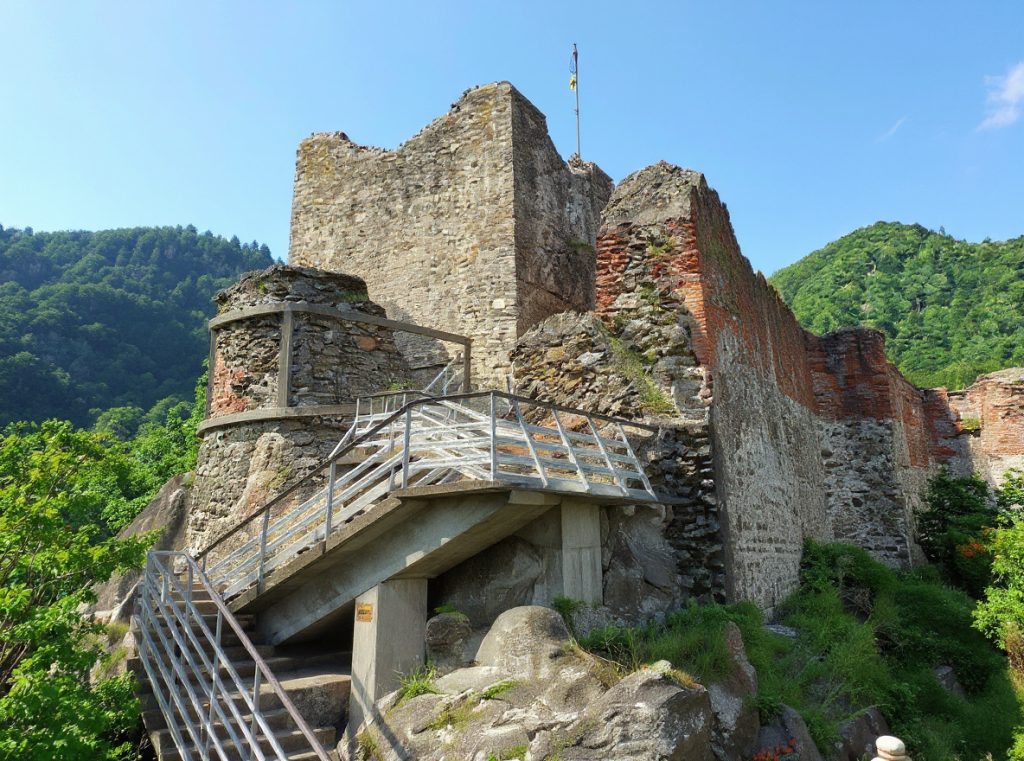
Before Poenari Castle was constructed in the mid-15th century, another castle around the same location was erected near the beginning of the 13th century by the Wallachians, called Castle Argeș. Around the 14th century, Poenari (then known as Castle Arges) was the main citadel of the Basarab rulers. Poenari is first documented in 1453, and in 1459, Vlad the Impaler repaired, enlarged, and consolidated the existing structure, turning it into one of his main fortresses. Chronicles record that Vlad forced captured boyars to rebuild the fortress, working them until their clothes fell to tatters. When reconstruction was completed, the castle had three towers and walls thick enough to withstand cannon fire. The fortress served both defensive and residential purposes for Vlad during his struggle against the Ottoman Empire. The 1462 Ottoman siege is the central event in Poenari’s history; Sultan Mehmed II besieged the fortress, yet Vlad escaped through the mountains to Transylvania. The fortress remained in use for many years after Vlad’s death in 1476, though Poenari Castle was eventually abandoned in the 16th century and left in ruins. Natural disasters compounded the decay: on January 13, 1913, a landslide caused by an earthquake brought down parts of the castle which crashed into the river far below, and earthquakes in 1913 and 1940 severely damaged the castle. The last restoration of the Poenari fortress was made between 1969-1972, when the walls were strengthened and access steps were built to allow the entire fortress to be visited.
Current status
Since 2009, the site has been administered by the Argeș County Museum, which manages the ruins as a protected historical monument of national importance. The castle was reopened to the public in 2025, and the site is managed by the Arges County Museum, featuring accurate information panels, following renovation work that closed the fortress to visitors for several years. The surviving ruins consist primarily of a large round tower, fragments of curtain walls, and partial floor-plan remains; approximately half the original perimeter was lost to the 1888 rockslide. The foundation and lower walls are built of medieval stone, while the upper sections display red brick that historians believe replaced stones shattered during sieges—none of which ever succeeded in taking the fortress by force. Though the castle stands in ruins, its position on the cliff remains as formidable as when Vlad chose this eagle’s nest for his stronghold. The climb rewards visitors with sweeping views across the Argeș valley and the Carpathian peaks, where the wind still whispers through walls that once sheltered one of history’s most controversial rulers.
Castles near Poenari Castle
Frequently asked questions
How many steps lead to Poenari Castle?
The castle is reached by climbing 1,480 concrete steps through forest from the parking area. The ascent takes most visitors 30–45 minutes at a steady pace.
Is Poenari Castle the real Dracula's castle?
Yes, Poenari was actually used as a fortress by Vlad III the Impaler (Vlad Țepeș) in the 15th century. Unlike Bran Castle, Poenari has a direct documented connection to the historical Vlad Dracula.
When is Poenari Castle open to visitors?
The castle is open Monday to Sunday, 09:00–16:00, with the last permitted ascent at 15:00. The site may close in winter or during bad weather, so check cetateapoienari.ro before visiting.
Can you drive directly to Poenari Castle?
No, you must park beside the DN7C Transfăgărășan road and climb 1,480 steps to reach the ruins. There is free parking at the base, but the fortress itself sits 200 metres above the valley floor.
What remains of Poenari Castle today?
The site is a partial ruin with remaining stone walls and tower bases visible on a clifftop ridge. Parts of the fortress collapsed into the Argeș River after an 1888 landslide.
Popular right now
Featured listings