
Lincoln Castle commands the skyline of England’s historic city from its dramatic hilltop position, where it has stood for almost a thousand years. William the Conqueror ordered its construction in 1068 on the site of a former Roman fortress. This makes it one of the earliest Norman castles built after the Conquest. The castle witnessed pivotal battles and served as a seat of justice for centuries. Today it houses one of only four surviving original copies of the 1215 Magna Carta. Visitors can walk the medieval wall walk, explore the Victorian prison, and experience the layers of English history preserved within its walls.
Plan your visit to Lincoln Castle
Location of Lincoln Castle
Lincoln Castle sits at Castle Square in Lincoln’s historic Cathedral Quarter, an area known locally as “uphill Lincoln”. The castle occupies a commanding position 60 metres above the surrounding countryside to the south and west. It offers sweeping views across the city and the Lincolnshire landscape. Its address is Castle Square, Lincoln, LN1 3AA. Lincoln Central train station lies in the city centre, a 20-minute walk or 10-minute drive from the castle. The location proved strategically vital because Ermine Street ran through it. This old Roman road connected London and York, while Fosse Way to the south-west also lay close by. Today the castle sits alongside Lincoln Cathedral. The famous cobbled Steep Hill and the independent shops of Bailgate stand just steps away.
History of Lincoln Castle
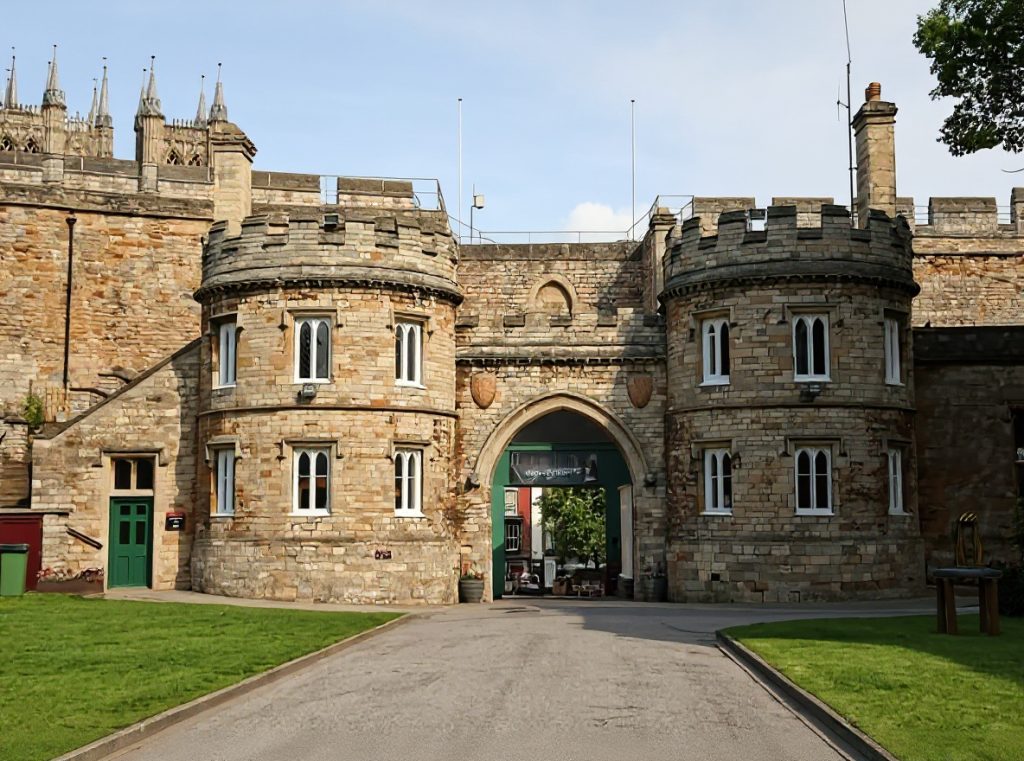
William the Conqueror ordered the castle’s construction in 1068, two years after his victory at Hastings. He built it as part of his campaign to control the rebellious north. The Normans raised their motte and bailey fortress on the site of Lindum Colonia. Builders reused the remaining stone walls of the original Roman city. The Domesday Book records that workers demolished 166 unoccupied residences to clear space for the castle. Lincoln Castle is highly unusual because it possesses two mottes. The only other surviving example of such a design stands at Lewes Castle. A fire destroyed much of the castle in 1113, so the original wooden structures gave way to stone construction after that.
The castle became a focal point during The Anarchy, the civil war of the 12th century. Forces loyal to King Stephen besieged it in 1141. Then Angevin and Welsh supporters of Empress Matilda attacked and decisively defeated Stephen’s troops in the First Battle of Lincoln. The castle faced siege again during the First Barons’ War, when the Second Battle of Lincoln took place in 1217. Nicola de la Haye, the castellan, held the fortress against French invaders and rebel barons. As a result, she secured the English Crown. The castle’s connection to Magna Carta began when one of the original 1215 exemplars came to Lincoln. This cemented its role in the history of liberty and justice.
By the late 18th century, authorities had repurposed Lincoln Castle as a prison and court. They constructed a three-storey stone prison building in 1787. Jailers kept prisoners in isolation like many late Georgian prisons did. In 1823, Sir Robert Smirke designed the majestic Lincoln Crown Court in Gothic Revival style. Workers built it within the castle walls.
Current status
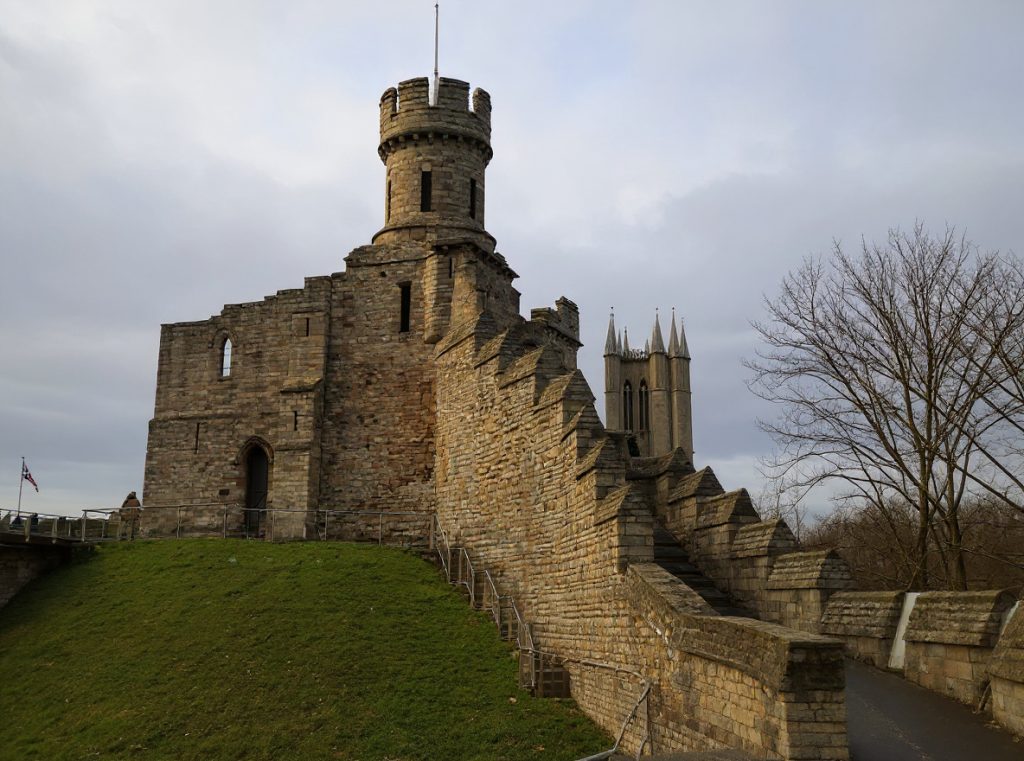
Lincolnshire County Council manages Lincoln Castle, which underwent a major £22 million restoration between 2010 and 2015. Heritage Lottery Fund, the European Regional Development Fund, the David Ross Foundation, and private donations supported this transformation. The castle now operates as a world-class heritage attraction. It opens to the public most days of the week. Visitors can walk the medieval wall walk, which offers 360-degree views of the cathedral, the city, and the countryside beyond. The Victorian prison, with its imposing chapel and exercise yard, provides insight into 19th-century penal practices.
The Magna Carta Vault displays one of only four surviving original copies of the 1215 charter. This makes Lincoln Castle a guardian of global liberty. The castle hosts special events, exhibitions, and concerts throughout the year. These include the popular Live at Lincoln Castle music series. Educational programmes bring school groups to explore everything from Norman architecture to Victorian justice. Archaeological excavations during the 2013 restoration uncovered an ancient Anglo-Scandinavian church three metres below ground. This discovery added yet another layer to the site’s rich history.
Lincoln Castle remains one of England’s best-preserved Norman fortresses. Stone walls rise from the foundations laid nearly a millennium ago. The Observatory Tower and Lucy Tower mark the skyline. The castle bridges past and present, where medieval stonework stands alongside working courtrooms. Visitors walk the same ramparts once patrolled by Norman soldiers. In later centuries, thousands gathered in the streets below to watch public executions from these walls.
Castles near Lincoln Castle
Frequently asked questions
What can I see at Lincoln Castle?
Lincoln Castle houses one of only four surviving 1215 Magna Carta copies, a Victorian prison with separate cells, and a complete medieval wall walk offering panoramic views across Lincoln. The castle grounds are free to enter.
How long should I spend at Lincoln Castle?
Allow 2 to 3 hours to walk the medieval wall, explore the Victorian Prison and see the Magna Carta vault. The castle grounds alone can be explored more quickly if you have limited time.
Do I need to book tickets for Lincoln Castle in advance?
Advance booking is not required for general admission, though you can book online. On special event days, only the Castle Day Ticket is available, and the Medieval Wall Walk ticket option is not offered.
Is Lincoln Castle accessible by public transport?
Yes, Lincoln Central train station is 20 minutes' walk from the castle, or take buses 7, 8, 17 or 18 from the city centre. Direct trains run to Lincoln from Nottingham, Sheffield, Leicester, Peterborough and London.
Are the castle grounds at Lincoln Castle free to visit?
Yes, the main grounds of Lincoln Castle are free to enter and open daily during regular hours. To access the Medieval Wall Walk, Victorian Prison and Magna Carta vault, you need to purchase a day ticket.
Popular right now
Featured listings