
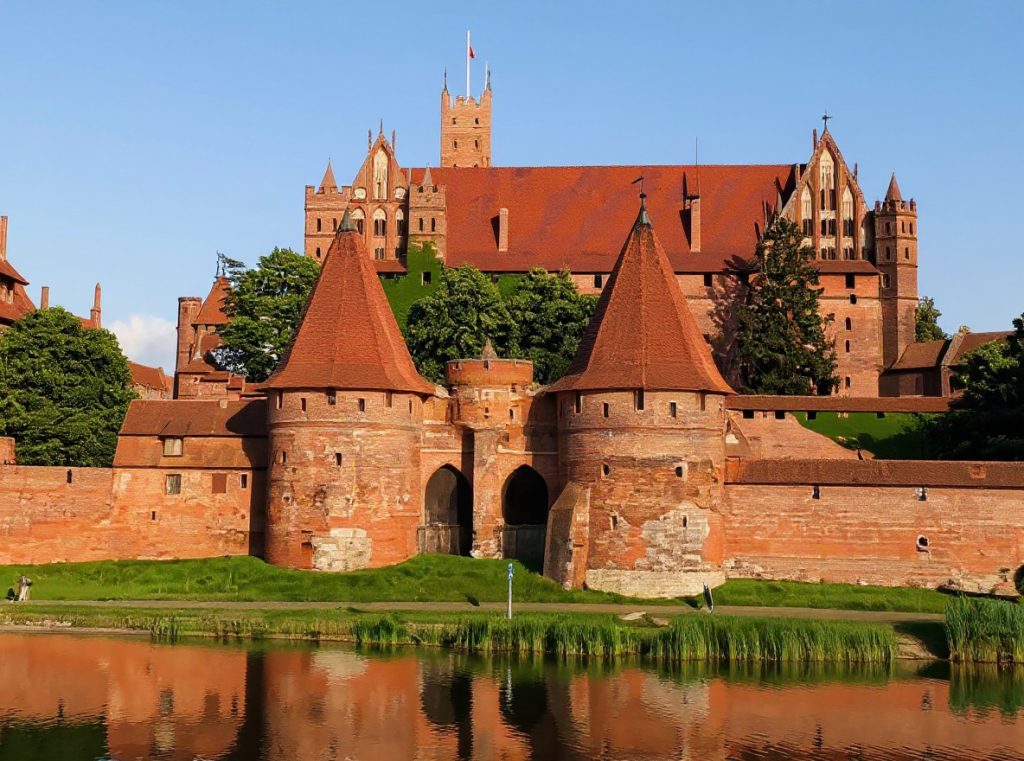
On the eastern bank of the Nogat River in northern Poland, Malbork Castle rises as the world’s largest brick castle and one of Europe’s most formidable medieval fortresses. The Teutonic Knights completed this classic example of a medieval fortress in 1406, when it claimed its title as the largest brick castle ever built. The castle consists of three separate sections—the High, Middle and Lower Castles, separated by multiple dry moats and towers. Since 1997, UNESCO has recognised this extraordinary Gothic complex as a World Heritage Site.
Plan your visit to Malbork Castle
Location of Malbork Castle
Malbork Castle sits in the north of Poland, on the east bank of the River Nogat. The town of Malbork lies roughly 60 kilometres south of Gdańsk. This makes the castle easily accessible for visitors exploring the Pomeranian region. The castle’s favourable position on the river Nogat allowed easy access by barges and trading ships. These vessels arrived from the Vistula and the Baltic Sea. Today, the fortress stands at ul. Starościńska 1, where the state-run Malbork Castle Museum draws around 600,000 visitors a year. Regular train and bus connections link Malbork to major Polish cities. The castle itself commands views across the surrounding flatlands and waterways that once served its strategic purposes.
History of Malbork Castle
Construction of Malbork Castle began around 1274. The Teutonic Order built the castle to strengthen their own control of the area. This followed their 1274 suppression of the Great Prussian Uprising of the Baltic tribes. The monastery or high castle rose between 1280 and 1330. After that, the middle castle and low castle followed between 1330 and 1457. The Order named it Marienburg after Mary, patron saint of the religious Order.
A dramatic transformation occurred in 1309. Grand Master Siegfried von Feuchtwangen officially established his seat at Malbork on 14 September of that year. He relocated from Venice before making this decision. This transformed the fortress from a regional stronghold into the administrative center of the Teutonic State. The castle once housed approximately 3,000 “brothers in arms”. During this period, the Teutonic Knights collected river tolls from passing ships. They also controlled a monopoly on the trade of amber.
The Order’s power crumbled after military defeats. The Order challenged Polish monarchs, who defeated its claims during the battle of Grunwald in 1410. In 1457 Malbork opened its gates to King Casimir Jagiellonian. The king bought it from the hands of the Teutonic Knights’ mercenaries. Since 1457 it served as one of the several Polish royal residences. It fulfilled this function for over 300 years. From 1568 the castle also housed the Polish Admiralty. In 1584 one of the Polish Royal Mints opened here.
The castle suffered through subsequent centuries of war and occupation. Military operations during the Second World War devastated much of the complex. In 1945 Malbork returned to Poland after the military operations of WWII terribly devastated it. Workers then raised it from ashes.
Current status
Since 1961, a national museum directly subordinate to the Ministry of Culture and National Heritage has run the complex. The Malbork Castle Museum operates the site today. The museum welcomes visitors year-round to explore its vast halls, courtyards and towers. Monday is a free admission day at the Castle Museum in Malbork, though the fortress charges admission on other days. Guided tours in multiple languages lead visitors through the High Castle’s monastery rooms. They also explore the Middle Castle’s Grand Master’s Palace and the Lower Castle’s economic buildings.
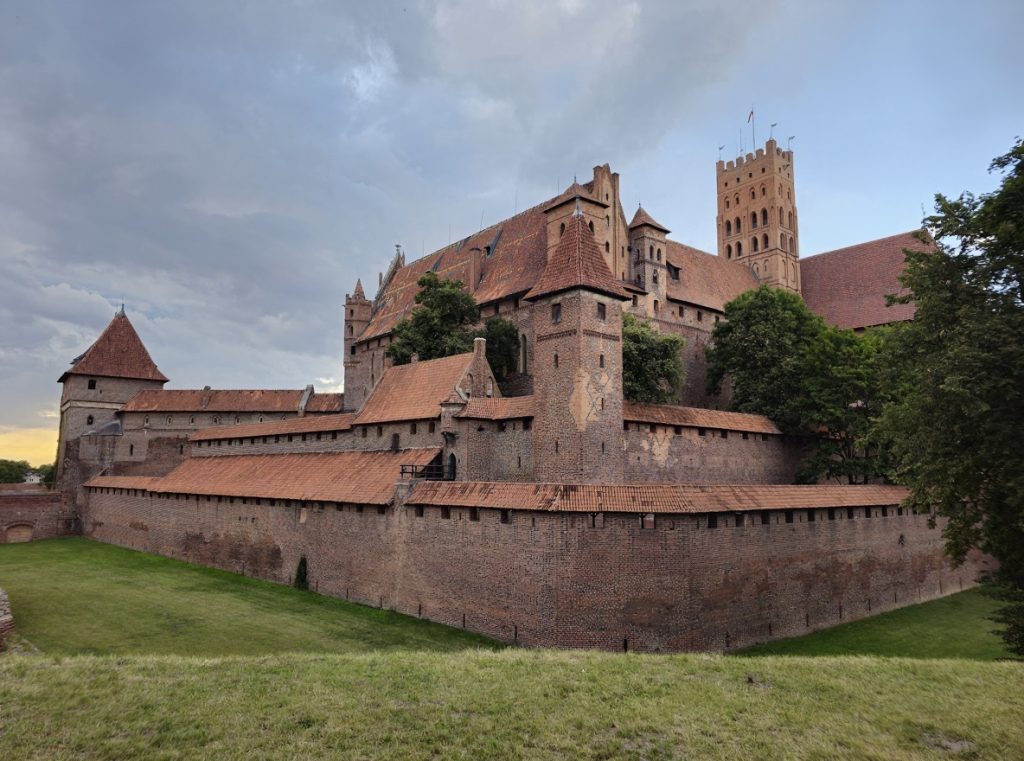
The castle remains an object of advanced conservation works. UNESCO inscribed it into the List of World Cultural and Natural Heritage in 1997. It stands as the most complete and elaborate example of a Gothic brick-built castle complex. This complex reflects the characteristic and unique style of the Teutonic Order. Exhibitions inside showcase medieval armour, amber treasures, and ceramic collections that chronicle centuries of Baltic history. The castle became the largest fortified Gothic building in Europe on a nearly 21-hectare (52-acre) site.
The castle’s red brick walls glow against the northern sky. The Nogat River continues to flow past ramparts that have witnessed crusader prayers, royal banquets, and the slow work of restoration. Visitors who cross the drawbridges and climb the towers discover a monument. This monument survived war, neglect and fire to reclaim its place among Europe’s great medieval fortresses.
Castles near Malbork Castle
Frequently asked questions
Is Malbork Castle free on Mondays?
Yes, admission is free on Mondays, but only the Castle Grounds Route is available (interiors and exhibitions are closed). You must collect a free ticket at the ticket office.
How long does it take to visit Malbork Castle?
The main Historical Castle Route with audio guide takes 3 to 3.5 hours. A shorter Castle Grounds Route takes around 1.5 hours but excludes the interiors.
Can I buy Malbork Castle tickets online?
Yes, tickets can be purchased online at the official website or at the castle ticket office. Booking in advance is recommended during peak summer months (July–August) to avoid queues.
What is included in the Malbork Castle ticket price?
The ticket includes either an audio guide (available in multiple languages including English) or a Polish-language guided tour. Tours depart every 30 minutes from the Plac 60-lecia MZM near the ticket counters.
Is Malbork Castle heated in winter?
No, the castle interiors are largely unheated year-round. Even on warm summer days, the thick brick walls keep the interior cool, so visitors should bring a warm layer regardless of the season.
Featured listings