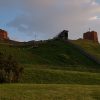
On the summit of Castle Hill above Vilnius Old Town, Gediminas’ Tower commands the skyline as Lithuania’s most recognisable landmark and a profound symbol of national identity. This lone red-brick survivor of the Upper Castle rises forty-eight metres above its base, crowned by the Lithuanian tricolour that flutters over the capital. The tower witnessed the birth of Vilnius as a medieval power, endured centuries of siege and fire, and became the rallying point for modern independence.
Plan your visit to Gediminas’ Tower
Location of Gediminas’ Tower
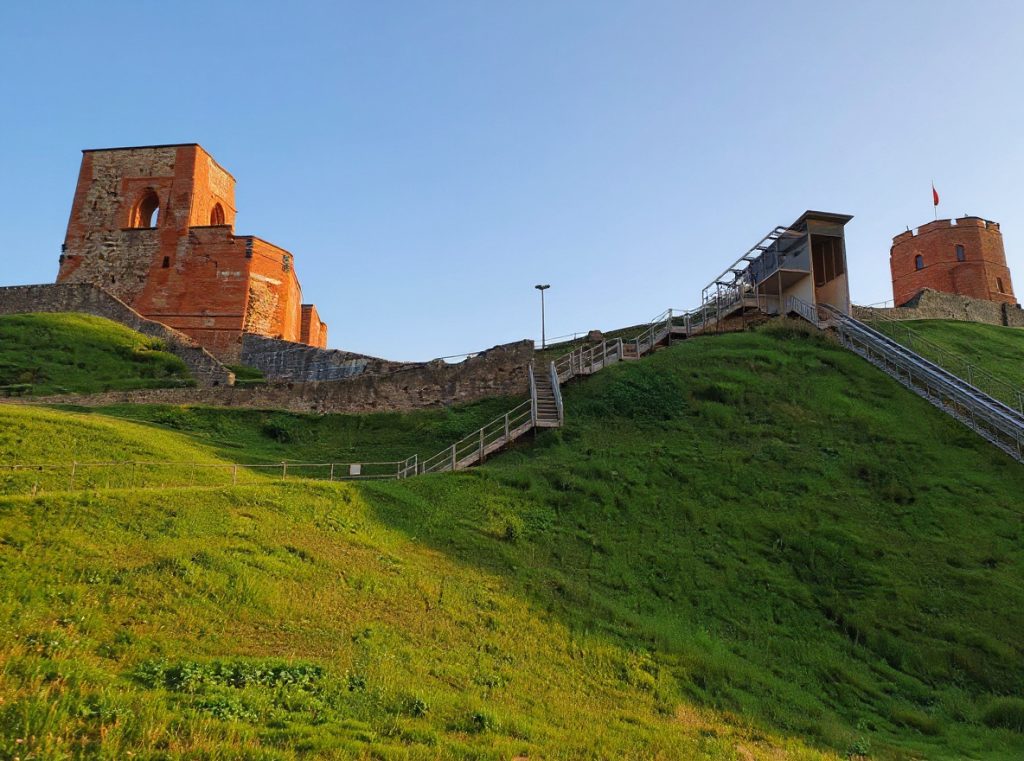
Gediminas’ Tower sits atop Gediminas Hill in central Vilnius, which rises forty-eight metres from its base and overlooks the confluence of the Neris and Vilnia rivers. The tower occupies Arsenalo g. 5, a short walk from Cathedral Square in the UNESCO-listed Old Town. Visitors reach the hilltop by a historical cobbled footpath from the Vilnia River side or by funicular lift from the inner courtyard of the Old Arsenal. The climb on foot takes about fifteen minutes through parkland. The funicular operates for a small fee and delivers passengers to the summit in under a minute. From the top, a 360-degree panorama unfolds over the Baroque spires, terracotta rooftops and winding lanes of the medieval quarter. The reconstructed Royal Palace sits at the hill’s foot, while the modern business district stretches beyond the rivers.
History of Gediminas’ Tower
Archaeological data shows that people occupied the site since Neolithic times. Builders strengthened the hill with defensive wooden walls, then later fortified it with stone in the ninth century. Historians believe that even before Gediminas, a wooden fortress stood on the hill and functioned as a key defensive site as early as the tenth or eleventh century. The site received its famous name in honour of Grand Duke Gediminas, during whose reign Vilnius gained the status of capital. In 1323 historical documents first mentioned Vilnius Castle. Legend tells that Gediminas dreamt of an iron wolf howling from this hill. A pagan priest interpreted the vision as a command to build a great city.
A devastating fire destroyed the original wooden fortifications in the early fifteenth century. As a result, builders raised a new brick castle between 1419 and 1422 during the reign of Grand Duke Vytautas, Gediminas’ grandson. The tower dates from the fourteenth and early fifteenth centuries, when builders originally created a four-storey structure for defence against firing weapons. People also inhabited the tower at that time. Gediminas’ Tower remains the only surviving tower of the three that once protected Vilnius Upper Castle. It stands as the only well-preserved example of Gothic defence architecture in Lithuania. The castle complex formed the political and military heart of the Grand Duchy of Lithuania, protecting the capital from repeated Teutonic incursions through the fourteenth and fifteenth centuries. Swedish and Russian forces destroyed much of the complex during seventeenth-century wars, yet the tower endured. In 1895 it began to house a fire watch tower. Polish architect Jan Borowski rebuilt the three-floor tower in 1933.
The flag of the Republic of Lithuania flew on Gediminas’ Tower for the first time on 1 January 1919.
Current status
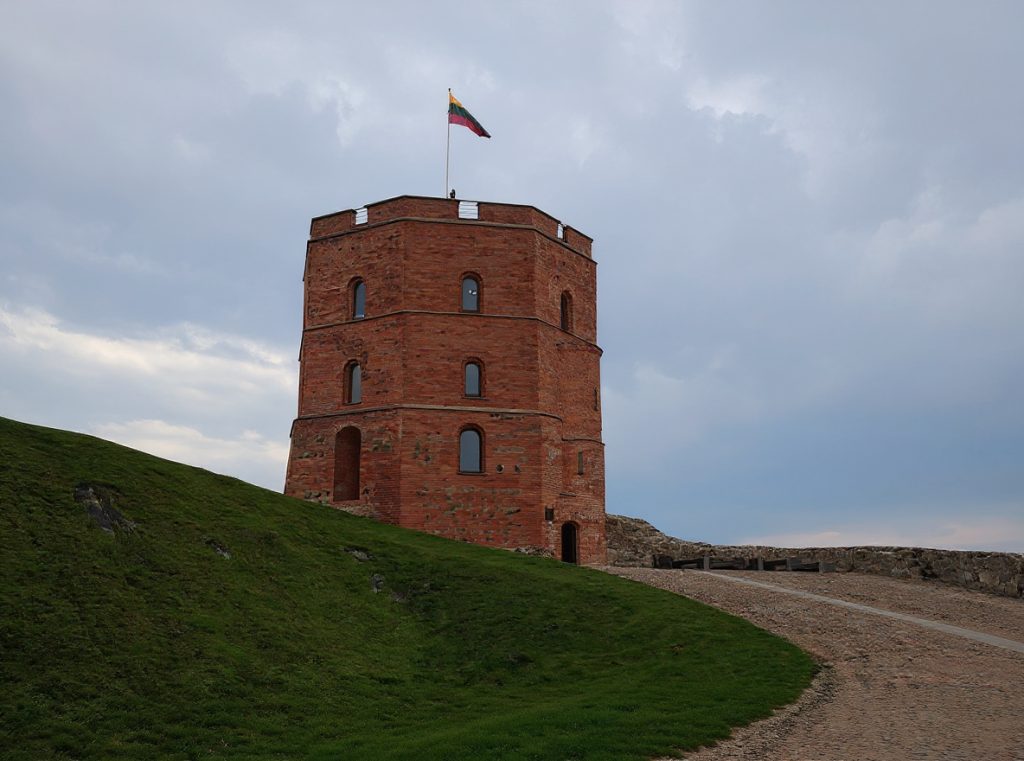
Gediminas’ Tower draws more visitors than any other branch of the National Museum of Lithuania. Its exhibition invites guests to learn about the history of Vilnius as the centre of the Grand Duchy of Lithuania. The tower houses a museum exhibiting archaeological findings from the hill and the surrounding areas, with models of Vilnius castles from the fourteenth to the seventeenth centuries, armament and iconographic material of Old Vilnius. Visitors can see the Lithuanian flag that flew over the tower during the events of January 1991, the lighter of Darius Gerbutavičius, a fallen defender of freedom, and a box that political prisoner Juozas Grušys made in a prison camp. As visitors climb the narrow stairs, several levels of exhibits present the development of the castle territory, Baltic jewellery and key military artefacts. Guests can reach the hilltop on foot or by lift. The museum opens daily, though hours vary seasonally.
Gediminas’ Tower remains an important state and historic symbol of the city of Vilnius and of Lithuania itself. The tower appeared on the former national currency, the litas. Lithuanians mention it in numerous patriotic poems and folk songs. Annually, on 1 January, officials hoist the Lithuanian tricolour on Gediminas’ Tower to commemorate Flag Day. From the observation platform at the summit, the city spreads out below—a living panorama of centuries. The tower stands silent yet eloquent, a sentinel over Vilnius and a keeper of memory for a nation that has never forgotten the price of freedom.
Castles near Gediminas’ Tower
Frequently asked questions
Can I visit Gediminas Hill without paying to enter Gediminas' Tower?
Yes, the hill and grounds are free to access and offer good views of Vilnius. The €8 ticket is only required to enter the tower museum and reach the rooftop observation deck.
How do I get up Gediminas Hill to reach Gediminas' Tower?
You can walk up the path from the Vilnia River side (10 minutes, includes stairs) or take the funicular from the Old Arsenal courtyard. The funicular costs €2 one way or €3 return.
What will I see inside Gediminas' Tower?
The museum displays archaeological finds, models of the original castle, Baltic jewellery, military artefacts, and exhibits on Lithuanian history including the Baltic Way independence movement. The top floor offers panoramic city views.
Do I need to book tickets in advance for Gediminas' Tower?
No, advance booking is not required. Tickets can be purchased at the tower entrance during opening hours (the ticket office closes 30 minutes before closing time).
Is Gediminas' Tower accessible for visitors with mobility issues?
The tower exhibition involves narrow staircases and is not wheelchair-accessible. However, the funicular lift and Gediminas Hill panoramic plaza are accessible, and the lift from the Old Arsenal courtyard is free for visitors with reduced mobility.
Featured listings