Rising from its moat-ringed island in southern Sweden, Malmö Castle commands attention as Scandinavia’s oldest surviving Renaissance fortress. Red-brick walls and corner towers frame an inner courtyard where Danish kings once held court and royal coins came to life. This formidable stronghold has witnessed nearly six centuries of dramatic history. It transformed from a 15th-century defensive bastion into a modern museum complex while retaining the architectural grandeur of its Renaissance rebirth.
Plan your visit to Malmö Castle
Tue–Wed 11:00–17:00
Thu 11:00–19:00
Fri–Sun 11:00–17:00
Location of Malmö Castle
The castle occupies the island of Slottsholmen on the western edge of central Malmö, Sweden’s third-largest city. A broad moat encircles the fortress, while grassy banks and walking paths loop around the water’s edge. Kungsparken and Slottsparken surround the castle, so they create a continuous green belt through the city centre. Visitors reach the site easily from Malmö Central Station, just a short walk or bus ride away. The Öresund Bridge connects Malmö to Copenhagen, so travellers from Denmark arrive within minutes. Bus lines 2 and 3 stop at Malmöhus and place the castle entrance steps from public transport.
History of Malmö Castle
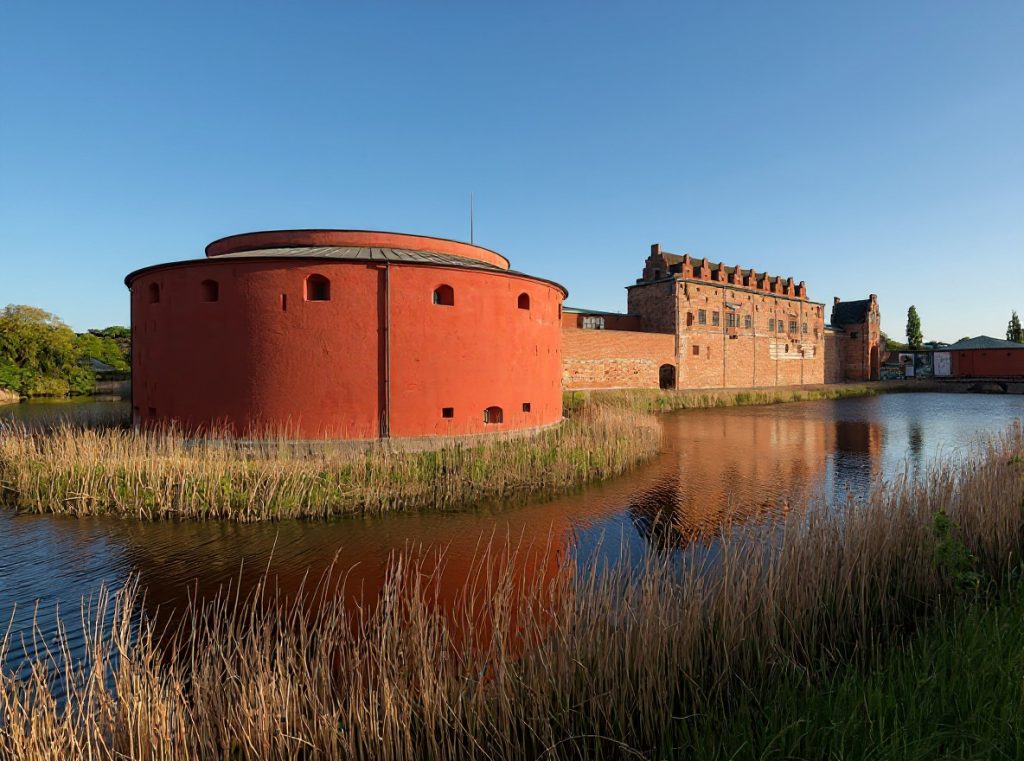
King Eric of Pomerania established the first fortress here in 1434 to control the Öresund Strait and collect tolls from passing ships. The original structure served as a strategic stronghold for the Danish crown and housed minting operations where craftsmen produced the kingdom’s coins. Traces of this medieval foundation remain visible in the castle walls today. During the Count’s Feud in the 1530s, the citizens of Malmö occupied the fortress and tore down sections separating it from the city. When the rebellion ended, King Christian III ordered a complete reconstruction between 1537 and 1542. Flemish master builder Marten Bussert likely assisted with this transformation, which gave the castle its present Renaissance form. Four massive brick corner towers rose above a rectangular layout designed according to Dutch architectural principles and Italian fortification techniques. The bright royal apartment floor featured Renaissance details such as bay windows and an elegant stairwell.
In 1607, Denmark’s builder king Christian IV added an elegant storehouse with Dutch Renaissance gables to the complex. Frederick II had resided at the castle during his reign, so the fortress remained one of Denmark’s most important strongholds. Between 1568 and 1573, the castle held James Hepburn, fourth Earl of Bothwell and third husband of Mary, Queen of Scots. When Sweden gained control of Skåne province in 1658, the castle’s role shifted from royal residence to military outpost on a contested frontier. The Swedes modernised the defences with a Dutch-inspired system, and in 1675 the fortress withstood a Danish siege. Over the following centuries, military importance faded and the building served primarily as a granary and arsenal. From 1828, authorities converted it into Sweden’s largest and most modern prison. Executions took place in the courtyard throughout the 19th century, and the facility remained operational until 1914.
Current status
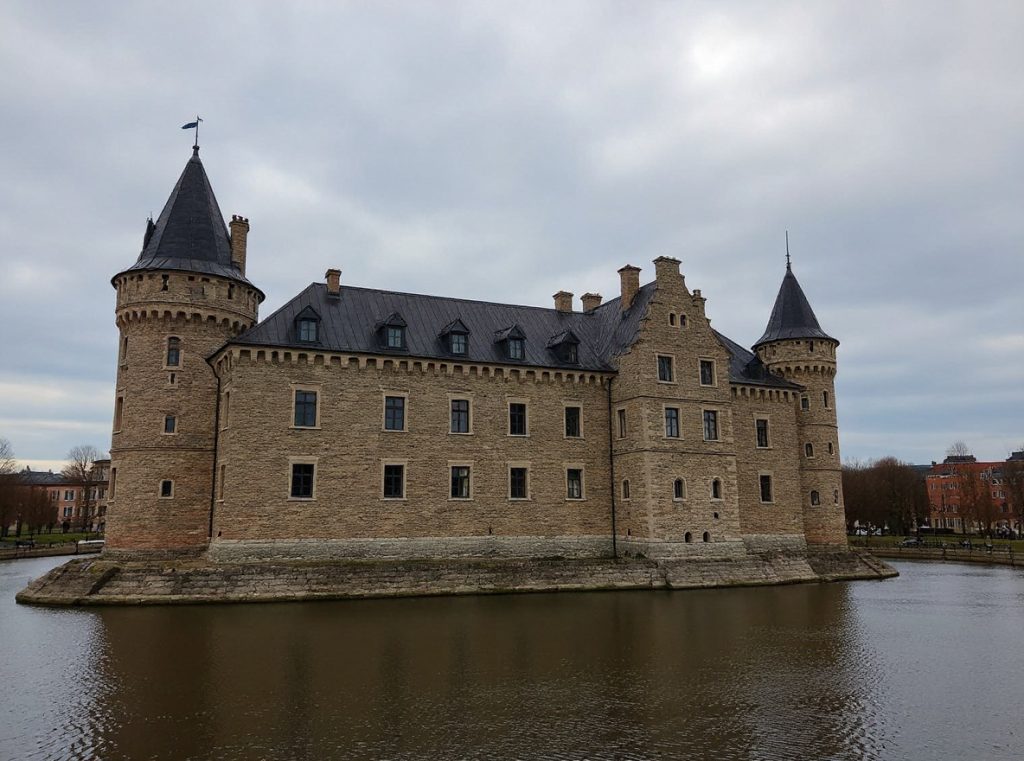
Sweden declared the castle a protected state monument in 1935. Restoration work from 1928 onwards preserved its Renaissance appearance because workers removed later prison-era additions to reveal the original architectural character. In 1937, the Malmö Museum relocated to new buildings erected on Slottsholmen after crews cleared prison barracks. The castle now forms the centrepiece of Malmö Museer, southern Sweden’s largest museum complex. The National Property Board of Sweden manages the site on behalf of the nation. Exhibitions inside explore the castle’s layered history through the lives of people who lived and worked here. Visitors discover royal apartments alongside austere spaces from the prison era, so they experience a vivid architectural record spanning royal splendour, military engineering and penal functions. The Malmö Art Museum occupies part of the complex and displays Nordic and European collections from the Renaissance to contemporary works. Natural history galleries include an aquarium opened in 1937, while cultural history exhibitions trace regional development from medieval times forward.
The castle sits within its historic moat, where reflections of red brick and limestone ripple across the water. Slottsträdgården gardens provide cultivated beds and peaceful paths just beyond the ramparts. One of the few surviving White Buses from World War II stands outside and commemorates rescue missions that brought concentration camp prisoners to safety. The fortress welcomes visitors throughout the year and offers multiple museums under one roof. Families explore aquarium exhibits while history enthusiasts trace centuries of Nordic power struggles through original rooms and artefacts.
Castles near Malmö Castle
Frequently asked questions
What museums are included in the Malmö Castle ticket?
The ticket includes Malmö Castle itself, the City Museum, Art Museum, Natural History Museum and the aquarium. A separate combi ticket (100 kr) also includes the Technology & Maritime Museum with a submarine.
Is Malmö Castle open on Mondays?
Yes, Malmö Castle is currently closed on Mondays. It is open Tuesday to Wednesday and Friday to Sunday 11:00–17:00, and Thursday 11:00–19:00.
How long does it take to visit Malmö Castle?
Most visitors spend 1.5 to 2 hours exploring the castle, museums and aquarium. If you also visit the Technology & Maritime Museum with the submarine, allow at least half a day.
Can I walk to Malmö Castle from the train station?
Yes, Malmö Castle is 1.2 km from Malmö Central Station, about a 15-minute walk through parks. Alternatively, bus 8 takes 10 minutes to Skeppsgatan stop.
Is Malmö Castle suitable for families with children?
Yes, children under 20 enter free and the castle complex includes an aquarium, natural history exhibits with stuffed animals, and interactive displays. The nearby Technology Museum also has hands-on experiments and a real submarine.
Popular right now
Featured listings