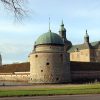

On the eastern shore of Lake Vättern, Vadstena Castle commands a powerful presence with its water-filled moat and four round bastions. King Gustav I Vasa founded this fortress in 1545 to defend Sweden’s heartland from southern threats. His successors transformed the defensive stronghold into a Renaissance palace, so by 1620 every Vasa king had left his mark on the castle. Today Sweden’s best-preserved Renaissance royal residence attracts visitors year-round.
Plan your visit to Vadstena Castle
Sat–Sun 12:00–16:00Hours vary by season: daily 11:00–16:00 in summer, reduced hours autumn/winter; check website before visiting.
Location of Vadstena Castle
The castle sits in Vadstena, a small town in Östergötland County, roughly 250 kilometres southwest of Stockholm. Lake Vättern laps against the castle walls, while the medieval Vadstena Abbey Church rises just a short walk away. Visitors reach Vadstena by car via Route 50, which connects to the E4 motorway. Regional buses serve the town from nearby Motala and Linköping. The castle occupies Hamngatan 4 in the town centre, so travellers can explore the historic quarter on foot. Free parking areas spread near the ramparts.
History of Vadstena Castle
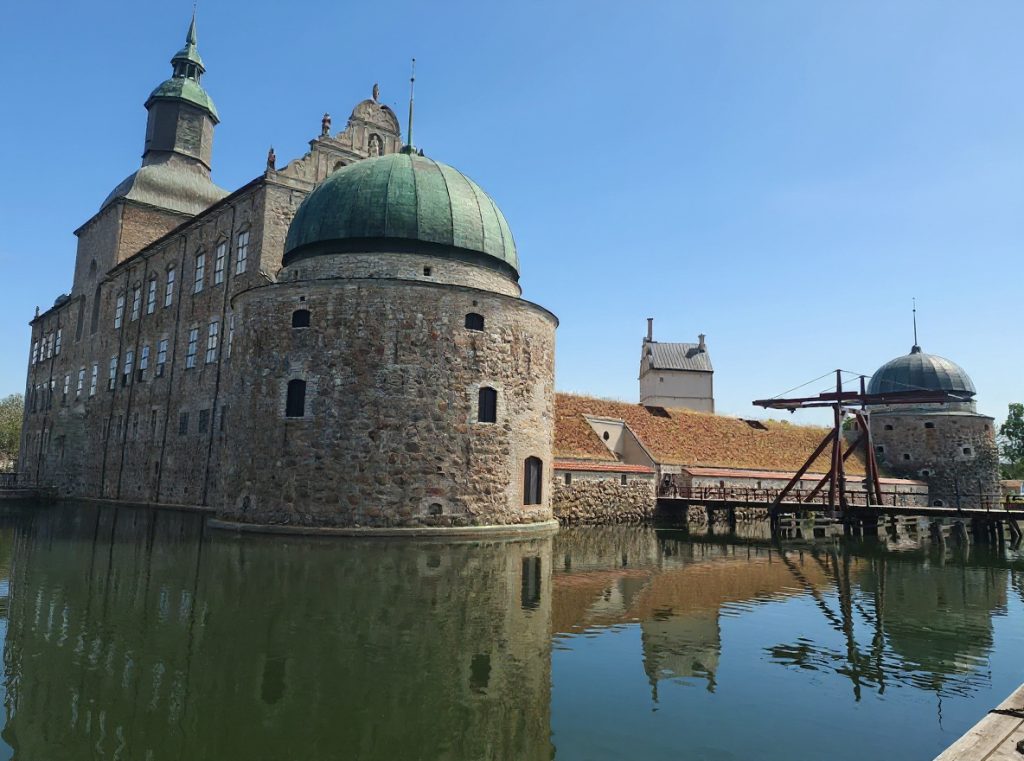
Gustav I Vasa began construction in 1545 as war threatened from Denmark and rebellious provinces. He raised three stone buildings facing the lake and ringed them with thick ramparts, a courtyard, and four circular cannon towers. The moat filled with lake water to repel attackers. When the king married Catherine Stenbock in Vadstena in 1552, builders had not yet finished the great hall now known as the Wedding Hall. The wedding went ahead anyway, since the castle already served as a base for royal authority in Östergötland.
The 1550s brought new ambitions. Prince Magnus became Duke of Östergötland and took up residence, though his mental illness meant he never ruled Sweden. His brother Erik XIV briefly sheltered here, and when their younger brother Johan III took the throne, he poured resources into transforming the fortress into a continental-style Renaissance palace. Johan added grand staircases, state halls, and refined decorative portals. By 1620, when construction finally ended, all the Vasa kings had contributed. The result displayed a symmetric palace with a central tower gate, stair towers, and cylindrical outer bastions that still announced its military origins.
Royal interest waned after Queen Ulrika Eleonora last stayed in 1716. The palace became a grain store for decades. In 1899 the Provincial Archives moved into the eastern half, and they remain today, preserving documents from four counties. The western section opened as a museum displaying 16th- and 17th-century furniture, royal portraits, and paintings drawn from the National Museum’s collection.
Current status
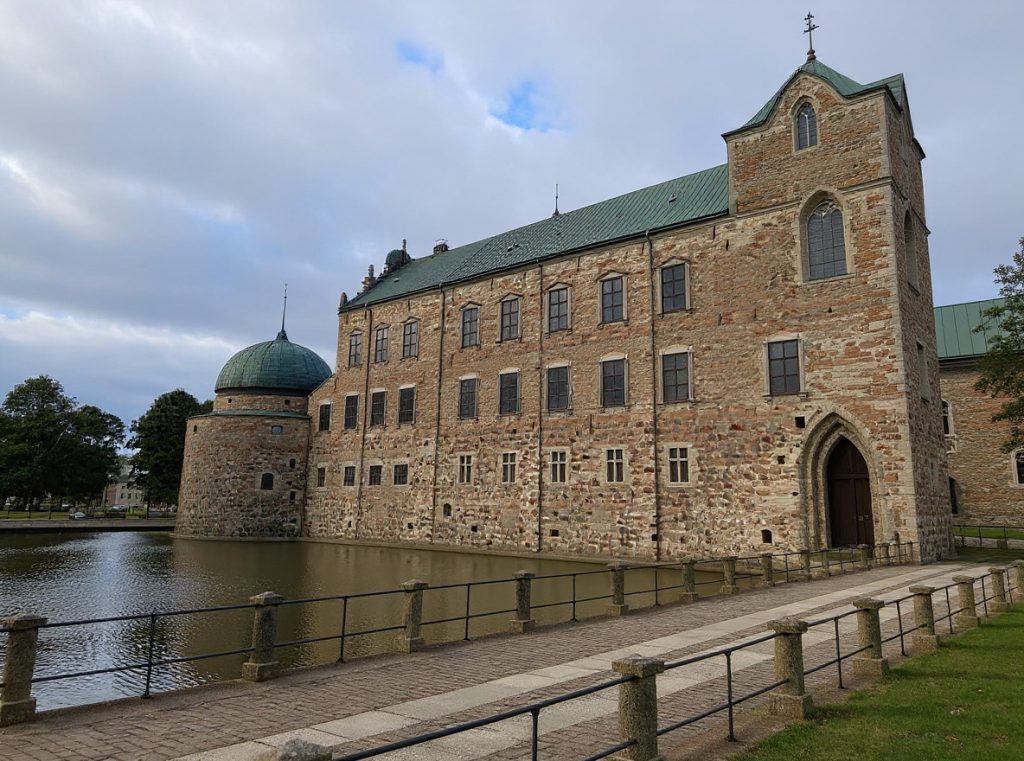
The National Property Board manages the castle as a protected monument under regulations established in 2007. Visit Vadstena AB operates public access and tours. Visitors can explore the castle museum independently or join guided tours that bring the Renaissance rooms to life. The first floor retains the Herreköket, where cooks once prepared banquets, and the Borgstugan, quarters for soldiers. On upper floors the Wedding Hall and chapel impress with their scale and acoustics; the chapel produces a seventeen-second echo. Opening hours vary by season, with daily access from spring through autumn and more limited winter schedules.
The castle hosts the Vadstena Academy, Sweden’s smallest opera house, which commissions new works and revives lost scores. Every summer the Academy stages performances in the Wedding Hall, so Renaissance interiors frame contemporary productions. The surrounding ramparts, reconstructed between 1994 and 1999 using archaeological evidence, offer lakeside walks and views across Vättern. The moat still encircles the structure, crossed by a single bridge. Gardens spread between the castle and the abbey, blending decorative plantings with the utility of a Renaissance landscape. Vadstena Castle remains a cultural anchor for the region, drawing history enthusiasts and opera lovers to its halls.
Castles near Vadstena Castle
Frequently asked questions
Can I visit Vadstena Castle without a guided tour?
Yes, you can purchase an admission ticket and explore the castle at your own pace. Guided tours are optional and cost an additional 35 SEK, covering the furnished Renaissance floors and the chapel with its famous 17-second echo.
What are the opening hours of Vadstena Castle?
Hours vary by season: in summer (mid-August to early October) the castle is open daily 11:00–16:00, then daily 12:00–16:00 until early November. From November onwards, hours are reduced to weekends only 12:00–16:00; always check the website before visiting as hours change throughout the year.
How do I get to Vadstena Castle by public transport?
Take a direct bus (line 65) from Linköping, which takes 53 minutes. From Stockholm, take a bus or train to Linköping, then connect to Vadstena via Motala; the total journey takes around 5 hours.
Is Vadstena Castle suitable for children?
Yes, children under 7 enter free, and ages 7–17 pay 80 SEK. The castle offers special children's guided tours during summer holidays and hosts family-friendly events like medieval days in July with activities such as archery and sword demonstrations.
What can I see inside Vadstena Castle?
Visitors can explore furnished Renaissance rooms from the 16th–18th centuries, royal portraits, and the castle chapel with its remarkable 17-second echo. The castle also hosts temporary exhibitions and houses parts of the Swedish National Archives.
Popular right now
Featured listings