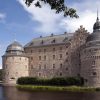

Set on an island in the Svartån River, Örebro Castle commands the heart of its namesake city with weathered grey stone walls and four imposing round towers. For more than 700 years this fortress has guarded a crucial river crossing on the road between Stockholm and Oslo. It evolved from a simple defensive tower into a grand Renaissance residence. The castle divides Örebro into northern and southern quarters, so its presence shapes the entire city around it.
Plan your visit to Örebro Castle
Location of Örebro Castle
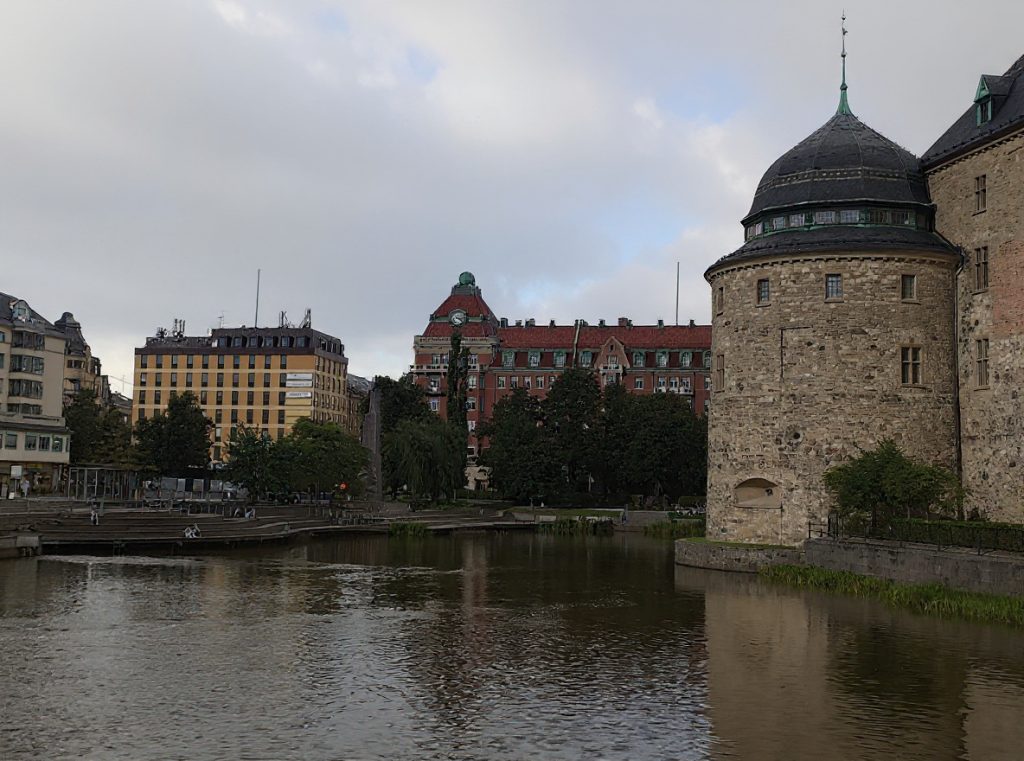
The castle occupies a small island in central Örebro, roughly 200 kilometres west of Stockholm in Närke province. Visitors reach it at Kansligatan 1, where a stone bridge connects the fortress to the surrounding streets. The Svartån flows around the castle and creates a natural moat 15 metres wide. People named the river for the dark colour of its water. Örebro sits near Lake Hjälmaren on the Närke Plain, a major logistics hub in inland Sweden. Rail and road links from Stockholm, Oslo, and Gothenburg converge here, so travellers find the castle easy to access from across Scandinavia.
History of Örebro Castle
Builders raised a defence tower on this island during the latter half of the 13th century, though no one knows the precise date. By 1364, King Albrecht of Mecklenburg captured a fortress at Örebro. This confirmed its strategic value. Builders expanded the tower in the 14th century under King Magnus Eriksson, who added three wings to form a U-shaped stronghold with a central tower. Thick walls and the surrounding river turned it into a formidable defence post controlling trade routes and regional power.
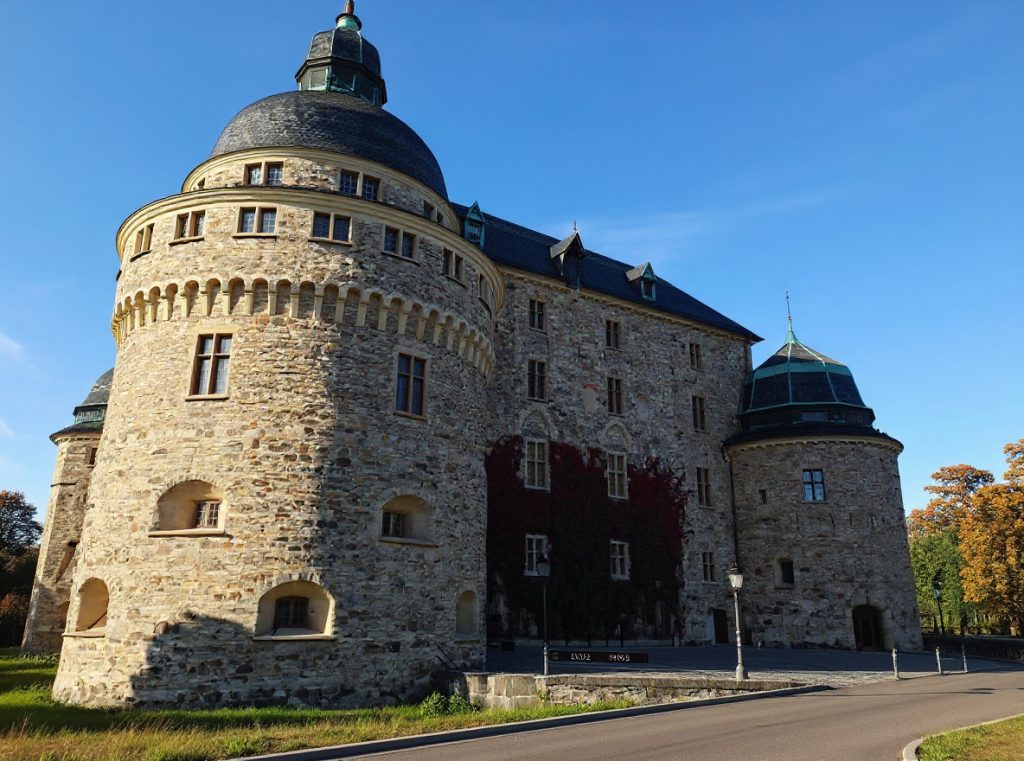
In 1529, the Örebro Synod convened here to advance the Lutheran Reformation in Sweden. When Gustav Vasa took the throne, he passed the castle to his youngest son, Duke Karl. Around 1573, Duke Karl—later Charles IX—launched an ambitious reconstruction inspired by French Renaissance palaces. Renowned architects Herkules Mida and Jakob von Brüssel directed the work, which continued until about 1625 under Queen Christina of Holstein-Gottorp. They added a fourth wing to enclose the courtyard. Workers built corner towers with artillery turrets and whitewashed the exterior with elaborate stone carvings. The fortress transformed into an elegant residence fit for royalty.
The castle hosted sessions of the Swedish Riksdag during the early 1600s. This cemented its role in governance. In 1617, parliament met here and adopted the Statute of Örebro. The statute shaped the country’s religious and political life for decades. After the Vasa era, neglect set in. By the early 18th century, one tower collapsed. As a result, architect Carl Johan Cronstedt began restoration work in 1758 using Carl Hårleman’s classicist designs. Workers demolished the outer defensive wall, added terraces and stone bridges, and crowned the towers with round domes.
Current status
Today, the National Property Board owns the castle. The governor of Örebro County still lives on the residence floor. This maintains a tradition begun in the 1760s. The rest of the fortress welcomes the public with guided tours, exhibitions, and cultural events. Visitors explore grand halls with high ceilings and intricate woodwork. They climb the towers for views over the city. Guests descend into the dungeons that once held prisoners of war and local criminals. The Children’s Tower offers interactive displays for families, while the castle café and shop occupy historic rooms.
Örebro Läns Museum operates exhibitions inside. The museum presents both permanent displays on regional history and rotating contemporary art shows. The castle hosts concerts, ghost tours, and seasonal activities year-round. During the city’s biennial Open Art festival, large-scale installations transform the ancient walls into a modern cultural canvas. Schools use some rooms as classrooms, weaving education into daily castle life.
The fortress stands as Sweden’s best-preserved example of a medieval stronghold turned Renaissance palace. Its four corner towers rise above Örebro’s streets, each 22 metres tall with walls up to three metres thick at the base. The river still flows around the island, just as it did seven centuries ago. The castle keeps watch over all who cross the bridge.
Castles near Örebro Castle
Frequently asked questions
Is Örebro Castle free to enter?
No, admission to Örebro Castle costs 170 kr for adults and 125 kr for children aged 3–16. Guided historical tours are included in the ticket price.
How do I get to Örebro Castle from the train station?
Örebro Castle is a 10–15 minute walk from Örebro Central Station. Alternatively, take bus line 5 from Örebro Centralstation to Slottet stop (1 minute ride, runs every 15 minutes).
What can I see inside Örebro Castle?
Örebro Castle features historical exhibitions, grand halls with portraits of Swedish royalty, guided tours covering 700 years of history, and rotating exhibits. The castle has housed the county governor since 1764 but is open to visitors year-round.
Are guided tours available at Örebro Castle?
Yes, historical guided tours are included in the admission ticket and run regularly on Saturdays and Sundays year-round. During summer, additional themed tours and activities for children are offered daily.
When is Örebro Castle open to visitors?
Örebro Castle is open year-round. From mid-May to October it opens daily 10:00–17:00; during off-season it typically opens Thursday–Sunday with reduced hours (often 13:00–16:00 or 11:00–16:00).
Featured listings