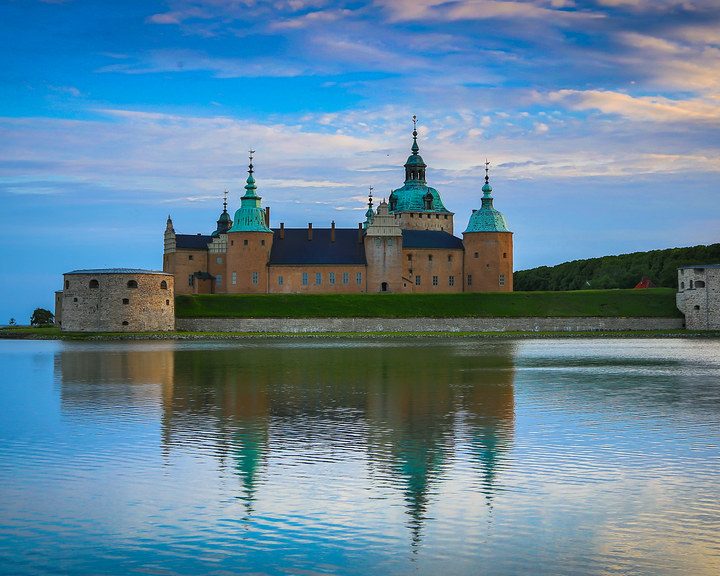
Kalmar Castle, often referred to as the “Key to the Kingdom,” is admired for its strategic location and formidable structure. It stands as one of Sweden’s most prominent medieval fortresses. Additionally, renowned for its robust fortifications, rich history, and striking Renaissance architecture, this castle has long held an important role. It has influenced the region’s political and military landscape for centuries. Today, it attracts visitors from around the world. Many seek to explore its architectural grandeur, historical significance, and scenic surroundings on the Swedish coast.
Plan your visit to Kalmar Castle
Location of Kalmar Castle
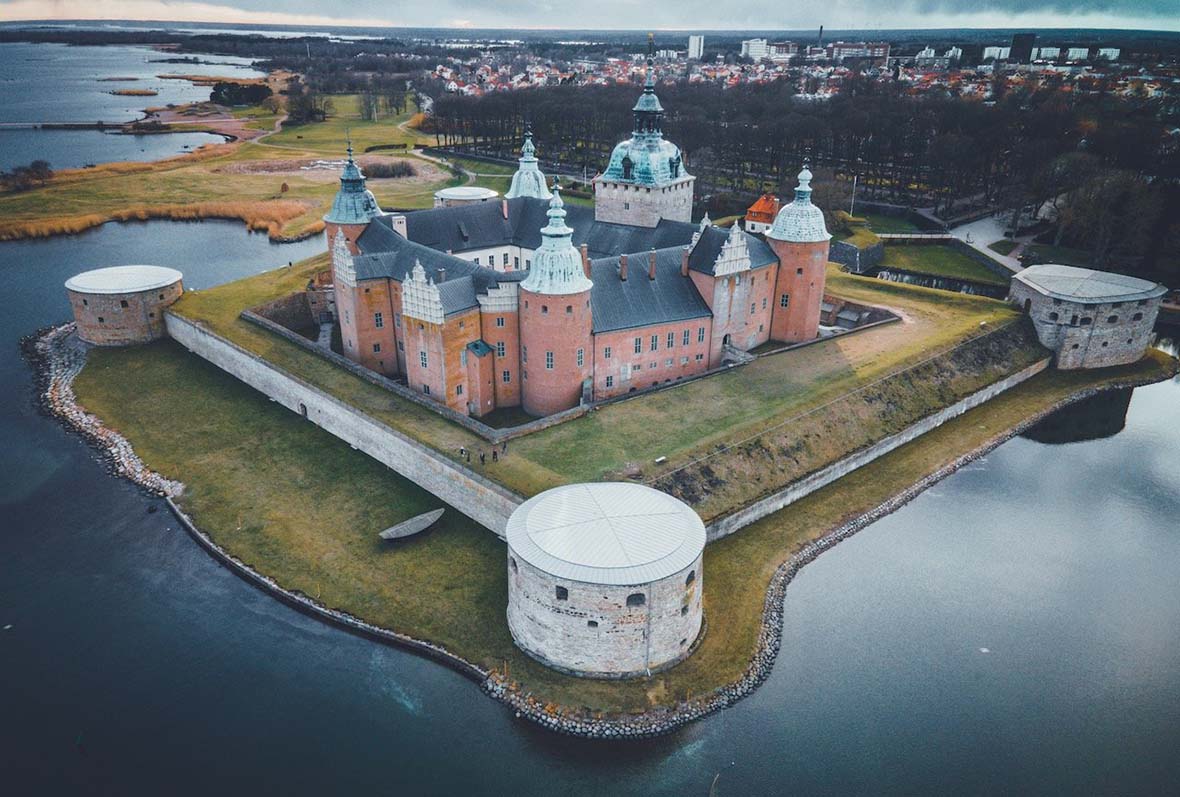
Kalmar Castle is located in the coastal city of Kalmar, in southeastern Sweden. Moreover, positioned on the shore of the Kalmar Strait, this imposing fortress offers breathtaking views over the Baltic Sea. It served as a defense against various foreign threats. Furthermore, its location near the southern tip of Småland placed it on the border of Swedish and Danish territories. This fact made it an essential military site throughout medieval and early modern history. With its proximity to the island of Öland, Kalmar Castle served as a sentinel overlooking an important maritime route. Sweden greatly valued its importance in coastal defense.
History of Kalmar Castle
Kalmar Castle’s origins date back to the 12th century, when a simple defense tower was built to guard Sweden’s coast from invasions. This early fortification marked the start of the site’s transformation into a significant regional power center. In the 13th century, King Magnus III (Magnus Ladulås) expanded the castle, fortifying it against potential Danish attacks. By adding defensive walls and strengthening the structure, Kalmar became a vital Swedish stronghold and royal administrative center.
In 1397, Kalmar Castle witnessed the historic signing of the Kalmar Union, orchestrated by Queen Margaret I of Denmark. This agreement united Denmark, Norway, and Sweden under one monarch to resist external threats, particularly from Germanic states. Though the Union dissolved in 1523, Kalmar remains a symbol of Scandinavian unity.
The 16th century brought significant renovations under King Gustav Vasa and his sons, Eric XIV and John III. Recognizing the castle’s strategic value, they modernized it into a Renaissance palace, adding grand halls, tapestries, and intricate woodwork. These enhancements gave the castle much of its current charm and elegance.
During the Kalmar War (1611–1613), the castle played a key role in the conflict between Sweden and Denmark over the Øresund Strait. Although Kalmar eventually fell to Danish forces, it was later restored to Swedish control. Over time, the castle’s military importance declined, leading it to serve as a prison and storage site. Kalmar Castle, with its rich history of expansion, conflict, and unity, stands today as a testament to Sweden’s medieval and Renaissance heritage.
Current status
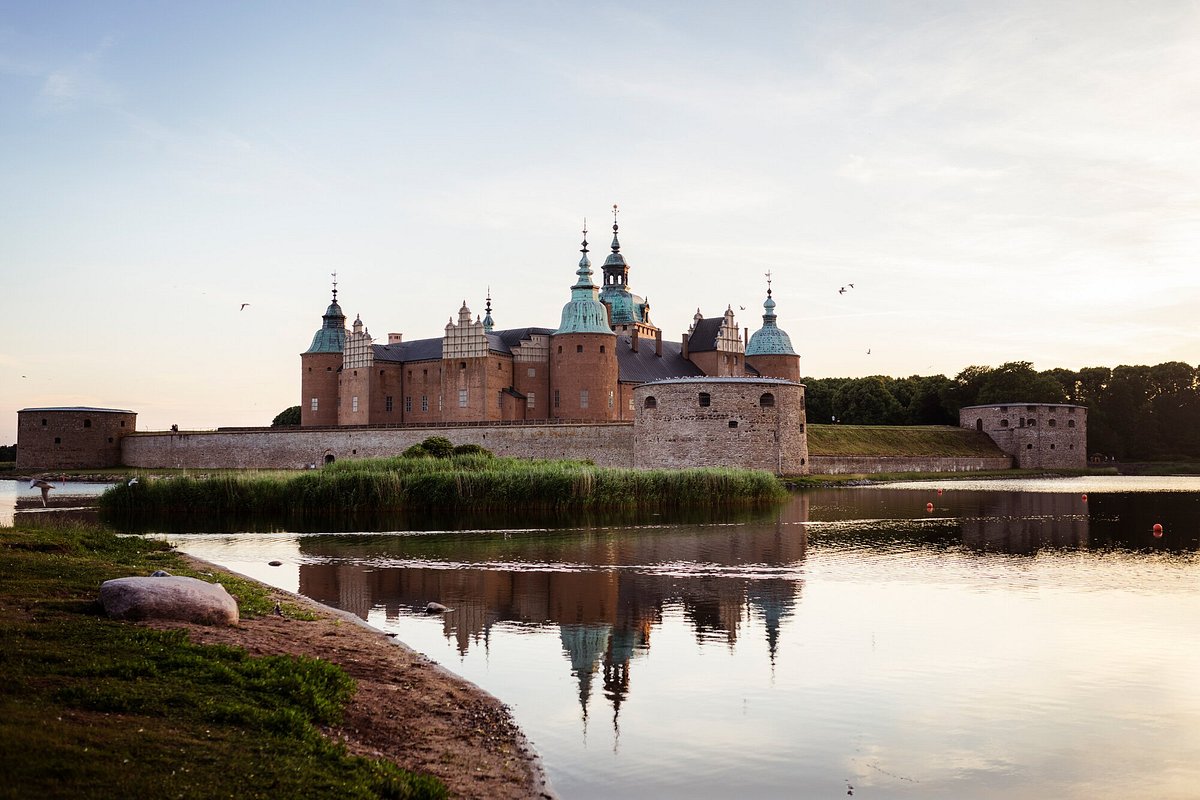
Today, Kalmar Castle remains one of Sweden’s most well-preserved Renaissance castles. It is open to the public as a museum and cultural site. Extensive restoration efforts have preserved its historical structures, including the outer defensive walls. Restorers have carefully revived the main gate and the iconic round towers. They have restored the castle to reflect its Renaissance-era appearance, with many rooms decorated to resemble their original state under the Vasa dynasty.
Visitors are offered a glimpse into medieval and Renaissance life. There are a variety of exhibits on display, including period furniture and artifacts. Detailed dioramas depict historical events. Among the most popular attractions is the Great Hall. Adorned with tapestries and period furniture, this space once hosted royal feasts and gatherings. The chapel, featuring exquisite woodwork and stained glass, provides a peaceful space. This part of the castle transports visitors back to the 16th century. Seasonal exhibitions and historical reenactments allow guests to experience Sweden’s past vividly.
Outside, the castle grounds and gardens invite guests to explore. The scenic views of the Baltic Sea are breathtaking. Walking along the ramparts, guests can imagine the lives of medieval soldiers who once stood guard. The moat and outer walls reveal the tactical skill of the castle’s original designers.
Kalmar Castle is also used as a venue for cultural events. Concerts, lectures, and theatrical performances are regularly held here. This has helped to make it a dynamic cultural landmark in Kalmar. The castle’s storied past and architectural beauty attract history enthusiasts and tourists alike. Special events, like the annual Kalmar Renaissance Festival, celebrate the castle’s heritage. Historical reenactments, crafts, and entertainment are enjoyed by both locals and international visitors.
Castles near Kalmar Castle
Frequently asked questions
What was the Kalmar Union and why is Kalmar Castle important?
The Kalmar Union was a treaty signed at Kalmar Castle in 1397 that united Denmark, Norway, and Sweden under a single monarch. The castle served as one of Sweden's most important fortifications and was known as 'the key to the kingdom' due to its strategic location.
Are guided tours included with admission to Kalmar Castle?
Yes, guided tours in Swedish and English are included in the admission price, along with all exhibitions and children's activities. Tours run regularly throughout the day and last approximately 45 minutes.
Is Kalmar Castle accessible for wheelchair users?
An elevator provides access to the Green Hall, Castle Church, and Golden Hall, but other sections with stairs and thresholds are not accessible. Accessible parking is available at the end of the castle avenue, about 100 metres from the entrance.
Can I bring a packed lunch to Kalmar Castle?
You can enjoy a packed lunch on the outer courtyard where there are picnic benches, or on the castle wall. However, food is not permitted inside the castle itself or in the restaurant.
What is the best way to reach Kalmar Castle from Stockholm?
Trains run several times daily from Stockholm to Kalmar Central Station, taking about 2.5 hours. From the station, the castle is a 10-minute walk or 750 metres away.
Featured listings