
Builders raised Kenilworth Castle from local red sandstone in Warwickshire, and today it ranks among England’s most extensive castle ruins. Its walls echo nine centuries of royal drama. Geoffrey de Clinton constructed the first fortress here in the early 1120s, when Henry I granted him the land. Henry II brought it into royal ownership in 1173. The castle witnessed some of medieval England’s most dramatic moments, from brutal sieges to royal imprisonments. When Elizabeth I granted the castle to Robert Dudley, Earl of Leicester, in 1563, he transformed the medieval stronghold. He reshaped it into a dazzling Renaissance palace to win the queen’s hand.
Plan your visit to Kenilworth Castle
Sat–Sun 10:00–16:00Apr–Oct daily 10:00–17:00/18:00; Nov–Mar weekends only 10:00–16:00
Location of Kenilworth Castle
Kenilworth Castle sits in the town of Kenilworth in Warwickshire, England. English Heritage manages the site. The town lies approximately 140 kilometres northwest of London and enjoys excellent transport links to nearby cities. The castle’s address is Castle Green, Off Castle Road, Kenilworth, Warwickshire, CV8 1NG. Visitors arriving by car should follow signs from the A452 or B4103, which Kenilworth marks well throughout the town. Kenilworth Station on Station Road sits about 1.6 kilometres from the castle grounds, roughly a 17-minute walk. The castle occupies the northwestern edge of Kenilworth. Its ruins appear clearly from the surrounding area.
History of Kenilworth Castle
Henry I granted land to Geoffrey de Clinton, and the king himself seems to have funded much of the construction. The phenomenal scale of the great tower suggests this royal backing. When Henry II took the castle back into royal ownership from Clinton’s son, he ordered work to strengthen it. By about 1240 the castle had reached its current form. King John expanded the fortifications considerably during his reign. In 1266 supporters of the late Simon de Montfort held Kenilworth through an extraordinary six-month siege. This became one of the longest in English medieval history. After the surrender, Henry III granted the castle to his younger son Edmund Earl of Lancaster. This began nearly two centuries of Lancastrian ownership.
In 1361 John of Gaunt inherited the castle as the fourth son of Edward III. Between 1373 and 1380 he transformed Kenilworth into the most spectacular non-royal residence of its age. The castle later became the setting for another dark chapter when Edward II arrived as a prisoner within its walls. His captors forced him to abdicate. Tudor kings favoured the castle as a residence, so it remained a royal possession until John Dudley assumed ownership in 1553. His son Robert Dudley spent fortunes transforming it into a magnificent palace. He famously entertained the queen here for 19 days of festivities in 1575. Those celebrations included elaborate water pageants, fireworks, bear-baiting, and theatrical performances. The extravagance cost over £1,000 per day.
Parliamentary forces dismantled the castle’s fortifications in 1650 after the English Civil War. They wanted to prevent anyone using it as a military stronghold. After the Restoration, the castle passed to the Earl of Clarendon. His family retained possession until 1937, when Sir John Davenport Siddeley purchased it.
Current status
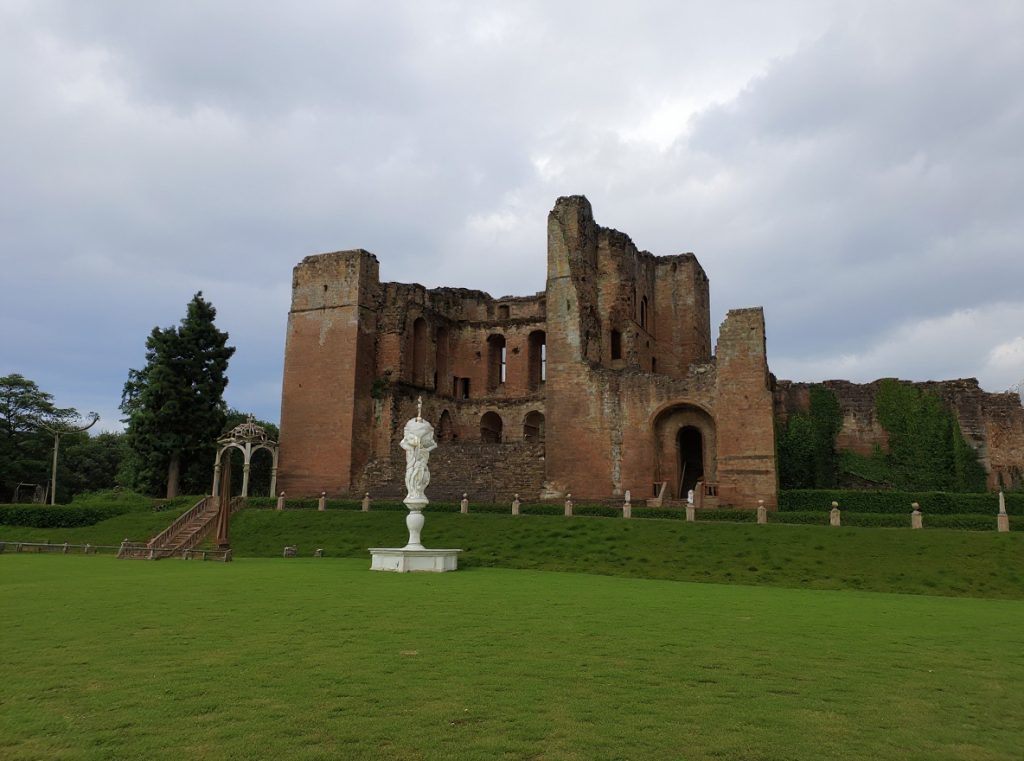
English Heritage has maintained the castle since 1984 and opened it to the public. The organization invested significantly in preservation and interpretation. Despite the slighting after the Civil War, Kenilworth illustrates five centuries of English military and civil architecture. Workers built almost all of it from local New Red Sandstone. The ruins represent a complex medieval fortress and late medieval and Tudor palace. They comprise an inner court surrounded by the keep, great hall, Strong Tower and Saintlowe Tower. The massive Norman keep still dominates the site. Its walls display some of England’s earliest arrow slits. Visitors can explore Leicester’s Gatehouse, which staff furnished as it would have appeared during the Tudor period. This offers insight into courtly life.
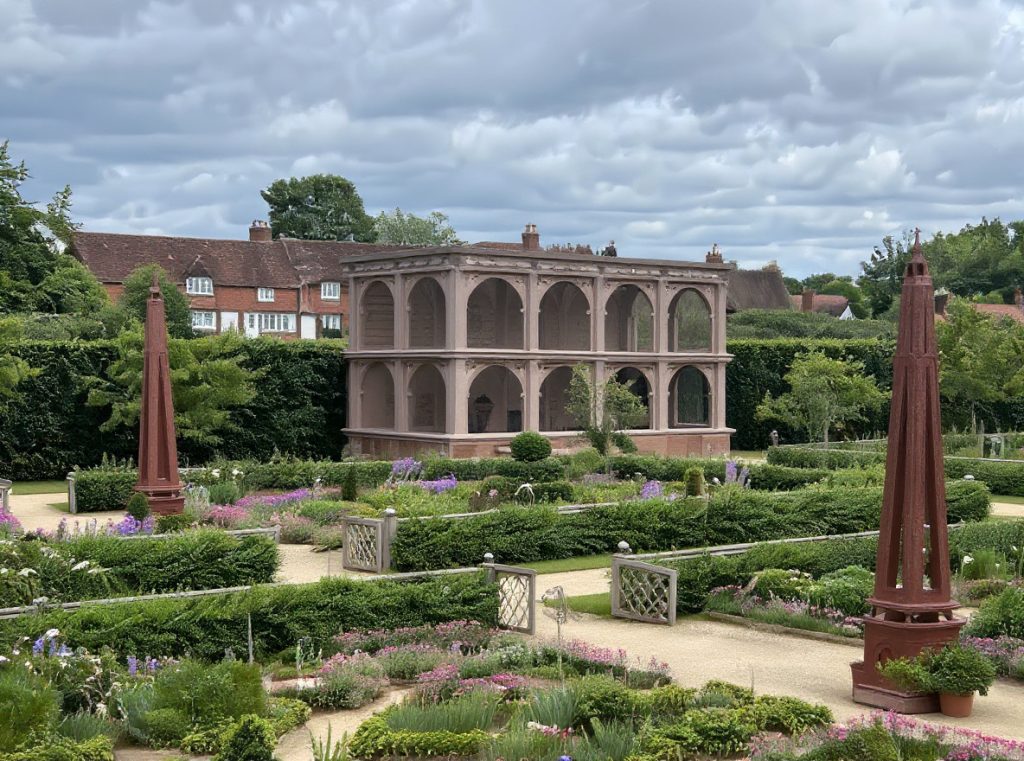
The recreated Elizabethan Garden, completed in 2009, faithfully reproduces the pleasure gardens Robert Dudley created for Elizabeth I’s 1575 visit. The garden features an aviary, fountain, obelisks, and carefully planned planting schemes. These designs rest on historical documents and archaeological evidence. English Heritage maintains excellent visitor facilities. These include an exhibition in Leicester’s Barn with an interactive model showing the castle’s development through the centuries. Admission charges apply, though Kenilworth residents enjoy free access through a special pass scheme. This honours the 1958 gift. The castle operates seasonal opening hours and hosts special events throughout the year.
Red sandstone walls glow warm in afternoon light across the extensive ruins. Visitors walk through chambers that once hosted medieval kings and Tudor magnificence. The castle remains one of England’s most important historical monuments. Its romantic ruins sit within landscaped grounds that preserve traces of medieval water defences and Renaissance gardens. These tell stories of ambition, power, and royal favour across nearly a millennium.
Castles near Kenilworth Castle
Frequently asked questions
Is Kenilworth Castle suitable for children?
Yes, Kenilworth Castle is excellent for families. Children can explore the ruins, climb the keep, and enjoy hands-on activities in the summer months including Tudor-themed events.
How do I get to Kenilworth Castle by public transport?
Take a train from Coventry (8 minutes) or Birmingham to Kenilworth station, then walk 1 mile or take a taxi. Alternatively, catch bus X17 or 11 from Coventry, Warwick, or Leamington Spa to stops within 10–15 minutes' walk of the castle.
What is the connection between Kenilworth Castle and Queen Elizabeth I?
Robert Dudley, Earl of Leicester, owned Kenilworth Castle and hosted Queen Elizabeth I here multiple times. In 1575, he staged a legendary 19-day entertainment to try to win her hand in marriage, complete with pageants, feasts, and the creation of an elaborate garden.
Is parking available at Kenilworth Castle?
Yes, on-site parking is available approximately 300 metres from the entrance. English Heritage members park free with a valid car sticker; non-members must pay a charge.
Can you go inside Kenilworth Castle?
Yes, visitors can enter Leicester's Gatehouse, which has furnished Tudor-era rooms and an exhibition on Robert Dudley and Elizabeth I. You can also climb the Norman keep for views and explore the Great Hall ruins and Elizabethan garden.
Popular right now
Featured listings