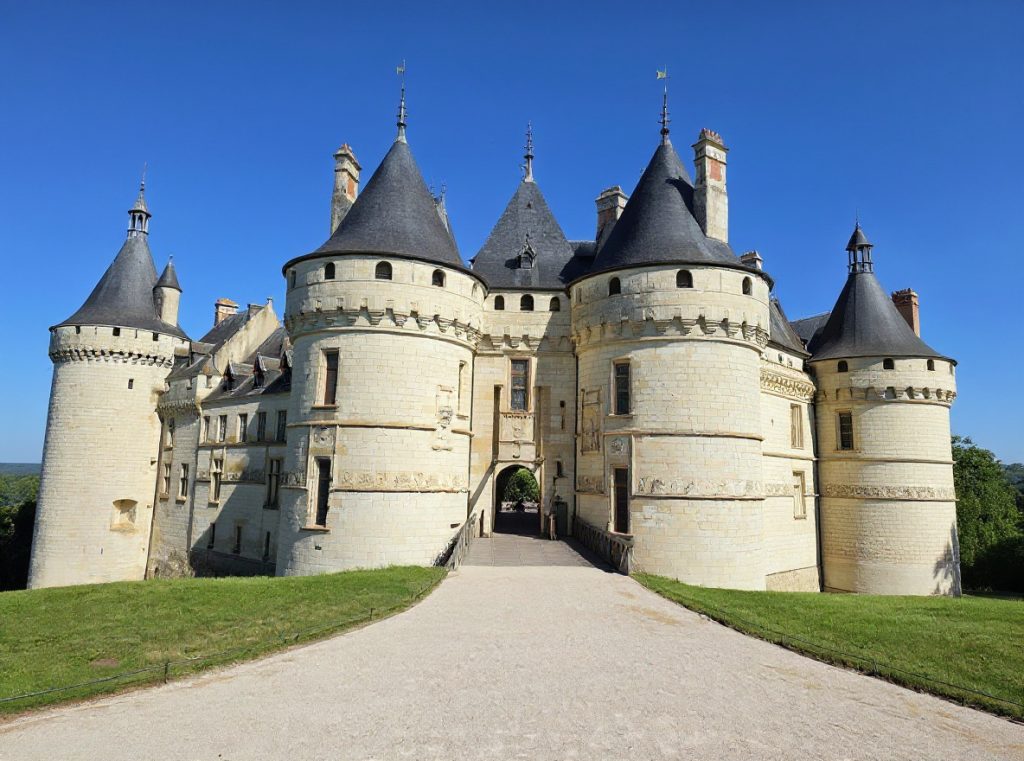
Perched on a commanding bluff above the Loire River, Château de Chaumont-sur-Loire rises with cylindrical towers and pepper-pot roofs. This remarkable fortress-turned-residence blends medieval strength with early Renaissance refinement. The château has witnessed centuries of French history, from feudal conflicts to royal intrigue. Today it serves as a renowned centre for contemporary art and gardens. It draws over 500,000 visitors each year to its 32-hectare estate.
Plan your visit to Château de Chaumont-sur-Loire
Location of Château de Chaumont-sur-Loire
The château sits in the commune of Chaumont-sur-Loire in the Loir-et-Cher department of Centre-Val de Loire. It occupies a strategic position midway between Blois and Amboise along the Loire Valley. The estate commands sweeping views across the river from its elevated bluff. Visitors reach the site via the D751 road, which runs through the village of Chaumont-sur-Loire. The property lies within the Loire Valley UNESCO World Heritage Site. Regular train services connect nearby Blois and Amboise to major French cities. From either town, the château sits approximately 15 kilometres away. The domaine sprawls across both riverbank and hillside. As a result, it offers remarkable vantage points over the valley.
History of Château de Chaumont-sur-Loire
Odo I, Count of Blois, founded the first fortress here around the year 1000. He built it to defend his lands from his feudal rival Fulk Nerra, Count of Anjou. The name Chaumont derives from the French “chauve mont,” meaning bald hill. The Amboise family acquired the château through marriage in the 11th century. They held it for five centuries. When Pierre d’Amboise rebelled against royal authority, Louis XI ordered the castle’s complete destruction in 1465.
Charles I d’Amboise began rebuilding just four years later in 1469. His son Charles II d’Amboise continued the work from 1498 to 1510. Together they created a structure that bridged two architectural worlds. The west wing retained massive round towers and defensive features. The newer sections introduced Renaissance courtyard design and ornate decoration. Catherine de’ Medici purchased the château in 1550 for 120,000 livres. After her husband Henri II died in 1559, she forced his mistress Diane de Poitiers to exchange the prestigious Château de Chenonceau for Chaumont. Diane lived there only briefly before retiring to her estate at Anet.
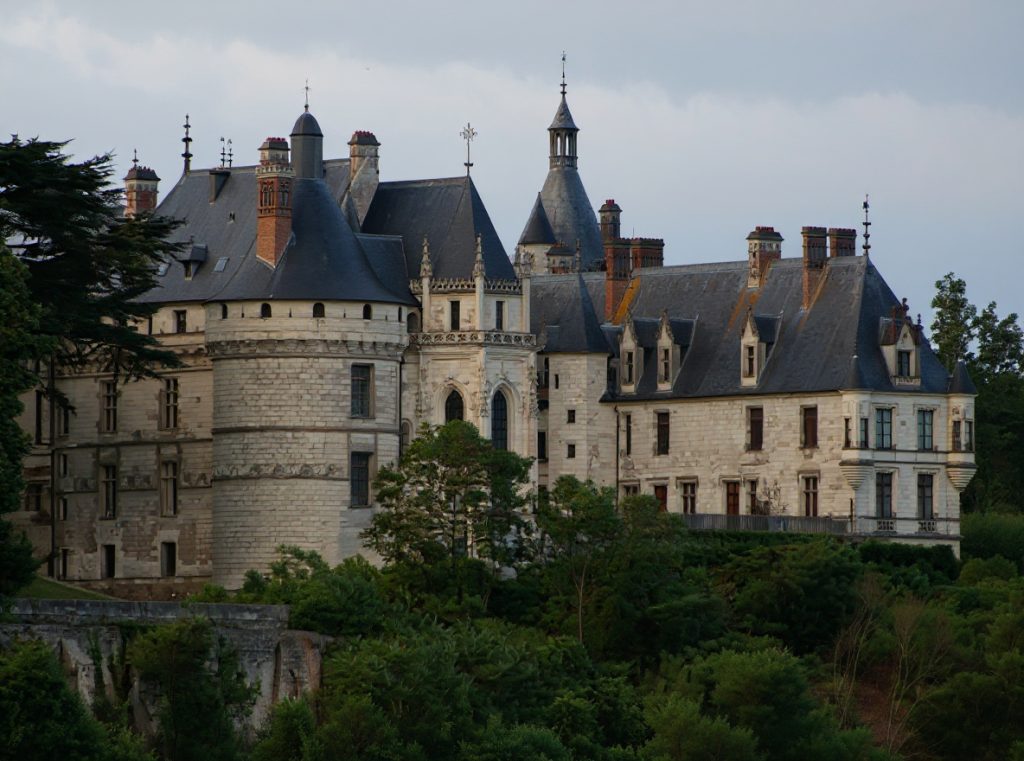
Jacques-Donatien Le Ray acquired Chaumont in 1750. He removed the north wing in 1739 to open the courtyard toward the Loire. Le Ray established a pottery and glass factory near the château. In fact, he hosted Benjamin Franklin in 1776. Madame de Staël owned the property from 1810. Marie-Charlotte Say, heiress to the Léon Say sugar fortune, bought Chaumont in 1875. She married Prince Henri-Amédée de Broglie, who transformed the estate into a Belle Époque showpiece. Architect Paul-Ernest Sanson designed luxurious stables in 1877, complete with electric lighting and running water. The de Broglie family commissioned extensive interior renovations. They also replanted the grounds as an English-style park.
Current status
The Centre-Val de Loire Region acquired Château de Chaumont-sur-Loire from the French state in 2007. The regional government established the Domaine Régional de Chaumont-sur-Loire as a public cultural institution. Director Chantal Colleu-Dumond oversees the estate’s operations. Authorities classified the château as a monument historique in multiple stages between 1840 and 1955. In 2008 it became a Centre Culturel de Rencontre. The French Ministry of Culture gave it this recognition for heritage preservation and artistic development.
The domaine functions as a year-round destination for heritage, art and horticulture. Visitors explore about 15 furnished rooms spanning Renaissance-style historic apartments and 19th-century private quarters. The Council Chamber displays eight 16th-century tapestries and a 17th-century majolica-tiled floor from Palermo. A small Gothic chapel built between 1498 and 1511 features pointed-arch windows and twisted columns adorned with arabesques. The 1877 stables showcase innovative Victorian design and equine luxury. Contemporary art installations occupy the château, park and stables throughout the year. They form part of the Centre for Arts and Nature programme.
The Festival International des Jardins runs annually from April to October. Each year, jury-selected teams of landscape designers, architects and artists create 30 experimental gardens across the grounds. The 21-hectare English-style park features mature cedars, open lawns and terraced views down to the Loire. The estate opens daily except for January 1 and December 25. The triple identity of heritage site, art centre and garden festival makes Chaumont a unique destination. It stands out within the Loire Valley’s château circuit. The château offers a rare example where medieval fortress architecture evolved seamlessly into Renaissance elegance. Its round towers and drawbridge still command the river crossing after more than a thousand years.
Castles near Château de Chaumont-sur-Loire
Frequently asked questions
What is included in a ticket to Château de Chaumont-sur-Loire?
One ticket covers the furnished château, 32-hectare historic park, famous stables, art installations and the International Garden Festival (22 April to 1 November). Two-day passes are available for €36 during the festival season.
How do I get to Château de Chaumont-sur-Loire from Blois?
Take a TER train from Blois to Onzain station (8 minutes, hourly service). The château is 2 km from the station; a seasonal shuttle operates during the Garden Festival, or it's a 20-minute walk.
When is the International Garden Festival at Château de Chaumont-sur-Loire?
The 2026 festival runs from 22 April to 1 November. The theme changes each year and features around 30 contemporary garden installations by international designers across the estate.
Are there guided tours available at Château de Chaumont-sur-Loire?
Yes, guided tours of the château are offered daily at 15:15 and 16:00, lasting 1.5 hours. They cost €5 per person in addition to the admission ticket.
Is Château de Chaumont-sur-Loire open year-round?
Yes, the estate is open every day except 1 January and 25 December. Hours vary by season: 10:00–20:00 in July–August and 10:00–17:30 in winter, with the ticket office closing one hour before the estate.
Popular right now
Featured listings