
At the foot of the Lomond Hills in Fife, Falkland Palace rises from the Royal Burgh of Falkland as one of Scotland’s most elegant Renaissance buildings. Between 1501 and 1541, James IV and his son James V commissioned the finest stonemasons and craftsmen to create a pleasure ground for their country pursuits. The palace represents the best example of French-influenced Renaissance architecture in Scotland. Built between 1501 and 1541 and set in the heart of a medieval village, the palace served as the country residence and hunting lodge of eight Stuart monarchs, including Mary, Queen of Scots.
Plan your visit to Falkland Palace
Tue–Wed Closed
Thu–Sun 10:00–17:00Palace open daily 10:00–17:00 (last entry 16:15) 1 Mar–31 Oct; shop & garden 09:30–17:00. Winter: guided tours only Thu–Mon.
Location of Falkland Palace
Falkland Palace sits in the village of Falkland, 11 miles north of Kirkcaldy and 11 miles south-west of Cupar. To the south the Lomond Hills rise up to Fort Glasslie on East Lomond some 1,699 feet (518 metres) high, and to the north-east the River Eden meanders through the flat plain of the Howe of Falkland. The palace occupies the High Street in the conservation village, with free parking available nearby. Visitors traveling by road can reach Falkland via the A912, approximately ten miles from the M90 motorway junction 8. The location provided both easy access from Edinburgh and sufficient distance for the Scottish court to escape the pressures of government.
History of Falkland Palace
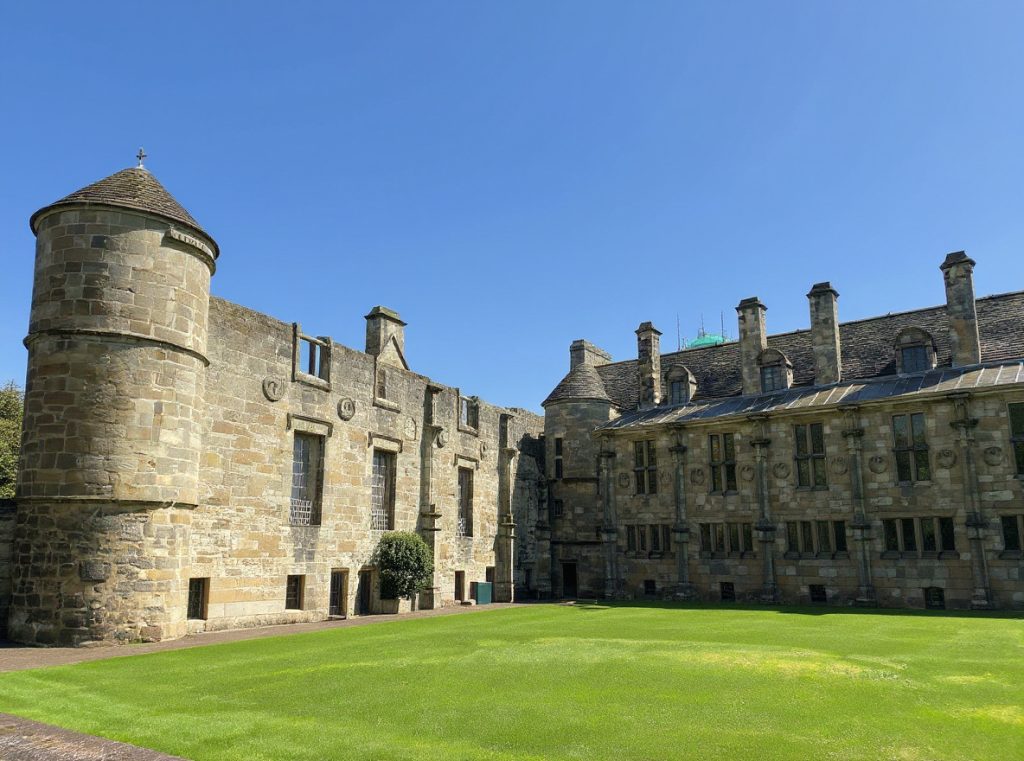
The palace was originally built as a residence for King James IV in 1500, replacing an earlier 12th-century castle. An older castle on the site belonged to the Earls of Fife before the Scottish Crown acquired it in the 14th century. James II of Scotland granted Falkland to his queen consort Mary of Guelders, and the palace became a favourite residence. James IV and James V transformed the old castle and royal lodgings into a beautiful renaissance-style royal palace. French stonemason Nicolas Roy was associated with the renaissance style carvings at Falkland Palace, as James V built the palace in French renaissance style. James V added significant structures and features, including the royal tennis court in 1539. James V died at Falkland in 1542, following his defeat against the English at the Battle of Solway Moss. Mary, Queen of Scots and King James VI visited the palace, but royal patronage was not sustained after the Union of the Crowns in 1603. King Charles I visited in 1633, and King Charles II in 1650-1. The Court never returned to Falkland Palace after 1665 and until the 19th century the village and palace were neglected. Oliver Cromwell’s army burned the palace down. In 1887 John Crichton-Stuart, 3rd Marquis of Bute bought Falkland and began a 20-year restoration of the palace.
Current status
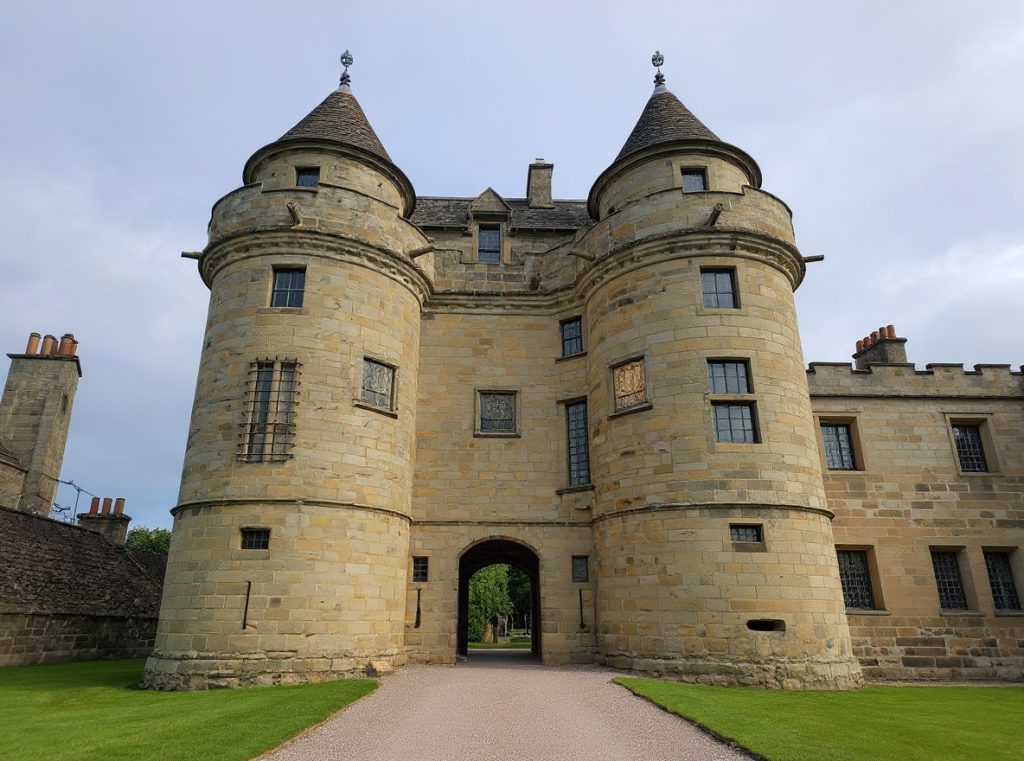
The palace still belongs to the Queen but has been maintained since 1952 by the National Trust for Scotland in its role as Deputy Keeper. Ninian Stuart, great-grandson of the 3rd Marquess of Bute, lives on site today as Keeper of the Palace. The National Trust for Scotland maintains the East Range as a stabilised ruin, so Falkland carries both its Renaissance completeness and its 17th-century destruction within the same site. Visitors can explore the Chapel Royal, the King’s Bedchamber, and several other apartments adorned with 17th-century Flemish tapestries and painted ceilings. Court construction for James V began in April 1539 and ended in late 1541, creating the oldest tennis court in use today. The picturesque palace gardens were designed by Percy Cane in the mid 1900s. The palace welcomes over 44,000 visitors annually. Beyond its historical significance, Falkland Palace has gained modern fame as a filming location for the television series Outlander. The palace stands as a testament to Scotland’s royal heritage, where centuries of Stuart history meet the careful preservation of one of Europe’s finest Renaissance buildings.
Castles near Falkland Palace
Frequently asked questions
Is Falkland Palace open all year?
The palace is open daily from 1 March to 31 October, 10:00–17:00 with last entry at 16:15. From November to February it offers guided tours only on Thursday to Monday.
What can I see at Falkland Palace?
You can visit the royal apartments, Chapel Royal with its painted ceiling, and the oldest real tennis court in Britain dating from 1539. The Arts and Crafts garden designed by Percy Cane features herbaceous borders, an orchard and Victorian glasshouses.
How much does Falkland Palace cost to visit?
Adult tickets are £19, children £10 and under 5s free; Young Scot cardholders pay £1. National Trust for Scotland members enter free at all times.
Where was Outlander filmed at Falkland Palace?
The village of Falkland doubled as 1940s Inverness in the Outlander series. The palace itself and surrounding village streets appear in several scenes from the first season.
Is there parking at Falkland Palace?
There is no parking at the palace itself, but free public parking is available at Back Wynd car park about 100 metres away. Street parking opposite the palace is restricted to 30 minutes only.
Popular right now
Featured listings