
On the banks of the Aura River, Turku Castle rises from Finland’s southwestern coast as the nation’s largest surviving medieval fortress. Grey granite walls, five metres thick at their base, have witnessed more than seven centuries of Nordic history. Swedish rulers founded this stronghold around 1280 when they transformed it from a military outpost into a Renaissance palace and administrative heart of Finland during the Swedish realm.
Plan your visit to Turku Castle
Tue–Sun 10:00–17:00Summer (1 Jun–30 Aug): Tue–Sun 10:00–18:00; rest of year: Tue–Sun 10:00–17:00. Closed certain holidays.
Location of Turku Castle
Turku Castle sits near the Port of Turku at Linnankatu 80 in southwestern Finland. The fortress occupies ground at the mouth of the Aura River. Swedish conquerors chose this strategic position to control river traffic and defend against eastern incursions. From Turku’s market square, the castle lies approximately three kilometres downstream along the riverside path. Visitors arriving by train reach Turku station in the city centre, then continue by local bus or bicycle. Ferry terminals serving Stockholm and other Baltic ports stand nearby. A city bicycle station operates directly in front of the castle entrance, while bike racks accommodate personal cycles.
History of Turku Castle
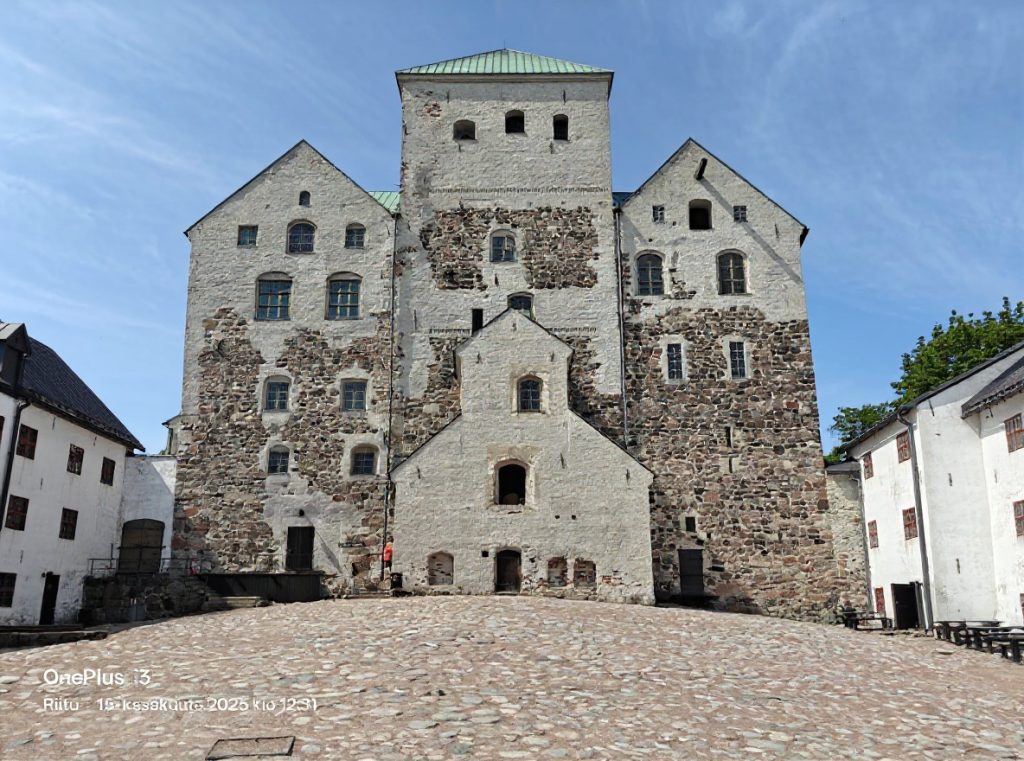
Swedish forces began construction around 1280 when they initially raised a fortified camp on what was then an island at the river mouth. During the early decades of the 14th century, builders transformed the camp into a closed fortress with square gateway towers. A moat connected to the Aura River, effectively isolating the stronghold. Russian invaders from Novgorod destroyed much of Turku in 1318, yet the castle endured. The keep reached completion in the early 15th century, while work on the bailey started in the late 15th century and finished during the 16th.
Power struggles within Sweden and the Kalmar Union repeatedly tested the fortress. Between 1364 and 1365, German lord Albrecht von Mecklenburg besieged the castle for eight months before Swedish troops surrounded his forces. The bailey housed administrative functions when the main castle stood empty. Governors-general and lord-lieutenants lived there during the 17th century. After 1556, King John III of Sweden lived at Turku as Duke John of Finland and commissioned Renaissance-style renovations. These renovations created the King’s and Queen’s halls and a round tower in the southeast corner. Polish princess Catherine Jagellon joined him there from 1562 to 1563.
The castle reached its peak during this mid-16th-century period, when Renaissance construction dramatically modified nearly all medieval rooms. In 1614, fire destroyed most wooden structures in the main castle during King Gustav II Adolf’s visit. Afterwards, the main castle largely stood abandoned or served as storage. From the 18th century until the late 19th century, authorities operated the fortress as a prison. Russian naval forces occupied it when the Finnish War began in 1808. During the Second World War in 1941, a Soviet incendiary bomb struck the main castle and caused severe damage.
Current status
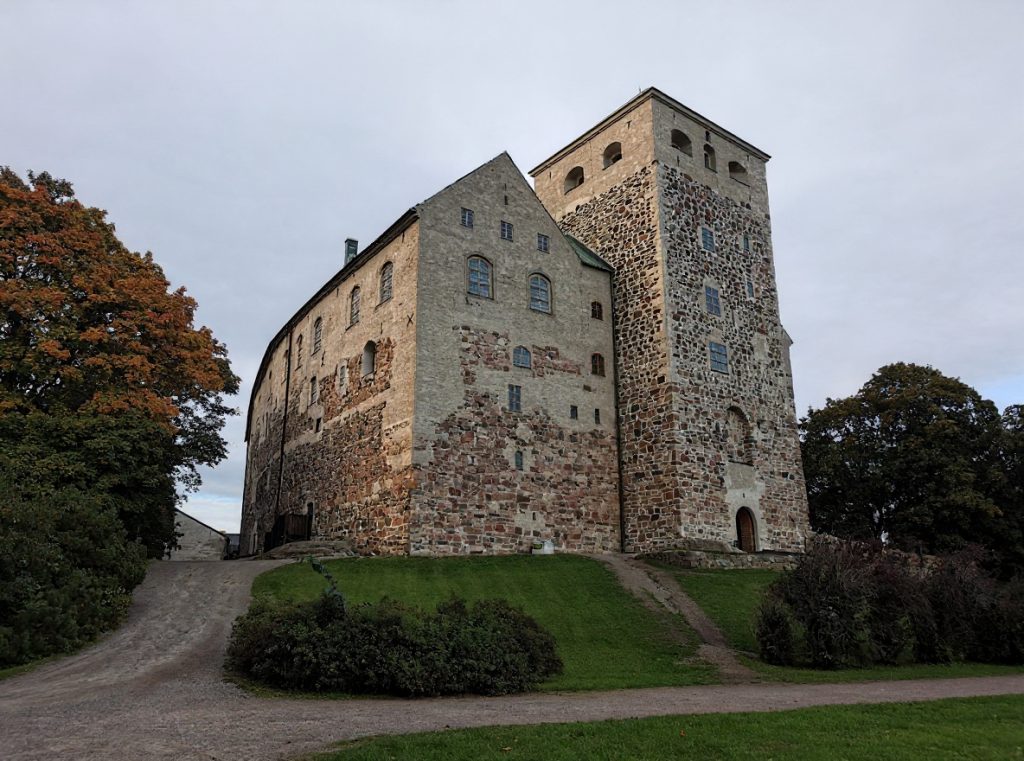
The Finnish state owns Turku Castle and entrusts its use to the City of Turku. The fortress functions entirely as a historical museum within the Turku Museum Centre. It serves as Finland’s most visited museum with attendance exceeding 100,000 people annually. Visitors explore over 40 individual rooms across the keep and bailey, including the Sture Church and Nuns Chapel. These spaces hold Finland’s finest collection of medieval religious statues. Builders constructed the Nuns Chapel in the 1480s as a dining room, though it later became Duchess Catherine’s devotional chamber. Exhibitions recount the castle’s transformation from military fortress to royal residence. They feature medieval weaponry, period furniture, and 16th-century wall paintings that conservators uncovered beneath whitewashed surfaces.
Guided tours and special events bring the castle’s history to life, while staff in medieval costume assist visitors navigating the labyrinth of halls, narrow staircases, and courtyards. The bailey’s furnished rooms demonstrate daily life across different eras. Several of the castle’s grander chambers host municipal functions, weddings, and cultural events. The magnificent church ranks among Turku’s most sought-after venues for ceremonies. Accessible entry for visitors with mobility needs routes through Nuottasaarenkatu to a western gate facing the harbour.
Turku Castle remains one of the oldest buildings still in use in Finland. It stands alongside Turku Cathedral as evidence of the nation’s medieval heritage. Its thick granite walls and square towers command the riverbank, where the grey fortress has guarded the waterway since the age of Swedish expansion into the eastern Baltic.
Frequently asked questions
Can I visit Turku Castle with a Museum Card?
Yes, the Museum Card grants free entry to Turku Castle. Without a Museum Card, adults pay €18, children (7–15) €8, and concessions €9.
What are the opening hours for Turku Castle?
Turku Castle is open Tuesday to Sunday, closed Mondays. Summer hours (June–August) are 10:00–18:00; the rest of the year 10:00–17:00, with some public holiday closures.
How long does it take to tour Turku Castle?
Plan for 2 to 3 hours to explore Turku Castle properly. The castle contains a large medieval fortress, Renaissance palace sections, and museum exhibitions spanning over 700 years of history.
How do I get to Turku Castle by public transport?
Take Föli bus number 1 from Turku city centre or Market Square to the 'Turun linna' stop, which takes about 20 minutes. Alternatively, the castle is a scenic 40-minute walk from the centre along the Aura River.
Are guided tours available at Turku Castle?
Yes, guided tours are available in multiple languages for an additional fee of €4 per person on top of admission. Public tours run regularly; group tours can be booked in advance by phone or email.
Featured listings