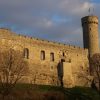
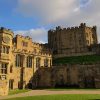
Atop a steep limestone hill in Tallinn’s heart, Toompea Castle commands the skyline with its pink Baroque façade and towering medieval fortifications. For eight centuries this fortress has served as Estonia’s seat of power. Danish crusaders, Teutonic Knights, Swedish governors and Russian empires each left their architectural mark here. Today it houses the Riigikogu, Estonia’s Parliament. The blue, black and white flag flies from Tall Hermann tower as a symbol of the nation’s independence. The castle blends medieval stone walls with elegant 18th-century palace wings, creating a living record of the rulers who shaped Estonia’s destiny.
Plan your visit to Toompea Castle
Location of Toompea Castle
Toompea Castle sits on Toompea Hill in central Tallinn, 50 metres above sea level. The fortress occupies the southwestern corner of the historic limestone hill within the Old Town. Visitors reach the castle on foot through Tallinn’s car-free medieval streets. They climb either the Lühike Jalg (Short Leg) or Pikk Jalg (Long Leg) lanes that wind uphill from the lower town. The castle stands at Lossi plats 1a, directly accessible from Castle Square. From Tallinn’s main railway station, the walk takes about 15 minutes. The location offers commanding views across the city’s red-tiled rooftops toward the Baltic Sea. Public buses connect the Old Town to other districts, though most visitors explore the compact historic centre entirely on foot.
History of Toompea Castle
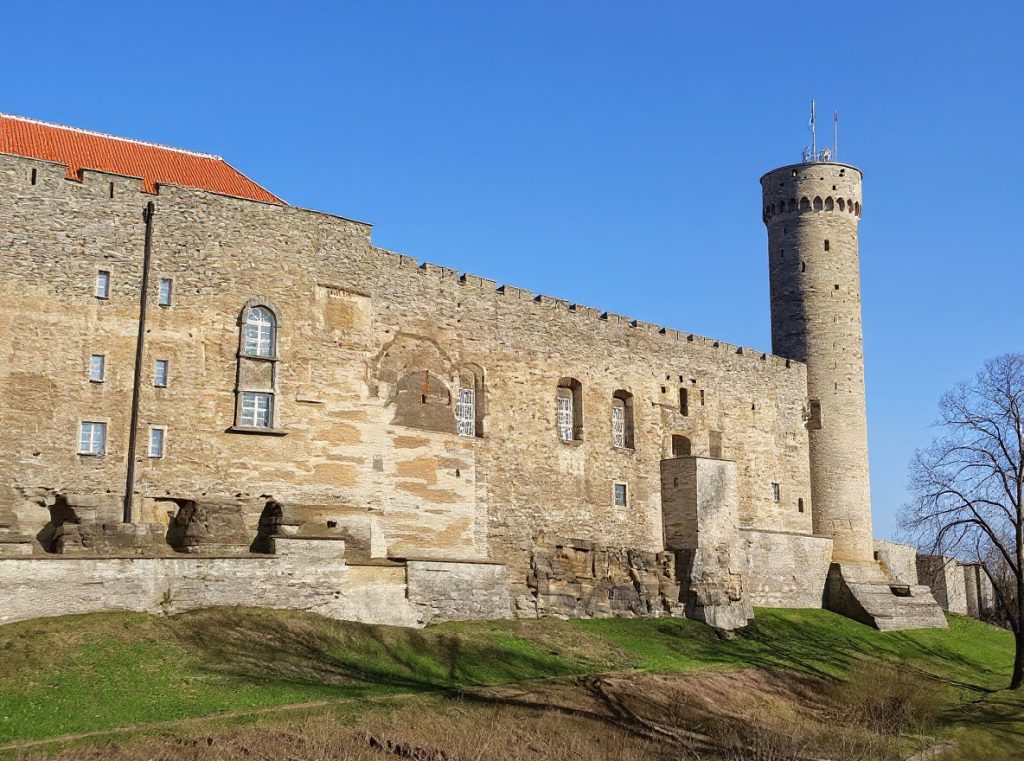
An ancient Estonian wooden fortress occupied this hill since at least the 9th century, when local rulers built the stronghold. In 1219, Danish crusaders under King Valdemar II conquered the site during the Battle of Lindanise. According to legend, the Danish flag Dannebrog fell from the sky during this battle, leading to victory. The Danes built the first stone fortifications and named it Castrum Danorum, the Castle of the Danes. Tallinn’s name may derive from this Danish designation.
The Order of the Brothers of the Sword acquired the castle in 1227 and began serious stone construction in the southwestern part of the hill. They built a rectangular fortress divided by a wall, with an outer bailey and inner residence protected by defensive towers. After 1346, the Teutonic Order purchased Estonia from Denmark and expanded the castle substantially. They erected four corner towers including Tall Hermann, completed in the 1360s and rising 48 metres. The Order added ecclesiastical buildings such as a chapel and chapter house, giving the complex a cathedral-like character. Medieval Toompea served as the administrative and military heart for the German Knights who governed the region through the Middle Ages.
Sweden gained control in 1561 after the Livonian War and transformed the castle into a political centre. A ceremonial State Hall building arose between 1583 and 1589 against the western wall. When Russia conquered Estonia in 1710, Empress Catherine the Great ordered major renovations between 1767 and 1773. Architect Johann Schultz designed a new wing in Baroque and Neoclassical style for the eastern part, creating the Governor’s Palace with its distinctive pink façade. This wing housed the provincial administration and the imperial governor’s living quarters.
Current status
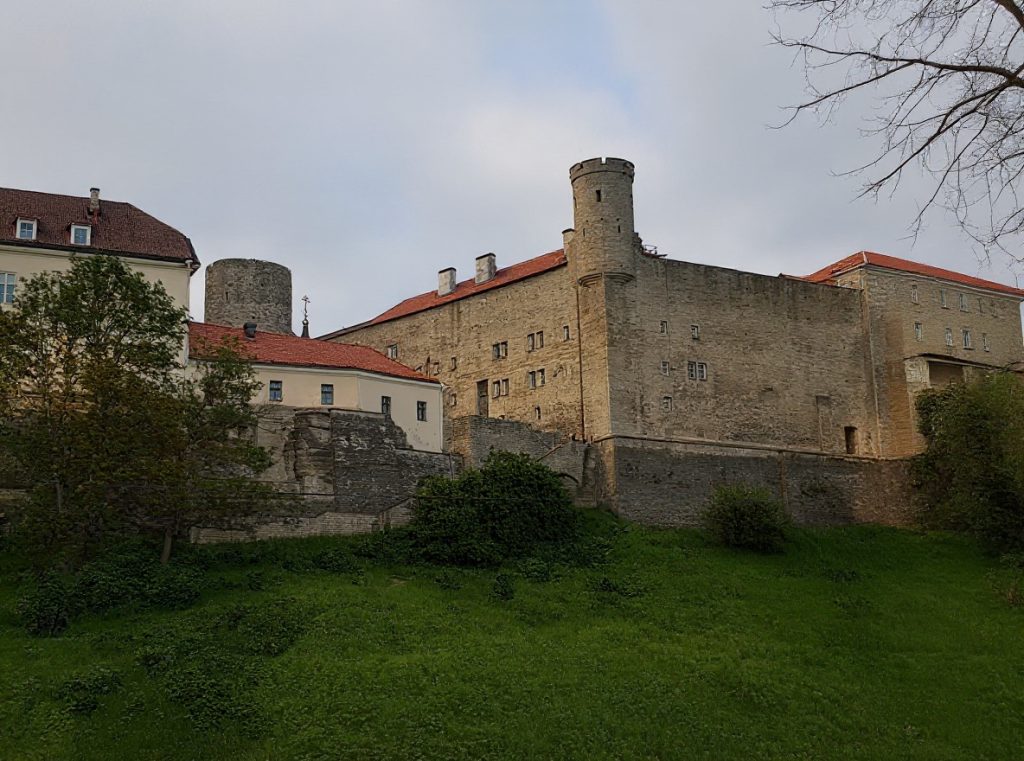
The Estonian Parliament manages Toompea Castle today. The Riigikogu occupies the complex with 101 members and approximately 251 staff of the parliamentary chancellery working within the historic walls. Free guided tours run Monday through Friday for individuals and groups, though visitors must book in advance through the official website. Tours last about 45 minutes and explore the Plenary Hall, White Hall, and various corridors while explaining parliamentary work and the castle’s layered history. Security measures include identity checks, metal detectors and bag scans at entry. Visitors can also watch parliamentary sessions from the public gallery after registering in the foyer.
The castle complex preserves architectural elements from multiple eras. Medieval fortifications include three surviving towers from the Teutonic period, with Tall Hermann the most prominent. Each morning at sunrise the Estonian flag rises on Tall Hermann to the national anthem, then lowers at sunset. The pink Baroque Governor’s Palace wing dominates the eastern façade facing Castle Square. In contrast, stern medieval walls with narrow windows face the lower town and sea. The 1920s parliament building introduces early 20th-century Expressionism into the courtyard. Exhibition spaces within the castle display Estonian art, and the complex hosts Open House Day annually to celebrate the anniversary of the Constituent Assembly.
Toompea Castle stands as a powerful symbol where foreign dominion gave way to Estonian self-governance. The fortress once sheltered Danish viceroys and Teutonic commanders. Now it safeguards democratic debate, its ancient stones witnessing the unfolding of modern Estonia’s story high above the capital.
Castles near Toompea Castle
Frequently asked questions
Can you visit the interior of Toompea Castle?
The castle interior can only be visited on pre-booked guided tours of the Riigikogu (Estonian Parliament). Tours must be reserved in advance through the official website, and a valid photo ID is required for entry.
Is Toompea Castle free to visit?
Yes, guided tours of Toompea Castle and the parliament building are free of charge. However, you must book in advance and the castle grounds and exterior are freely accessible at all times.
What language are tours of Toompea Castle conducted in?
Group tours are available in Estonian and English. Individual visitor tours in English are offered on Fridays at 11:00 during the season (September to October 2026), with advance booking required.
Can you climb Tall Hermann Tower at Toompea Castle?
The Tall Hermann Tower is generally not open to the public except during special events like the annual Open House Day in April. The tower is primarily a symbolic landmark with the Estonian flag flying on top.
How do I get to Toompea Castle from central Tallinn?
Toompea Castle is within Tallinn's Old Town on Toompea Hill, a 5–10 minute walk from the Lower Town. Access the hill via the cobbled lanes Pikk jalg or Lühike jalg, or walk from near the A. Laikmaa tram stop.
Featured listings