
Built on Estonia’s western coast, Haapsalu Castle served as the spiritual and administrative heart of the medieval Bishopric of Ösel-Wiek for over four centuries. Authorities created the bishopric as a state of the Holy Roman Empire on 1 October 1228. Soon after, construction began on this formidable episcopal fortress. Within its walls rises the largest single-naved church in the Baltic countries, with its 15.5-metre-high domical vaults. Legend says that during full moons in August, the ghost of the White Lady appears on the chapel wall, mourning her lost love.
Plan your visit to Haapsalu Castle
Wed–Sun 10:00–18:00
Location of Haapsalu Castle
Haapsalu is a seaside resort town on the west coast of Estonia. The castle sits at Lossiplats 3 in the centre of Haapsalu town, approximately 100 kilometres southwest of Tallinn. Visitors reach the site easily by car via the E263 highway. They can also take a direct bus from the capital. The journey takes about 90 minutes through the scenic landscapes of Lääne County. Haapsalu is the administrative centre of Lääne County, so the town offers good facilities for visitors. The castle grounds occupy a prominent position overlooking the bay. The historic stone walls remain visible from many vantage points around the town. Public parking lies near the entrance. The old town’s wooden architecture provides a charming backdrop for exploring this medieval monument.
History of Haapsalu Castle
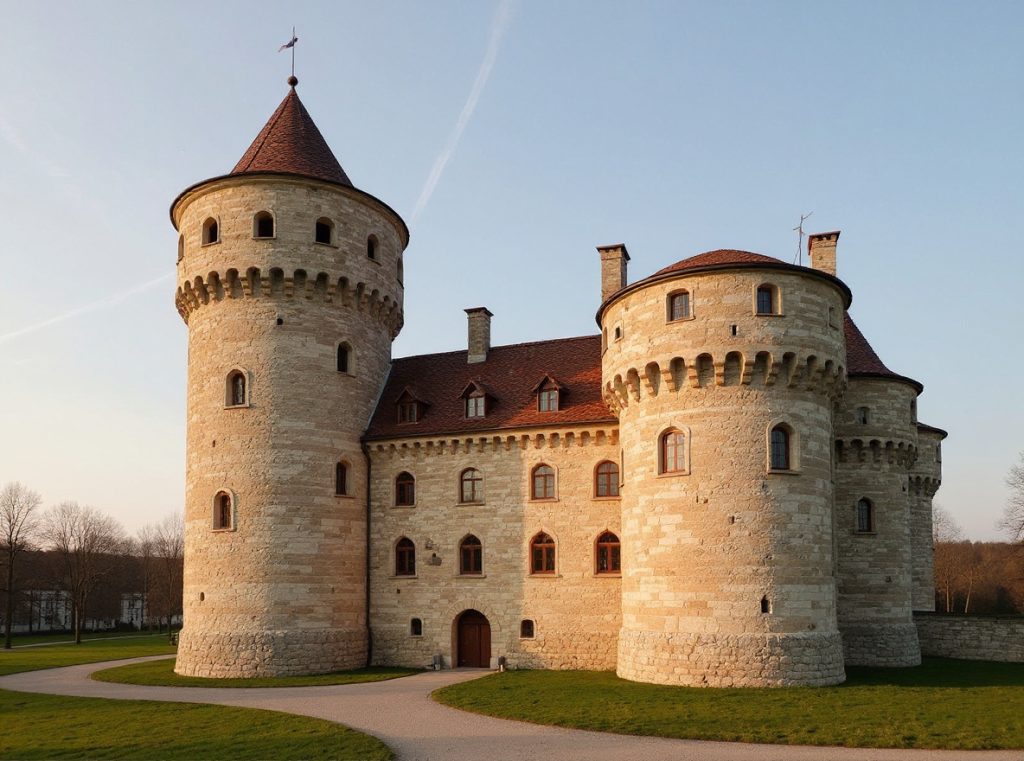
The first residence of the Bishopric of Ösel-Wiek sat in Lihula Castle. There, with the help of the Livonian Brothers of the Sword, builders raised a stronghold of stone. In an attempt to avoid conflicts with the influential Order, the Bishop transferred the diocese’s residence to Perona. Lithuanians burned it ten years later. Church leaders chose a new center for the diocese in Haapsalu, where they started an Episcopal stronghold and cathedral. Builders probably completed the cathedral in the 1260s, while the castle only appeared in documents in 1314. Construction of the castle continued for three centuries. The building, widening and reconstruction of the stronghold went on throughout several centuries, with the architecture changing as weapons developed.
Bishop Hermann I de Becheshovede of Ösel-Wiek granted town rights to Haapsalu in 1279. He transferred the official seat of the bishopric there at the same time. In the second half of the 14th century, builders added a large, round chapel to the church. This chapel remains the only example of this type of Gothic building in Livonia. The stronghold achieved its final dimensions under the reign of Bishop Johannes IV Kievel (1515–1527). During his rule, workers added defensive works adapted to firearms. The castle complex eventually encompassed an area of more than 30,000 square metres, with wall thickness between 1.2 and 1.8 meters.
The inner trenches and blindages, which builders created for cannons and as a shelter from bombing, date back to the Livonian War (1558–1582). Yet it was during this war that the stronghold suffered severe damage. Enemies left the walls of the small castle and the outer fortification partly destroyed. After authorities ended the bishopric of Ösel-Wiek in 1559, Haapsalu lost its main raison d’etre. Several fires damaged the castle in the seventeenth century.
Current status
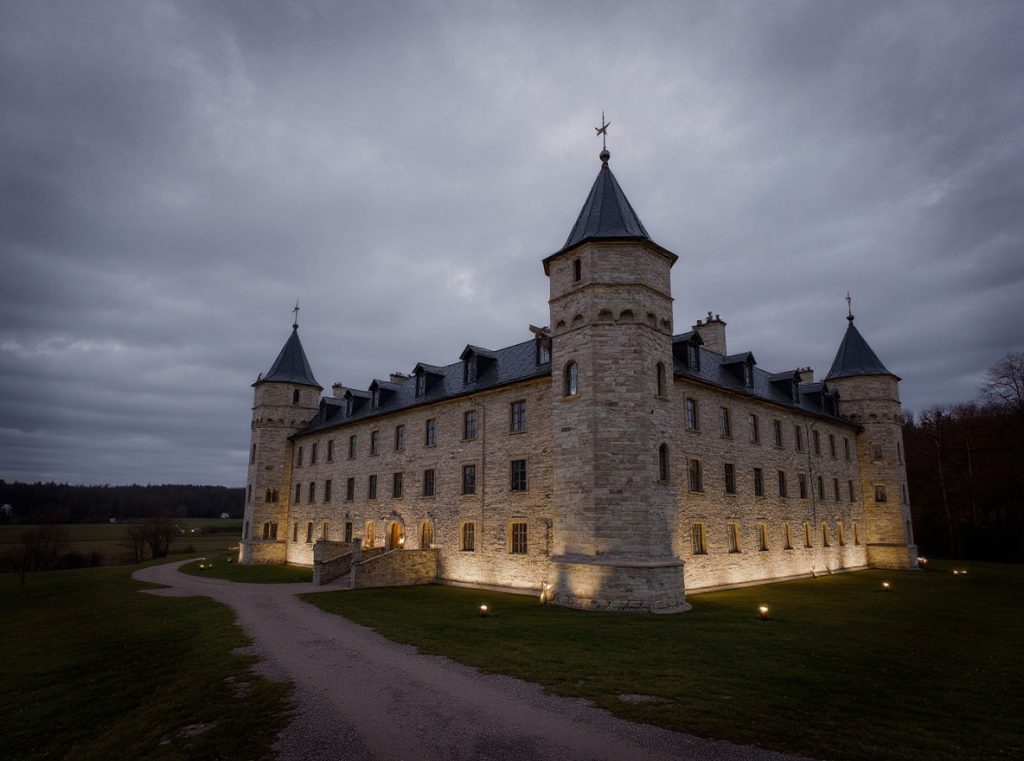
Today Haapsalu Castle stands as one of Estonia’s most significant medieval monuments. In the main castle, a museum presents the Middle Ages. From there you can head to the cathedral in the south wing, which first appeared in Chronicles from 1279. The museum presents the ancient history of Haapsalu and the living environment of the medieval fortress in a conventional and playful hands-on format. Haapsalu Castle got a Special Commendation from the European Museum of the Year Awards (EMYA) in 2021. The Haapsalu and Läänemaa Museums foundation runs the site. It offers visitors a 700-metre journey through two floors of interactive exhibits.
Restorers have brought the church back to life, and since 1990 the local congregation of the Estonian Lutheran Church has actively used it. These days the inner bailey hosts a museum. The cathedral still serves the local congregation. Over the course of time, landscapers have turned the historic castle grounds into a park. Visitors can climb the towers for views across the bay. They can explore the defensive walls and experience the atmospheric dimly-lit halls. The round baptism chapel remains the focus of the White Lady legend. It attracts visitors each August when moonlight might reveal the spectral figure.
The castle grounds stay open year-round, though museum hours vary by season. Families enjoy the medieval playground in the moat, while history enthusiasts appreciate the blend of ruins and restored architecture. The fortifications show the evolution of military design across three centuries. They display early medieval stonework alongside later cannon emplacements. Stone towers punctuate the curtain wall. Gates lead through to the courtyards where bishops once held court over their small ecclesiastical state.
Castles near Haapsalu Castle
Frequently asked questions
What is included in the Haapsalu Castle ticket?
The ticket grants access to the museum exhibition, the 13th-century cathedral, and the viewing platform in the tower. The castle courtyard is free to explore without a ticket.
Is Haapsalu Castle open year-round?
Yes, but with reduced hours in winter. From June to August it opens daily 10:00–18:00; from September to May it opens Wednesday to Sunday 10:00–18:00, closed Monday and Tuesday.
Can I visit the cathedral inside Haapsalu Castle on Sundays?
The cathedral is included with the museum ticket, but access is restricted on Sundays from 11:00 to 12:00 during church services. Entrance to the service itself is through the main cathedral doors.
Who qualifies for the concession rate at Haapsalu Castle?
School students, university students, pensioners, and teachers receive the €8 concession rate. Children aged 0–8 and people with severe disabilities (plus one accompanying person) enter free.
How do I get to Haapsalu Castle from Tallinn by public transport?
Buses depart hourly from Tallinn bus station to Haapsalu, taking approximately 1 hour 30 minutes. The castle is a short walk from Haapsalu bus station in the old town centre.
Featured listings