
On the banks of the River Clwyd, where medieval engineering reshaped the landscape itself, Rhuddlan Castle rises as the first of Edward I’s revolutionary concentric fortresses in Wales. Master architect James of St George began work on this diamond-shaped stronghold in 1277, and workers completed it in 1282 at a cost of £9,613. The castle became far more than a military structure. Its completion preceded the Statute of Rhuddlan, which laid down English law in Wales for 250 years until Henry VIII’s Act of Union in 1536.
Plan your visit to Rhuddlan Castle
Location of Rhuddlan Castle
Rhuddlan Castle sits in Rhuddlan, Denbighshire, just three miles inland from the Welsh coast. The castle lies on the A525 or A547 routes. Visitors can reach it by rail from Rhyl station, six kilometres away on the Chester-Prestatyn/Llandudno line. A deep moat links the fortress to the River Clwyd, which Edward’s engineers converted into a deep-water channel to the sea through an astonishing feat of medieval engineering. Some seventy labourers from the Lincolnshire Fens, using only hand tools, took three years to complete the two-mile-long channel. Ships could then supply the castle during sieges, so the fortress never depended on overland routes alone. The surrounding town of Rhuddlan still follows its medieval grid pattern today.
History of Rhuddlan Castle
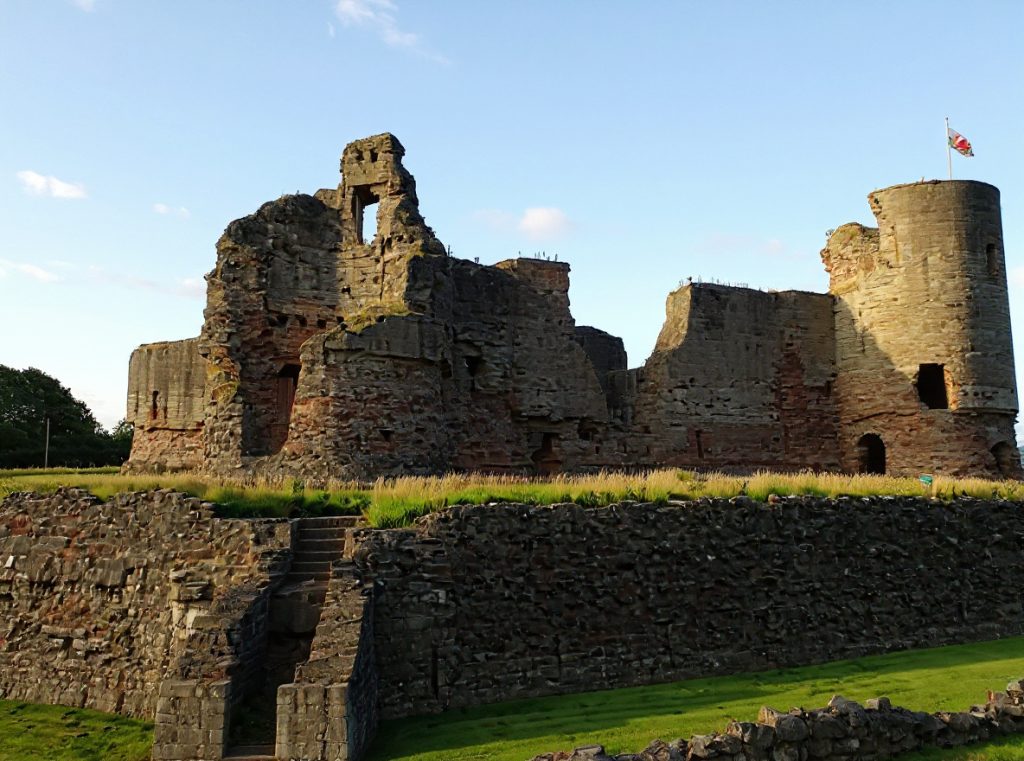
Edward I chose Rhuddlan as a castle site in 1277 and built it concurrently with Flint Castle as he consolidated his conquest of Wales. The castle became part of Edward’s Ring of Iron fortifications. The design featured a diamond-plan stronghold with twin-towered gatehouses at two corners and single round towers at the others. An outer circle of lower turreted walls surrounded the inner ward, and beyond these lay a deep moat. The site held strategic importance long before Edward arrived. Robert of Rhuddlan built a motte-and-bailey castle here in 1073. The Welsh then held it, with two brief interludes of English occupation, until 1277.
Elizabeth, the eighth daughter of Edward I, came into the world at Rhuddlan in 1282, the same year workers completed the castle. Two years later, officials signed the Statute of Rhuddlan at the castle following the defeat of Llewellyn the Last, who had attacked the castle unsuccessfully. This statute established English administrative control over much of Wales and created a system that endured for centuries. The castle saw action again during the Welsh uprising of 1294 and remained a significant English stronghold throughout the medieval period. Royalist troops garrisoned it during the Civil War, but after Parliament successfully besieged Rhuddlan, Parliamentarians slighted the castle to prevent Royalists from holding it again. Burgesses of the borough then used much of the building stone for their own projects.
Current status
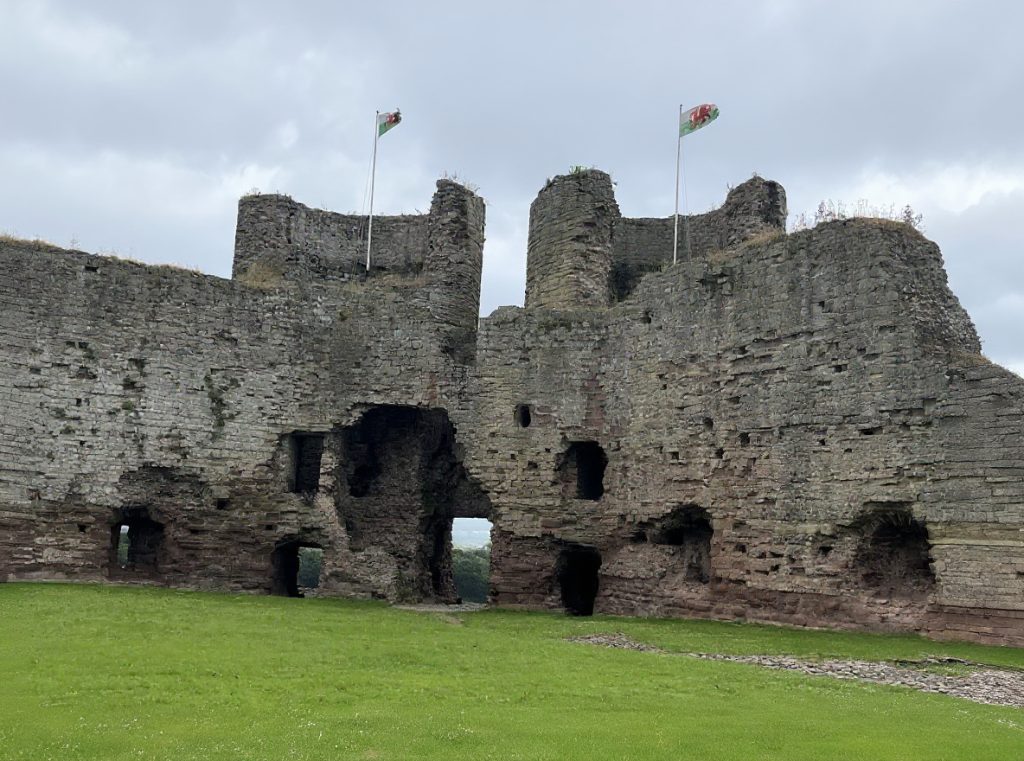
The castle now sits in the care of Cadw in the small village of Rhuddlan on the outskirts of Rhyl. Cadw, the Welsh Government’s historic environment service, maintains the site and welcomes visitors year-round. The ruins remain substantial and reward exploration. The inner ward, in particular, survives in good condition, with a pair of towered entrances each rising to four storeys. Visitors can walk the fortifications, examine the gatehouse chambers, and trace the outline of the defensive systems that made this castle such a formidable stronghold. The site includes a visitor centre and gift shop. Regular events bring medieval history to life through storytelling, archery demonstrations, and living history displays.
Seven centuries after its construction, the castle still commands attention beside the River Clwyd. The concentric design remains clear, and the relationship between fortress and waterway tells the story of medieval military innovation. When you stand within these walls, the weight of history presses close. English law took root in Wales here, where a princess came into the world, and where armies clashed for control of a strategic river crossing that had sparked conflict for half a millennium.
Castles near Rhuddlan Castle
Frequently asked questions
What are the opening times for Rhuddlan Castle?
Rhuddlan Castle is open from 25 March to 31 October, 10am to 5pm, but is closed on Tuesdays and Wednesdays. The castle is closed from 2 November to 24 March.
How much does it cost to visit Rhuddlan Castle?
Adult admission is £6.50, children aged 5–17 and students pay £4.50, and seniors (65+) pay £5.80. Children under 5 and disabled visitors with a companion enter free.
How do I get to Rhuddlan Castle by public transport?
From Rhyl railway station (6 km away), take bus 36 or 51 to Rhuddlan, which takes about 15 minutes. The nearest bus stop is a short walk from the castle entrance.
Is there parking at Rhuddlan Castle?
Yes, free parking is available on site at Rhuddlan Castle. There is also a designated disabled parking space.
What can I see at Rhuddlan Castle?
Visitors can explore the concentric castle ruins, including the diamond-shaped inner stronghold with twin-towered gatehouses and the outer walls. The site also features one of the largest dry moats in Wales and information boards about the castle's history.
Popular right now
Featured listings