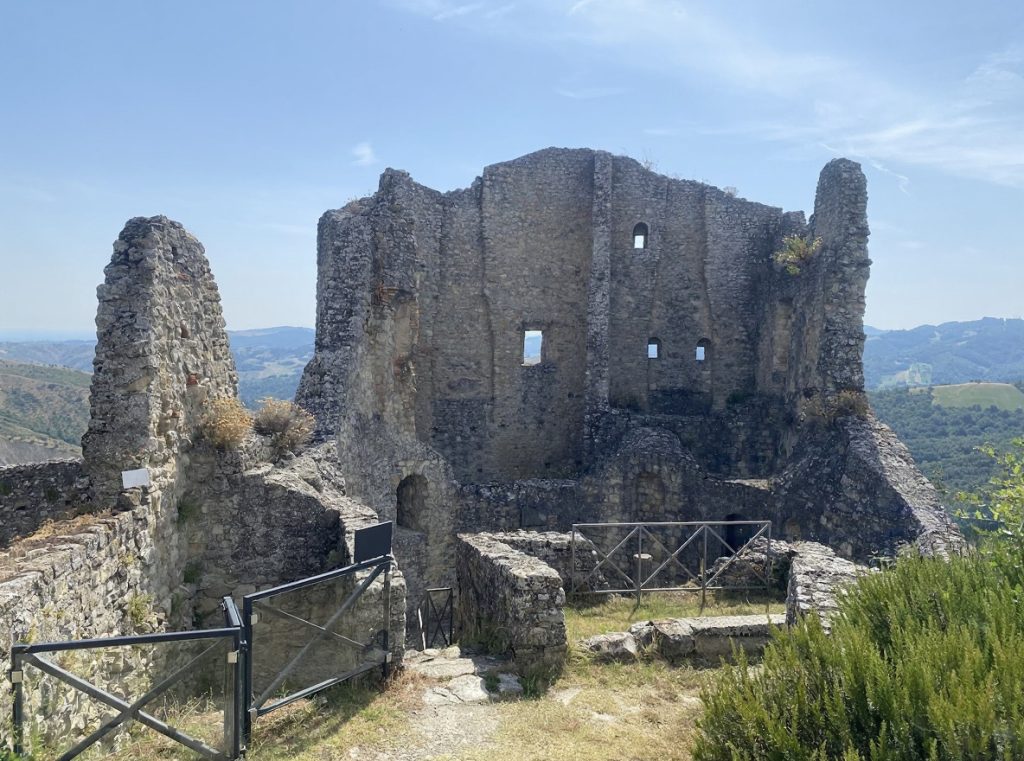
Canossa Castle commands a white sandstone cliff in the Reggio Emilia Apennines, 576 metres above sea level. Around 940, Adalberto Atto built the castle. He was the son of Sigifredo of Lucca, a Lombard nobleman. This fortress became the seat of one of medieval Italy’s most powerful dynasties. The castle is especially known as the location of the Road to Canossa. In 1077, Emperor Henry IV and Pope Gregory VII met here during the Investiture Controversy. This event defined the struggle between secular and religious authority in medieval Europe.
Plan your visit to Canossa Castle
Tue–Sun 10:30–16:30Apr–Sep: Tue–Fri 10:00–17:00, Sat–Sun 10:00–18:00; Oct–Mar: shorter hours, check website.
Location of Canossa Castle
The castle sits in Canossa, province of Reggio Emilia, northern Italy. It occupied a strategic position along the end of the Apennines between Parma and Bologna. The most important roads from northern Europe to Rome flowed through here. The fortress sits between the Enza River and the Crostolo stream. Its elevated position gave the Canossa family control over vital trade and pilgrimage routes. Visitors reach the site via SP73 road through the rolling hills south of Reggio Emilia. The ruins dominate the landscape for miles around. The geological formation consists of Oligocene limestone. Today the municipality of Canossa encompasses the site, though people formerly knew the town as Ciano d’Enza.
History of Canossa Castle
Adalberto Atto built the castle on the summit of a rocky hill. Apart from his residence, it included a convent with 12 Benedictine monks and the church of Sant’Apollonio. A triple line of walls protected it. Between the two lower lines stood the barracks and the residence of the servants. In 950 Adelaide of Italy, the widow of King Lothair II, took refuge there. Berengar II of Ivrea besieged the castle for three years but failed to capture it. The fortress passed to Adalberto’s great-granddaughter, Countess Matilda of Tuscany. She controlled territories stretching from Verona to Lazio.
In January 1077, the castle witnessed one of medieval Europe’s most dramatic moments. Matilda invited Pope Gregory VII to take refuge in Canossa Castle during the dispute with Henry IV. Henry was the Holy Roman Emperor at the time. After three days of waiting at the castle gates, Henry gained admission and received forgiveness. The excommunicated emperor had crossed the Alps in winter to seek absolution. This humiliation of imperial power before papal authority resonated across Christendom. In 1502 Ercole I d’Este named the poet Ludovico Ariosto castellan, blending military and cultural life.
In 1255, troops of Reggio destroyed the castle and the church. The Canossa family regained it afterwards. In 1593 Canossa became a fief assigned to the Counts Rondinelli. The castle passed through several noble families after that. In 1409 the Canossa family ceded it to the House of Este. The Este held it until 1796. The Valentini family later owned the decaying fortress. By the 19th century, the castle had fallen into ruin. A landslide caused by a falling rock in 1846 brought additional damage.
Current status
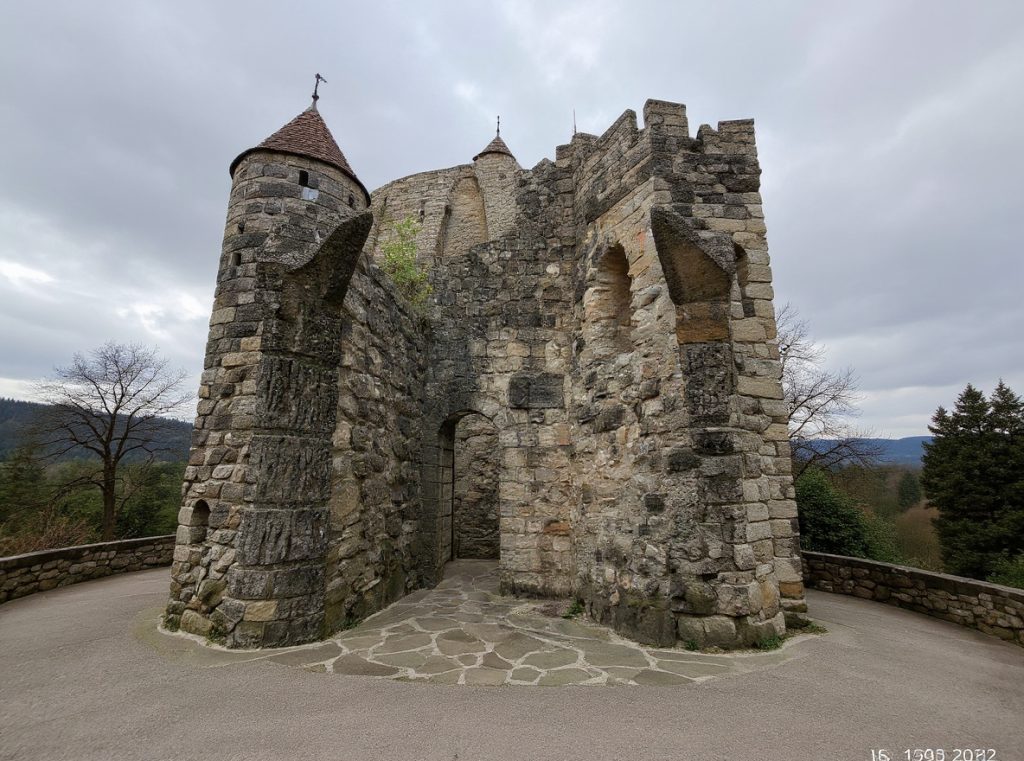
In 1878 the Italian State acquired the Castle. Authorities declared it a national monument soon after. Archaeologist Naborre Campanini led excavations in the late 19th and early 20th centuries. The Naborre Campanini National Museum now stands on site. It houses artefacts from these excavations. Visitors can explore the remaining walls and fortification structures. The ruins occupy only a portion of the original fortified area because erosion crumbled parts of the cliff. The site charges admission and operates seasonal opening hours. The castle forms part of the broader Matilda heritage route through the Reggio Emilia Apennines.
The state manages the ruins as both archaeological site and historic monument. Educational programmes explain the Investiture Controversy and medieval power structures. The museum displays architectural fragments, Roman finds, and reproductions of medieval manuscripts. Combined tickets allow visits to nearby Rossena Castle, another stronghold in Matilda’s defensive network. The surrounding landscape retains its medieval character, with watch towers visible on neighbouring peaks. The white stone glows against green valleys below. Standing where emperor and pope met, visitors grasp something profound. This remote fortress shaped the course of European history.
Castles near Canossa Castle
Frequently asked questions
What is the historical significance of Canossa Castle?
Canossa Castle is famous for the 'Walk to Canossa' in January 1077, when Emperor Henry IV stood in the snow for three days to beg forgiveness from Pope Gregory VII, who was the guest of Countess Matilda of Tuscany. This event became a symbol of the power struggle between the Church and the Holy Roman Empire during the Investiture Controversy.
Can you explore the interior of Canossa Castle?
Only ruins remain on the clifftop, but visitors can explore the archaeological site and the adjacent Naborre Campanini Museum, which houses a Romanesque baptismal font and artefacts from the Matildic era. Guided tours (included in the admission price) are offered on weekends and public holidays.
Is Canossa Castle suitable for visitors with mobility issues?
No, the castle is not accessible to visitors with mobility impairments. The ruins sit atop a steep sandstone cliff at 576 metres above sea level, requiring a short but steep uphill walk or stairs from the parking area.
Are there combined tickets for Canossa Castle and nearby attractions?
Yes, visitors can purchase a combined ticket with Rossena Castle (another Matildic fortress nearby) for a reduced price. Present your Canossa ticket at Rossena to pay €4 instead of €5, or vice versa.
Do I need to book in advance to visit Canossa Castle?
Advance booking is recommended, especially outside peak season and on weekdays. Contact the Matilde di Canossa Association at +39 366 2287340 or via the website to confirm opening times and arrange guided tours for groups.
Popular right now
Featured listings