A dramatic limestone peninsula carved by the winding Smotrych River holds Kamianets-Podilskyi Castle, which commands the historic Podilian landscape with its formidable stone towers. This medieval fortress takes its name from the Slavic word ‘kamin’ meaning stone. For centuries it has guarded the gateway to the Old Town. Seven towers from the original twelve still dominate the surrounding canyon, so they create a natural defence system of extraordinary power. Ukraine recognizes the castle as one of its Seven Wonders. Visitors step into a world where Lithuanian princes, Polish kings and Ottoman armies shaped its layered history.
Plan your visit to Kamianets-Podilskyi Castle
Location of Kamianets-Podilskyi Castle
The castle sits in Kamianets-Podilskyi city in Khmelnytskyi Oblast, western Ukraine. The Smotrych River wraps around the peninsula on three sides, so the fortress controlled the single bridge linking the Old Town to the mainland. Regular trains and buses from Kyiv, Lviv and Chernivtsi reach the city. From the railway station, city transport or a twenty-minute walk through ancient streets leads to the castle entrance on Zamkowa Street. The fortress occupies a strategic position in the historic Podolia region. Seven rivers including the Dniester and Smotrych flow through canyons and valleys there. The dramatic topography made this site vital for controlling medieval trade routes between Poland and the Ottoman Empire.
History of Kamianets-Podilskyi Castle
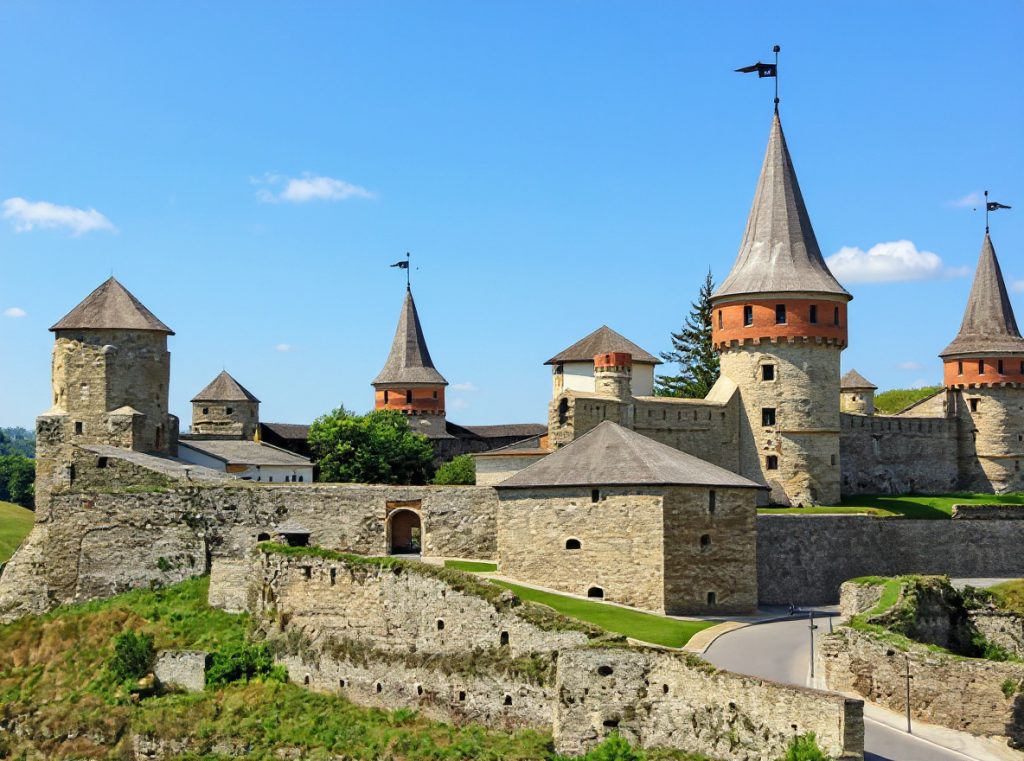
Historical documents from 1374 first mention the castle, though archaeological evidence proves human settlement from the twelfth or thirteenth century. Prince Yuriy Koriatovych granted Magdeburg rights to Kamianets within the castle walls during Lithuanian rule. Lithuanian prince Fyodor Koriatovych raised a stone castle at the end of the fourteenth century. Legend tells how Fyodor and his brothers discovered the canyon-encircled peninsula while hunting deer and recognised its defensive potential. Polish control began in 1434 when the castle entered the Polish-Lithuanian Commonwealth. It remained there until Russian annexation in 1793. King Casimir IV fortified the Old Town, whilst Kings Sigismund I and Stephen Báthory rebuilt the Old Castle. Kings Sigismund III Vasa and Władysław IV Vasa founded the New Castle, so they created the three-part Polish fortress complex. In 1621, engineer Theophilus Schaumberg modernised the defences to withstand artillery fire. Ottoman forces seized the fortress in 1672 after a long siege. It remained part of the Ottoman Empire until 1699. The fortress earned renown for repelling countless invasions by Cossacks, Tatars and Turks across three centuries. After Russia absorbed the territory in 1793, Kamianets-Podilskyi became the centre of Podolia province. The city briefly served as capital of the Ukrainian People’s Republic from February 1919 to November 1920.
Current status
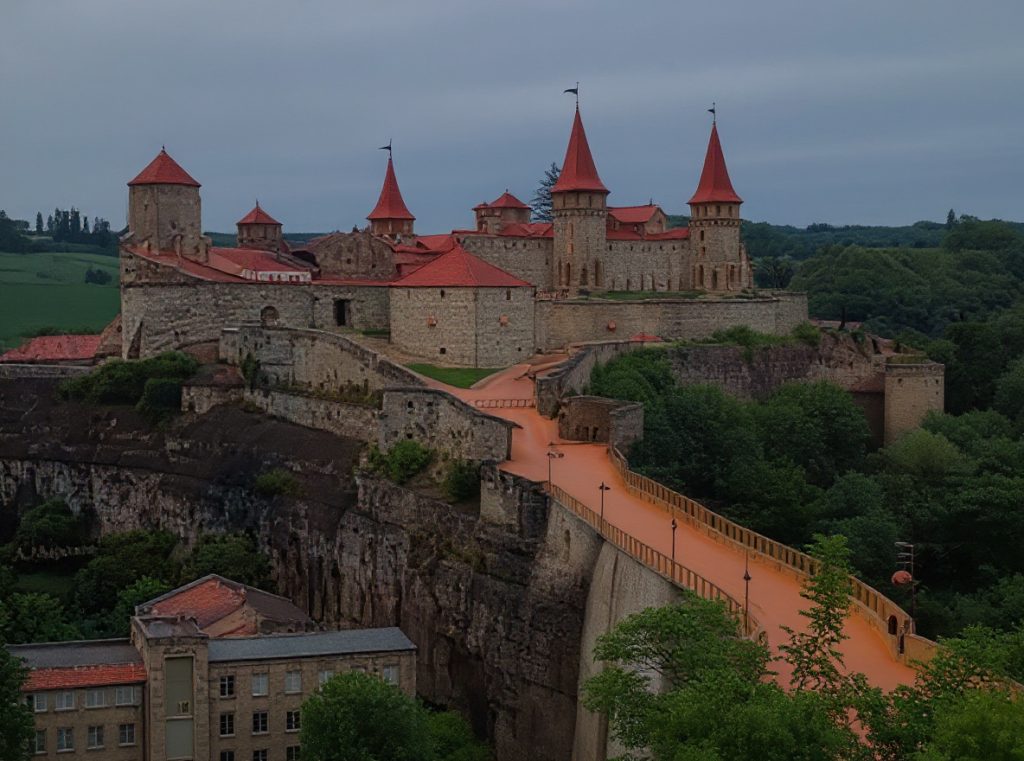
The State Architectural and Construction Inspection Agency manages the castle today as part of the National Historical-Architectural Reserve “Kamianets”. The fortress opens daily from 9:00 to 18:00, with extended hours until 19:00 during summer weekends. Admission requires a paid ticket. Guided tours bring the fortress’s dramatic past to life through the towers, ramparts and underground chambers. The castle functions as a living museum. It hosts cultural events, historical re-enactments and ethnographic festivals throughout the year. Conservation work continues on the remaining towers and walls, balancing preservation with public access. Seven towers still stand from the original twelve. Each bears names that echo Polish, Lithuanian and local rulers who shaped the fortress. The canyon viewpoint from the ramparts reveals why this site proved so defensible for so long. Stone walls rise directly from limestone cliffs. Far below, the Smotrych River curves through its deep gorge. The Old Town spreads across the opposite bank in a tableau unchanged since medieval times.
Frequently asked questions
What can I see inside Kamianets-Podilskyi Castle?
The castle features 11 named stone towers, museum exhibitions on fortress history, medieval weapons displays including artillery from the 15th–18th centuries, and access to ramparts with views of the Smotrych River canyon. An exhibition about recent Ukrainian history is displayed in the wall building.
Is Kamianets-Podilskyi Castle wheelchair accessible?
The fortress is built on rocky terrain with medieval architecture, including stairs, uneven surfaces, and tower access. These features present significant challenges for wheelchair users and those with limited mobility.
Can I visit Kamianets-Podilskyi Castle year-round?
Yes, the castle is open daily throughout the year from 09:00–19:00. However, some outdoor areas and tower access may be affected by severe winter weather conditions.
Are guided tours available at Kamianets-Podilskyi Castle?
Yes, guided tours are available for an additional fee beyond the entrance ticket. You can arrange tours through the castle administration or the museum's Tourist Information Centre.
How far is Kamianets-Podilskyi Castle from the city centre?
The castle is located within the historic Old Town area, approximately 2–3 km from the modern city centre. It sits on a rocky peninsula surrounded by the Smotrych River canyon and is easily reached on foot or by local transport.
Featured listings