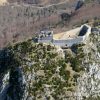

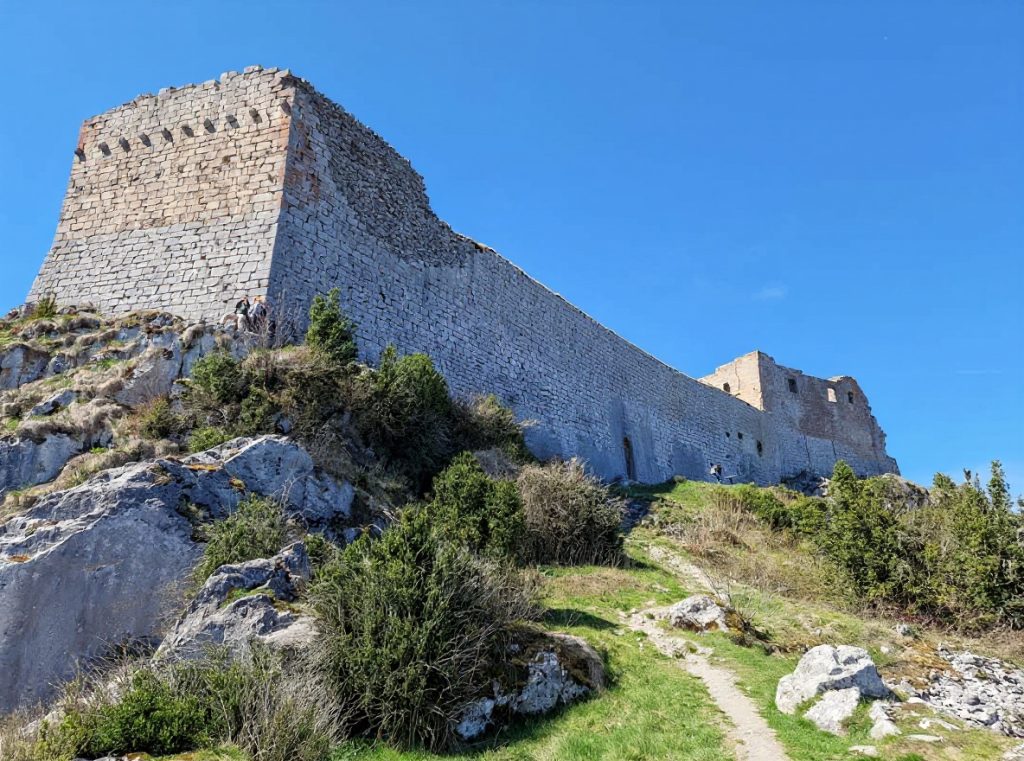
Perched atop a dramatic limestone pinnacle at 1,207 metres, Château de Montségur commands the landscape of the Ariège Pyrenees with its ruined walls. The fortress gained fame as the last Cathar stronghold, which fell after a ten-month siege in 1244. The present fortress ruin does not date from the Cathar era because royal forces entirely pulled down the original Cathar fortress after they captured it. The ruins now serve as a memorial to one of medieval Europe’s most dramatic religious conflicts.
Plan your visit to Château de Montségur
Location of Château de Montségur
The castle sits in the Ariège department, in the southern Occitanie region south-east of Foix. It stands near Montségur, a commune in the Ariège department in southern France. The fortress sits at an altitude of 1,207 metres, erected on top of its “pog” (rocky spur), and offers an outstanding view of the Pyrénées. The castle sits not far from Lavelanet, due south from Mirepoix. Visitors reach the ruins by a steep footpath that climbs from the modern village below. The ascent takes about twenty-five minutes and rewards those who make it with sweeping views across the valleys. In the village, the museum features a collection of archaeological objects dating back to the Middle Ages. Admission to the castle includes access to the museum.
History of Château de Montségur
Raymond de Péreille carried out the reconstruction commissioned in 1204, at the request of the Cathar bishop Guilhabert de Castres. This work transformed the site into the functional headquarters of the Cathar church. In 1233, the Cathar Bishop Guilhabert de Castres asked Raymond de Pereille for permission to make Montségur “the seat and head” (domicilium et caput) of the Cathar Church. At that time Montségur housed about 500 people. The fortress sheltered parfaits, their archives, and an armed garrison in a settlement spread across the upper slopes of the pog.
French royal forces laid siege to Montségur in May 1243. The defenders held out for ten months before they capitulated on 2 March 1244. Men from Montsegur murdered representatives of the inquisition at Avignonet on May 28, 1242, which triggered the final military expedition to conquer the castle. The siege lasted nine months until the castle finally surrendered in March 1244. A field below the hilltop castle marks the site where over 200 Cathars burned alive after they refused to renounce their faith. Those who renounced the Cathar faith could leave, though the victors destroyed the castle itself.
The French Crown demolished the original Cathar fortification and rebuilt the site from around 1245 as a royal stronghold. After the fall of Montségur, the King of France awarded the castle to one of his lieutenants, Guy de Lévis, who remodelled its architecture. This second castle, smaller and more regular than what the Cathars had held, survives as the ruin visible today. At the end of the 13th century, workers dismantled the old fortified village (castrum) and replaced it with a fortress commissioned by the King of France.
Current status
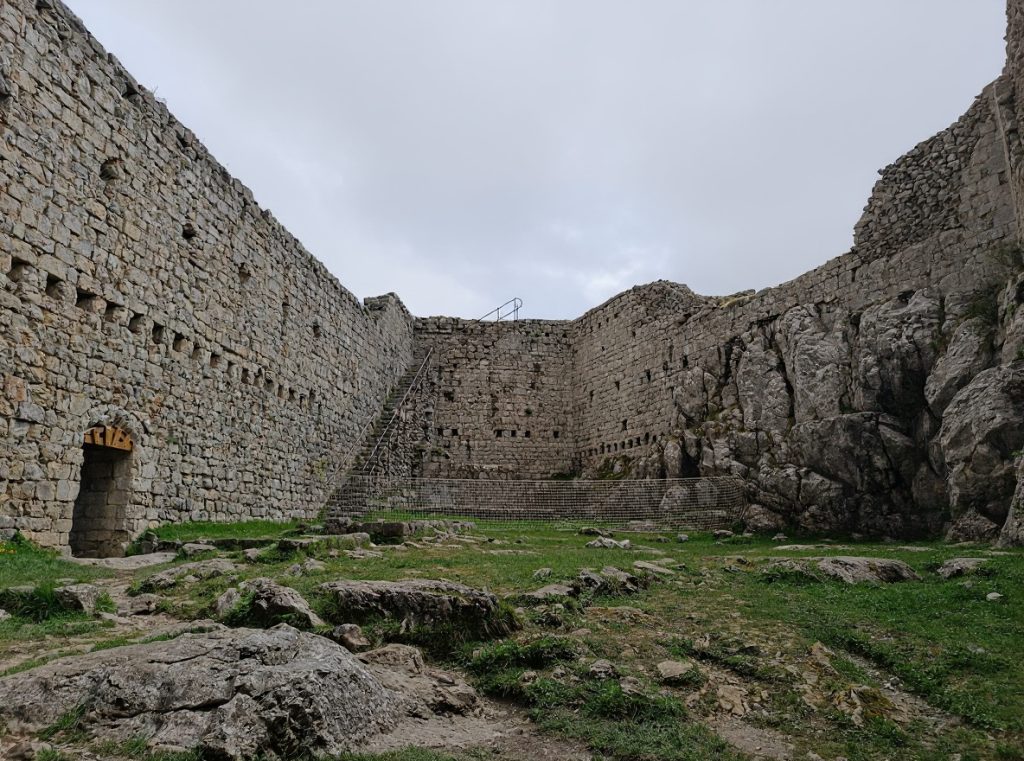
The French Ministry of Culture has listed the fortress as a monument historique since 1862. The Commune of Montségur owns the castle. The ruin opens to the public, as does a museum in the nearby modern village of Montségur, with an entrance fee for both. A small garrison of around 15 men occupied the fortress, though enemies never attacked it. The lord of Lévis-Mirepoix abandoned it in the first half of the 17th century, before Richelieu destroyed fortresses and the Treaty of the Pyrenees took effect.
Archaeological excavations have uncovered thousands of artefacts from the medieval period. Items found during excavations at the site include cannonballs, chisels, weapons and everyday objects dating from the 13th century. The fortress stands within a landscape that UNESCO recently inscribed as a World Heritage Site. Visitors walk among walls that witnessed one of the most dramatic episodes in religious history. The steep path, the exposed summit, and the wind-swept ruins combine to create an atmosphere both haunting and unforgettable. Far below, the Ariège valleys stretch toward distant peaks, much as they did when the last Cathars looked out from these same stones.
Castles near Château de Montségur
Frequently asked questions
How difficult is the climb to Château de Montségur?
The path climbs 170 metres over 30–40 minutes on steep, rocky terrain with wooden steps. Sturdy footwear is essential and the climb is not suitable for those with limited mobility or very young children.
What happened at Château de Montségur in 1244?
After a ten-month siege by royal forces, over 200 Cathars who refused to renounce their faith were burned at the stake in March 1244. The castle ruins visible today are the royal fortress rebuilt after the siege, not the original Cathar structure.
Is the Château de Montségur ticket valid for the museum?
Yes, the castle entry ticket includes admission to the village archaeological museum, located 1.5 km from the car park. The museum displays objects excavated from the site and provides historical context for the castle.
Can I drive to the top of Château de Montségur?
No, the castle is only accessible on foot via a steep mountain path. Free parking is available at the base, and the ticket booth is located partway up the trail, about 15 minutes from the car park.
Are guided tours available at Château de Montségur?
Free guided tours in French are offered at scheduled times from May to October, included in the entry price. Audio guides linking to information panels along the trail are also available for hire at the ticket booth.
Popular right now
Featured listings