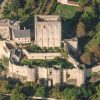
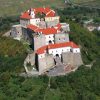
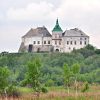
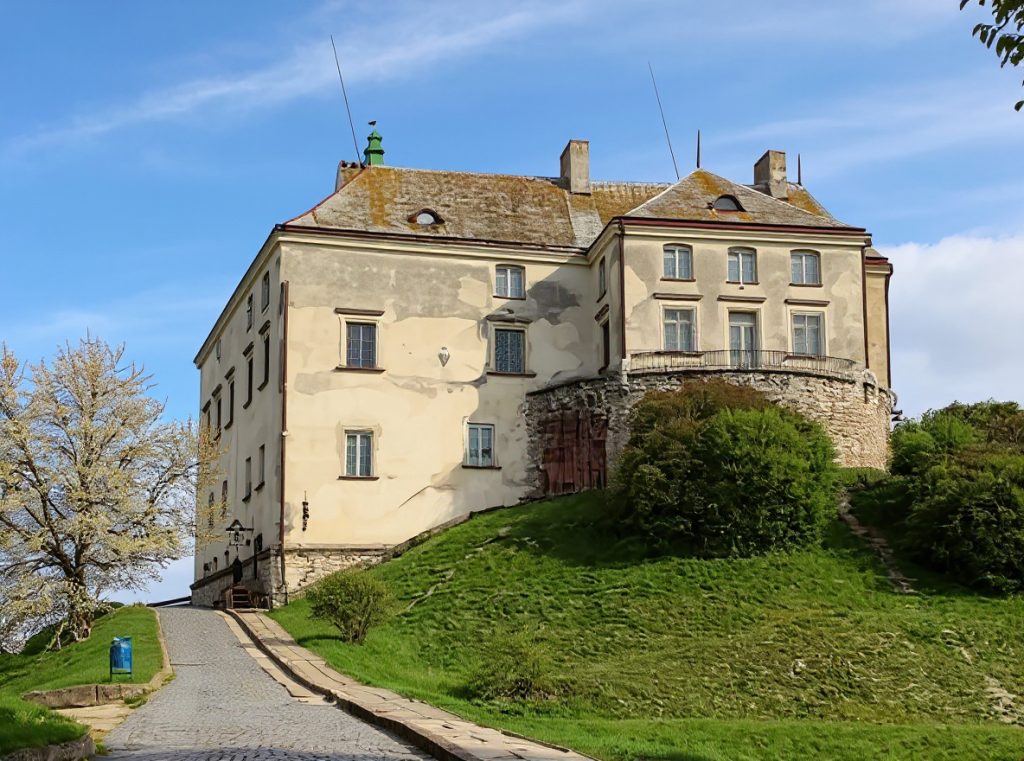
Raised on a fifty-metre hill above the wetlands of western Ukraine, Olesko Castle commands the landscape with its oval walls and fortified towers. Documents first mentioned this fortress in 1327, when it served as a strategic stronghold on the shifting border between medieval princedoms. The future Polish king John III Sobieski came into the world within these walls in 1629. Bohdan Khmelnytskyi, the prominent Ukrainian Cossack leader, spent his childhood here as well. Today the castle houses a museum branch of the Lviv National Art Gallery. Visitors can explore centuries of European art behind its Renaissance portals.
Plan your visit to Olesko Castle
Tue 11:00–15:30
Wed–Sun 10:00–16:30Ticket office closes at 17:30 (Wed–Sun).
Location of Olesko Castle
Olesko Castle sits on a hill in the village of Olesko in Zolochiv district, about 70 kilometres from Lviv. The fortress occupies the historic border region between Volhynia and Halychyna. The oval castle stands atop a small hill that dense swamp surrounds. This swamp once provided natural defence against attackers. The castle museum opens Wednesday to Sunday from 10:00 to 18:00. It closes on Monday and Tuesday. Visitors travelling from Lviv follow the main highway towards the village. The castle crowns the landscape from its elevated position. A landscape park spanning over 13 hectares surrounds the complex. The park features shaded walkways and historic trees.
History of Olesko Castle
Builders raised the castle around the 13th to early 14th century during the reign of King Andriy or Lev II. The kingdom then was Galicia-Volhynia. In 1327, the fortress passed into the possession of Prince Yurii. He assumed the Halych-Volyn throne at that time. Its location on the border of Volyn and Halitia made it strategically important. The fort played a key role in battles among Lithuania, Poland, and Hungary. Throughout the 15th century, Tatar raids repeatedly destroyed the defences.
In 1605, a nobleman acquired the castle. Under the ownership of the Daniłowicz noble family in the 16th century, craftsmen remodelled the medieval fortress. They transformed it into a Renaissance residence. The work featured elegant stone portals, residential wings, and decorative carvings. The castle embraced the Italian Renaissance style, popular at the time. New paintings and mosaics decorated its rooms. In the early 18th century, the Rzewuski family bought Olesko. Workers then moved its collection of antiques to Pidhirtsi Castle.
After an earthquake in 1838, the castle suffered partial destruction. In 1882, the Committee of Preservation of Olesko Castle bought the property. Many regarded it as a Polish national monument. This purchase led to a restoration in 1892. In 1956, lightning struck the castle and caused further damage. Workers restored the castle again, beginning in 1961 and lasting until 1985. This work returned the structure to its earlier form.
Current status
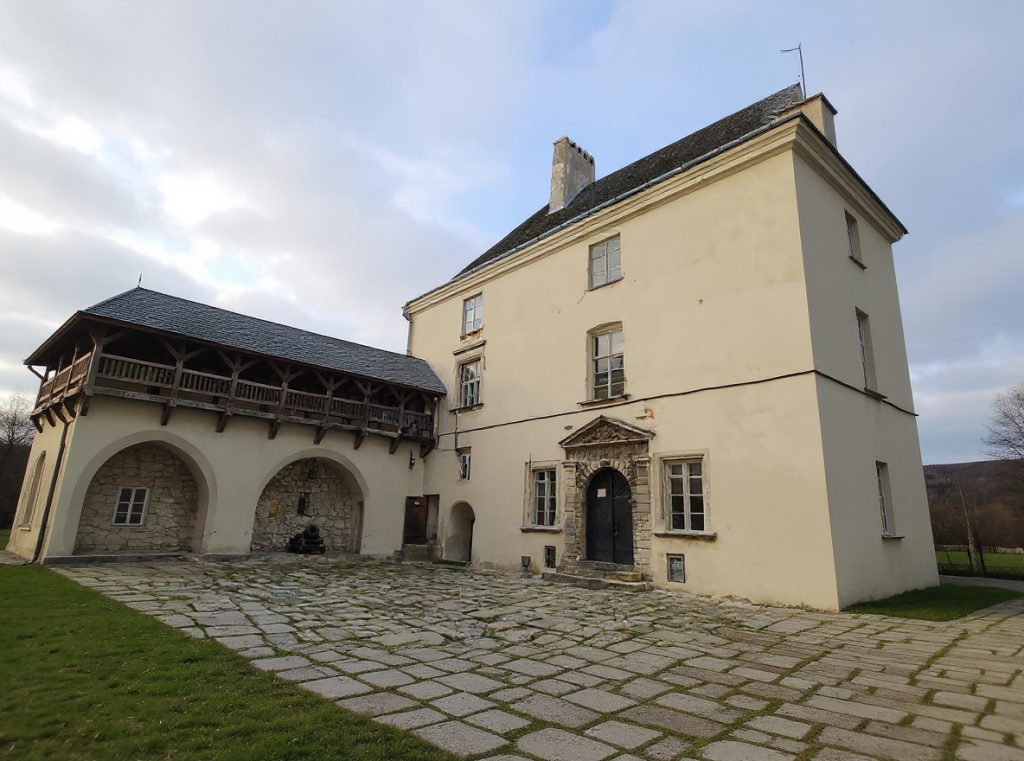
Today, Olesko Castle operates as a museum branch of the Lviv National Art Gallery. The museum collection holds over 500 artworks from the 13th to 19th centuries. The permanent display covers Halych-Volhynian icon painting of the 15th to 18th centuries. It also includes Ukrainian portraiture, European painting and sculpture, furniture and everyday objects. The inner courtyard features a 40-metre-deep well carved into solid rock. The Renaissance entrance gate displays stone reliefs and heraldic coats of arms.
The castle forms part of the “Golden Horseshoe”, a ring of three castles near each other. These are Olesko, Pidhirtsi, and Zolochiv. A park and the former Capuchin monastery adjoin the castle. The monastery houses a collection of sacral sculpture. The monument attracts visitors interested in Ukrainian heritage and European art history. From the upper ramparts, views extend across the surrounding wetlands and forests. These wetlands and forests once protected this border fortress from invaders. The stone walls and fortified towers recall centuries of conflict, transformation, and cultural patronage in western Ukraine.
Castles near Olesko Castle
Frequently asked questions
What is Olesko Castle famous for?
Olesko Castle is one of Ukraine's oldest preserved castles, first mentioned in 1327. Polish King Jan III Sobieski was born here in 1629, and the castle now houses a branch of the Lviv National Art Gallery with collections of Ukrainian icons, portraits, and Baroque sculpture.
Can I visit Olesko Castle on a day trip from Lviv?
Yes, Olesko Castle is about 75–80 km from Lviv (1 to 1.5 hours by bus or car). It forms part of the 'Golden Horseshoe of Lviv Region' tourist route, alongside Pidhirtsi and Zolochiv castles, which can be combined in a single day.
Is Olesko Castle accessible for visitors with limited mobility?
The castle sits atop a 50-metre hill, which requires climbing. There is no information indicating wheelchair access or lifts inside the building. Visitors should be prepared for stairs and uneven historic surfaces.
Are guided tours available at Olesko Castle?
Yes, guided tours for groups of up to 20 people cost ₴500–700 (₴1,000 for tours in a foreign language). Tours can be arranged on-site, but signage and most staff speak Ukrainian only, so self-guided visitors may benefit from a translator.
What else is there to see near Olesko Castle?
The castle grounds include a French-style park with sculptures and rare trees created in the 17th century. The former Capuchin monastery at the foot of the hill houses a collection of sacred sculpture and medieval gravestones.
Popular right now
Featured listings