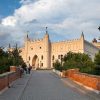

Rising above the Bystrzyca and Czechówka rivers, Lublin Castle commands the skyline of eastern Poland’s historic capital from its hilltop position. This remarkable fortress blends medieval, Renaissance and Gothic Revival architecture into a complex that witnessed one of Europe’s most significant political unions. The castle’s Holy Trinity Chapel shelters extraordinary Byzantine-Ruthenian frescoes from 1418, while its surviving 13th-century Romanesque tower stands as the oldest masonry structure in the city. For over 700 years, through royal splendour and darker chapters as a notorious prison, the castle has remained the heart of Lublin’s story.
Plan your visit to Lublin Castle
Tue–Thu 09:00–17:00
Fri–Sat 09:00–18:00
Sun 09:00–17:00
Location of Lublin Castle
Lublin Castle sits in Lublin, adjacent to the Old Town district and close to the city centre. The hill occupies a strategic position where the Bystrzyca and Czechówka rivers meet, surrounded by pools that made it hard to conquer. Visitors reach the castle easily from the Old Town through Castle Square and the historic Grodzka Gate. The castle stands at Zamkowa 9, 20-120 Lublin. The site lies on what once served as the royal route connecting Kraków to Vilnius, which gave Lublin enormous importance during the Polish-Lithuanian Commonwealth. Today the castle sits within walking distance of Lublin’s market square and other central attractions. Regular buses and taxis serve the area. The National Museum now occupies the castle complex, so access is straightforward for visitors arriving from anywhere in the city centre.
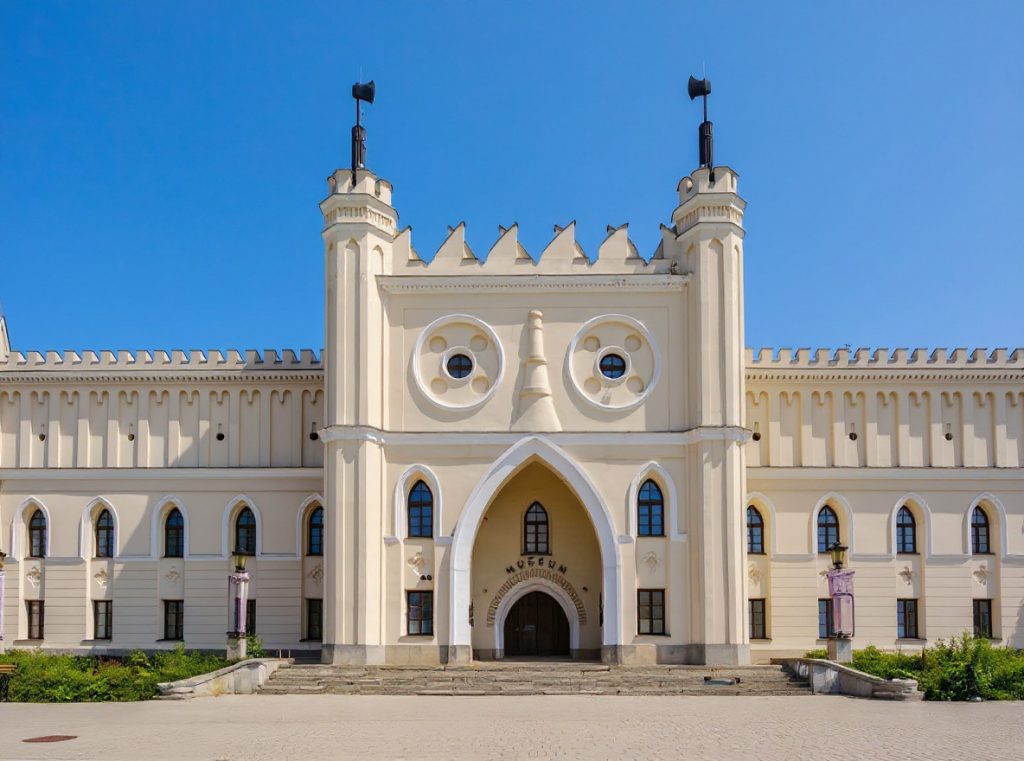
History of Lublin Castle
The castle’s origins relate to the establishment of the Lublin castellany in the 12th century. Natural assets determined that an early-medieval fortified settlement arose here, probably as early as the 6th century. The castle became the seat of a castellan, first mentioned in historical sources from 1224. Casimir III the Great built a masonry castle in 1341 and encircled the city with defensive walls. During the 14th century, Casimir the Great erected a brick castle surrounded by a defensive wall. The 13th-century Romanesque tower survived from the earlier fortifications.
From 1326, if not earlier, the stronghold on Castle Hill included a chapel in honour of the Holy Trinity. King Władysław Jagiełło commissioned Byzantine-Ruthenian frescoes for the chapel, which artisans completed in 1418. In the 16th century, the castle enjoyed the interest of the Jagiellonians, since it lay on the royal route from Kraków to Vilnius. Italian architects transformed the medieval fortress into a Renaissance residence. In 1569, the Sejm debated within the castle walls and concluded the Union of Lublin, which joined Poland and Lithuania into the Polish-Lithuanian Commonwealth. King Zygmunt Augustus and his court stayed in the castle for almost a year.
An inspection from 1661 describes the castle as ruined, burned by the enemy, with the rest collapsed. Wars of the 17th century destroyed most of the complex. Only the Romanesque tower and Gothic chapel survived. In 1824–1826, Stanisław Staszic initiated construction of a new building in the English neo-Gothic style according to Jan Stompf’s design. Officials intended it for the criminal prison of Congress Poland. The castle served as a prison for 128 years. Tsarist authorities imprisoned Polish independence fighters from 1831 to 1915. During Nazi occupation from 1939 to 1944, between 40,000 and 80,000 inmates passed through.
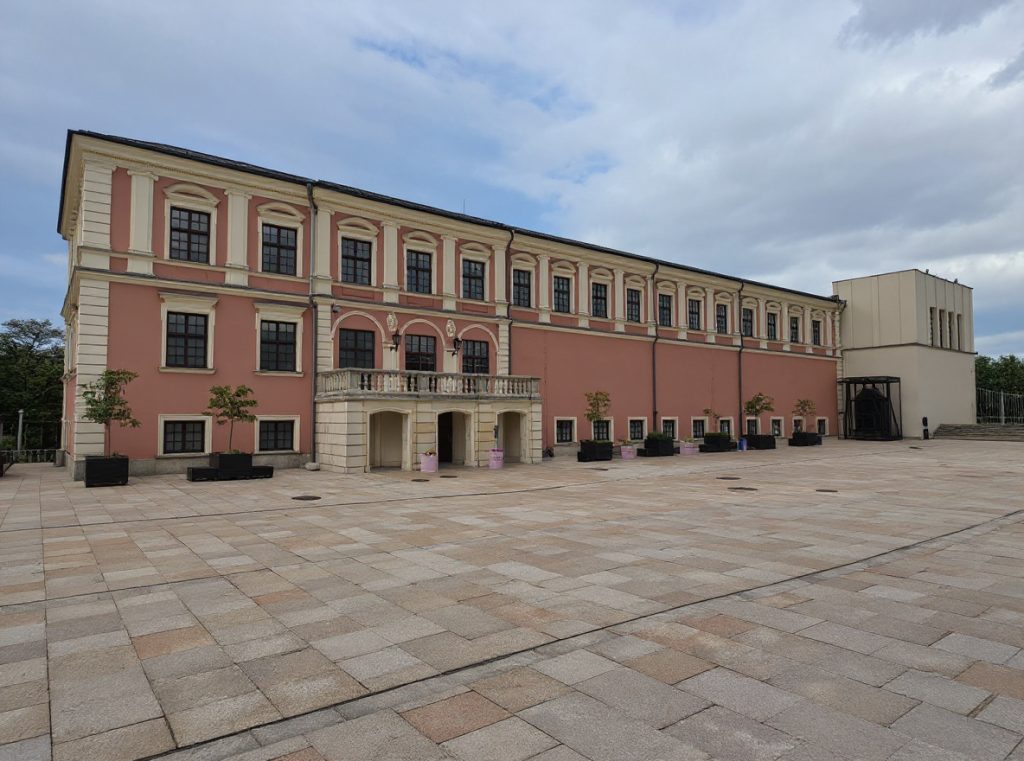
Current status
On 21 July 1956 the museum headquarters officially opened in the castle. From 1957 it serves as the headquarters of the Lublin Museum founded in 1906. The National Museum in Lublin now manages the site, presenting collections of painting, decorative arts, armaments, archaeology and ethnography. The Castle’s Holy Trinity Chapel received the European Heritage Label. The chapel’s Byzantine frescoes draw art historians from across the world. Visitors can climb the Romanesque tower to reach a viewing terrace with panoramic views across Lublin’s Old Town and surrounding landscape.
The museum complex opens Tuesday to Sunday. On Tuesday, Wednesday and Sunday it opens from 09:00 to 17:00, while on Thursday, Friday and Saturday it stays open until 18:00. The castle hosts temporary exhibitions alongside permanent displays about the Lublin region’s history, the Union of Lublin, and the dark prison years. Educational programmes serve schools and universities. The complex remains one of Poland’s most important historic monuments. The castle forms part of the official Lublin historic architectural and urban ensemble recognised as a Monument of History. Stone walls that once confined prisoners now welcome cultural visitors, while the chapel where kings prayed stands preserved for future generations to witness this layered past.
Castles near Lublin Castle
Frequently asked questions
What can I see inside Lublin Castle?
The castle houses the National Museum with permanent exhibitions on Polish art and regional history, the 14th-century Holy Trinity Chapel with Byzantine-Ruthenian frescoes, and the Romanesque keep tower offering panoramic views of Lublin. The castle courtyard is free to enter.
Is Lublin Castle open on Mondays?
The permanent exhibitions are closed on Mondays. However, the Holy Trinity Chapel and the castle tower remain open, so visitors can still climb the tower and see the chapel on Mondays.
Can I buy tickets to Lublin Castle in advance?
Yes, tickets can be purchased online at the official website, at ticket machines in the castle courtyard, at the museum ticket office, or via the Paymove app. Combined tickets covering all areas cost 40 zł (adult) or 30 zł (reduced).
How do I get to Lublin Castle from Warsaw?
Take a train from Warsaw to Lublin Główny station (approximately 2 to 2.5 hours). From the station, buses 1, 13, or 34 go directly to the castle stop, or you can walk about 20 minutes through the city centre to the castle hill.
Are there free entry days at Lublin Castle?
The museum offers occasional free entry days for permanent exhibitions and the chapel, but not for the tower or temporary exhibitions. Check the official website for current free admission dates as they vary throughout the year.

Top Rated Castle 2026
Lublin Castle is one of the best rated castles in Europe: 4.8 stars from 1,405 visitors on Google. See all winners.
Is this your castle? Show the award on your website
Copy this code into your website:
Popular right now
Featured listings