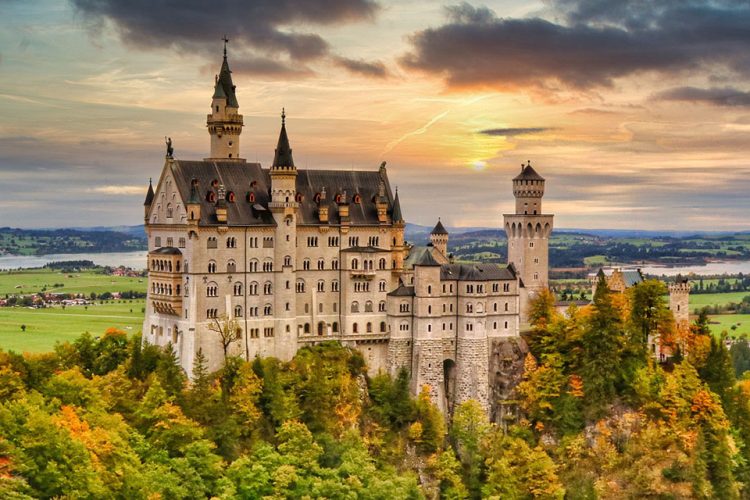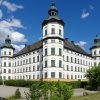

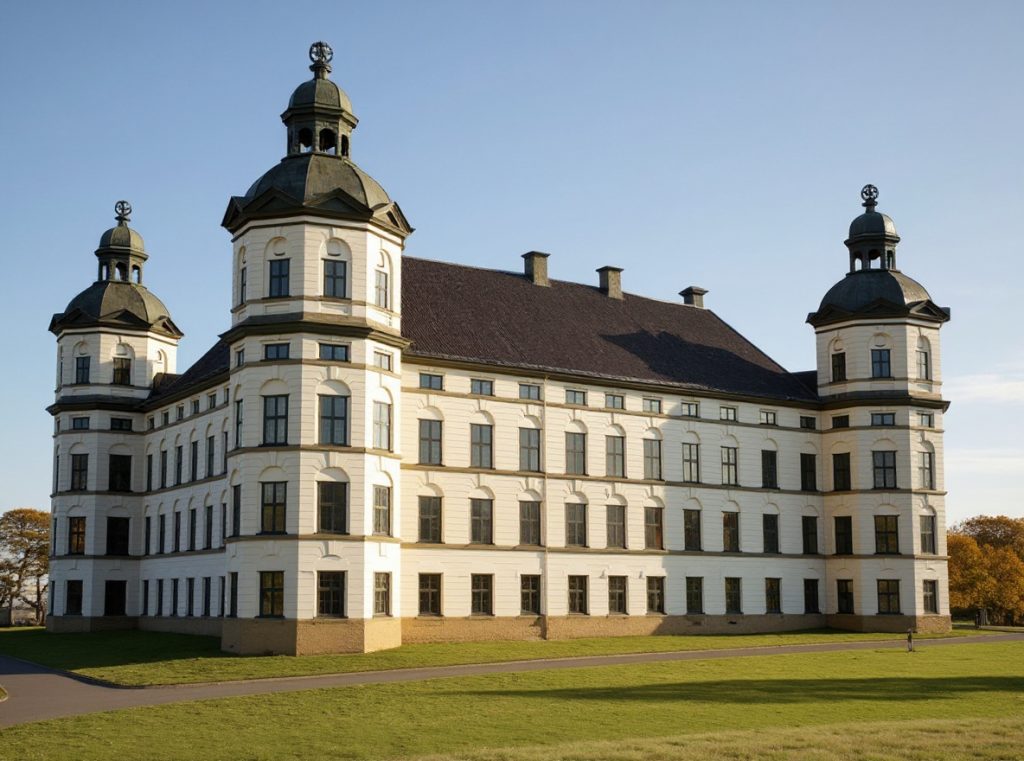
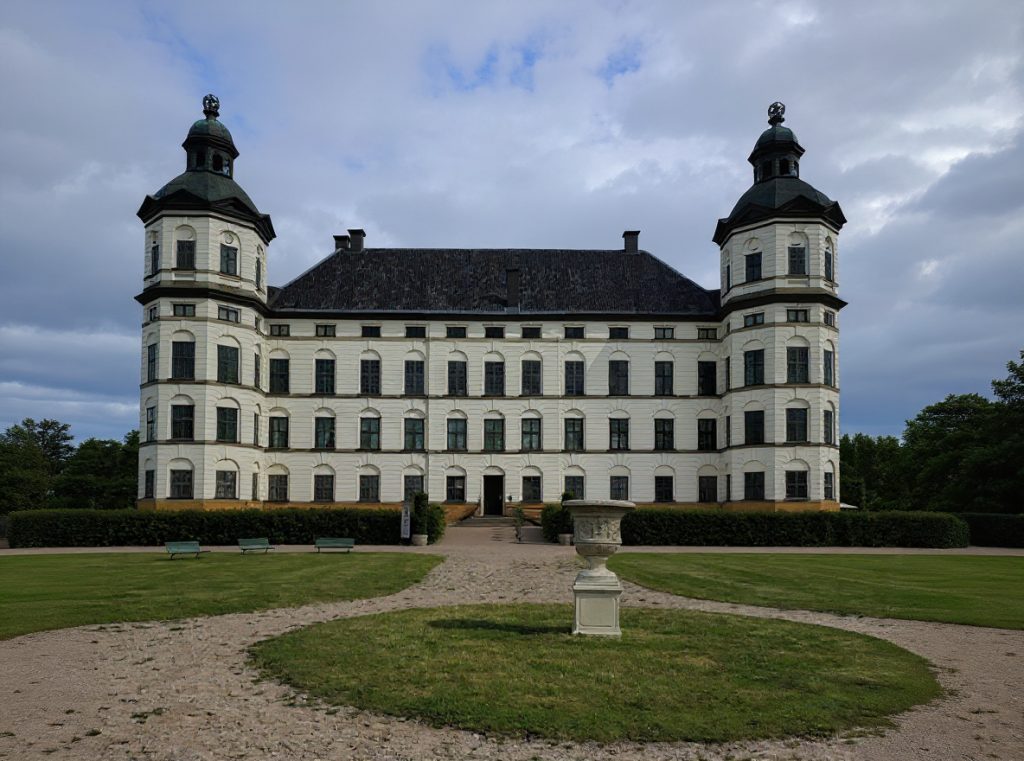
Rising on a peninsula in Lake Mälaren between Stockholm and Uppsala, Skokloster Castle commands attention with its four octagonal towers and pristine Baroque facade. The castle remains the largest private palace ever built in Sweden. Its 78 rooms house 50,000 artefacts from the 17th, 18th and 19th centuries. As a result, the castle preserves a complete 17th-century building site of unmatched authenticity in Europe. Time stopped here in 1676 when workers abandoned their tools mid-project. They left behind a frozen moment of history.
Plan your visit to Skokloster Castle
Location of Skokloster Castle
Skokloster Castle sits on Skohalvön by Lake Mälaren, in Håbo municipality, between Stockholm and Uppsala. The castle occupies a strategic position roughly 60 kilometres northwest of Stockholm. It sits right on the waterway between Stockholm and Uppsala. Visitors travelling by car can reach the castle easily because it lies near Arlanda Airport. Major roads connect the castle with Sweden’s capital cities. A museum with a shop and nearby café now fills the castle. The medieval brick church of Skokloster stands near the castle parking area. This church remains from the Cistercian nunnery that once occupied this land. The surrounding parkland and lakeshore offer visitors scenic walks and views across the water. Regional bus services connect the castle with nearby towns. Yet many visitors choose to drive through the beautiful Uppland countryside.
History of Skokloster Castle
Count Carl Gustaf Wrangel and his wife Anna Margareta von Haugwitz built Skokloster Castle in 1654–1676. Wrangel ranked among the country’s most successful soldiers. He owned large landed properties and several castles. The Estonian-born German-Baltic nobleman Herman Wrangel, Carl Gustaf’s father, had entered Swedish service. In 1611 he received Skokloster as a gift from King Karl IX. Before the castle, Sko Abbey operated as a Cistercian nunnery from 1230 until at least 1588. The Crown confiscated the religious complex during the Reformation.
The German architect Caspar Vogel mainly created the design. Jean de la Vallée, Mathias Spihler and Nicodemus Tessin the Elder further enhanced it. Craftsmen built the castle in the Baroque style. Construction employed over 260,000 bricks, manufactured partly in two kilns built on site in 1653. The castle’s distinctive appearance may have drawn inspiration from Ujazdów Castle in Warsaw. Wrangel had besieged that fortress during Swedish military campaigns in Poland. However, workers never fully completed the castle or the grounds.
By the time of Wrangel’s death in 1676 the castle remained uncompleted. In the banqueting hall—later known as the Unfinished Hall—craftsmen downed tools when they learned of the Count’s death. They simply left. The oldest daughter Juliana Wrangel and her husband Nils Brahe the Younger took over Skokloster in 1676. The Brahe family already owned several castles. They chose not to complete the interiors. So much survived because a 1701 ruling forbade splitting up the castle collection. Skokloster remained in Brahe family ownership until the line died out in 1930. It then passed to the von Essen family. After the Second World War, the von Essen family converted parts of the castle into a residence. They carried out renovations in 1947 and 1952.
Current status
In 1967, the castle and collections passed to the Swedish state. Skokloster Castle now forms part of the government agency Statens historiska museer. The castle operates as a museum. It welcomes visitors seasonally with guided tours available in English. The museum opens seasonally, though groups can book guided tours all year round. The castle displays remarkable collections spanning three centuries. For example, visitors see weapons, books, silver, glass, textiles, furniture and paintings. Successive generations of owners gathered these treasures.
Within these thick walls lies one of Europe’s best-preserved Baroque interiors. The famous Unfinished Hall remains exactly as workers left it in summer 1676. Tools and construction materials still sit in place. As a result, they offer an extraordinary window into 17th-century building methods. The castle houses seventeen stucco ceilings. Craftsman Nils Eriksson created fourteen of them while working at Skokloster for more than seven years. Among the treasures on display stands Giuseppe Arcimboldo’s world-famous painting Vertumnus. The castle also holds extensive armouries that rank among Europe’s finest historic weapons collections. The 17th-century library contains rare books and manuscripts. The scale model of the castle shows Caspar Vogel’s original vision. Craftsman Barthel Volkland made this model in 1657.
The castle stands proudly by the lake shore. Its copper-clad towers catch the light across the water. Visitors stroll through the castle park and grounds throughout the year. A museum shop and nearby café serve guests. The adjacent 13th-century church adds another layer of history to the site. The lime tree avenue, now 330 years old, frames the approach to this monument. It recalls Sweden’s Age of Greatness, when the nation stood among Europe’s great powers.
Castles near Skokloster Castle
Frequently asked questions
Can I book tickets to Skokloster Castle online?
No, tickets cannot be pre-booked online. Admission tickets are sold on a drop-in basis at the castle entrance when you arrive.
What can I see on a guided tour of Skokloster Castle?
Guided tours include the spectacular armoury, the great unfinished hall, and the Wrangel state apartments. Tours take around 45 minutes and cost 190 kr including admission.
Is Skokloster Castle open year-round?
No, the castle is open daily only June–August. It also opens weekends in May and September, during Easter and autumn breaks, and for a Christmas market in November.
How do I get to Skokloster Castle from Uppsala?
Take bus 895 from Uppsala Central Station towards Bålsta, change at Yttergran Church onto bus 311 to Skokloster. By car, it's 22 km and takes about 30 minutes via road 263.
Are children free at Skokloster Castle?
Yes, visitors under 19 years of age enter free of charge. Adults pay 140 kr for admission or 190 kr including a guided tour.
Popular right now
Featured listings