On the banks of the Salzach River, Mirabell Palace ranks as one of Salzburg’s most elegant Baroque monuments. Prince-Archbishop Wolf Dietrich von Raitenau commissioned this architectural jewel in 1606 as a residence for his beloved Salome Alt. The palace with its gardens forms part of the Historic Centre of the City of Salzburg UNESCO World Heritage Site. Fire later transformed its appearance, yet the palace still enchants visitors with its magnificent marble halls, sculpted staircases, and geometrically perfect gardens.
Plan your visit to Mirabell Palace
Sun ClosedGardens open daily 5:00–23:00 (Apr–Sep) and 7:00–22:00 (Oct–Mar); palace Mon–Sat 8:00–18:00, closed Sun
Location of Mirabell Palace
The palace sits on the shore of the Salzach river north of the medieval city walls. It lies within walking distance of the railway station, old town, and other major tourist attractions in Salzburg. Public transport serves the location excellently, since numerous bus lines stop at the ‘Mirabellplatz’ stop. The palace occupies a commanding position between the river and the Kapuzinerberg hill. Visitors arriving from the Old Town cross the Salzach via several historic bridges. Those coming from the train station find the palace only minutes away on foot. The central Mirabellplatz square provides easy orientation.
History of Mirabell Palace
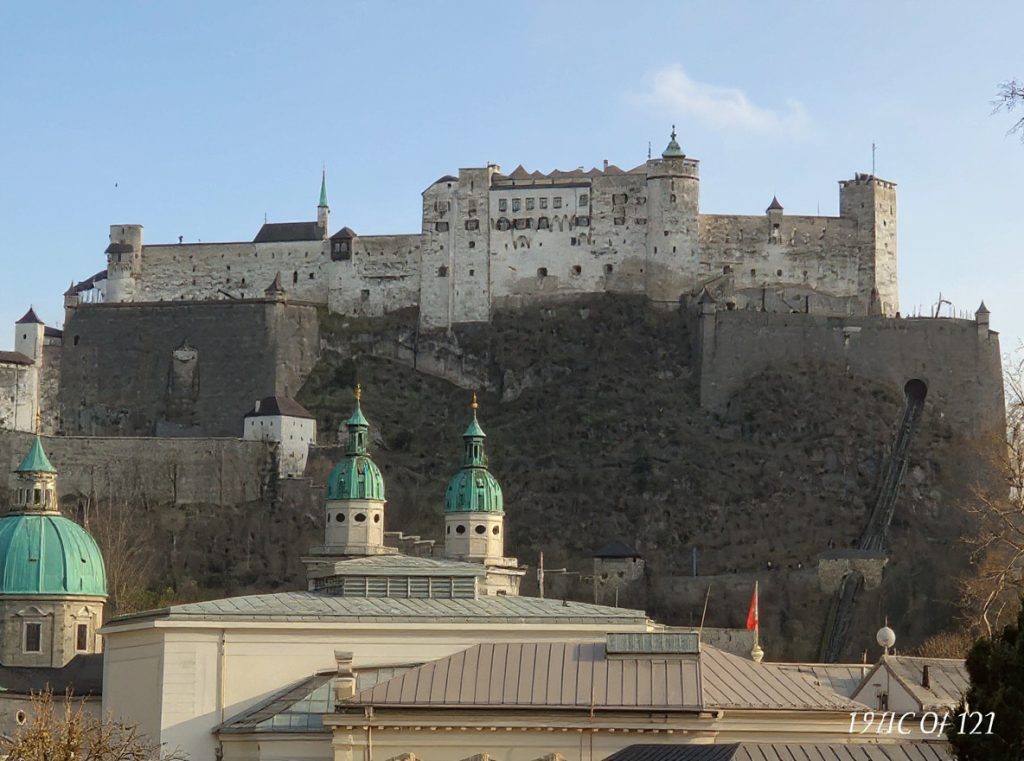
Construction began in 1606 by order of Prince-Archbishop Wolf Dietrich von Raitenau. Builders raised the palace, originally known as Altenau, as a lavish gift for the archbishop’s secret lover, Salome Alt. The couple had fifteen children together. When Raitenau fell from power and faced arrest at Hohensalzburg Castle in 1612, his successor Mark Sittich von Hohenems expelled Salome Alt. He then gave the palace its current name from Italian word ‘mirabile’ (‘amazing’). Prince Archbishop Franz Anton Harrach rebuilt the palace more or less from scratch between 1721 and 1727. He followed plans by Johann Lukas von Hildebrandt. This reconstruction gave the building its celebrated Baroque character. On 30 April 1818, a devastating fire swept through parts of Salzburg and severely damaged Mirabell Palace. The current Neoclassical appearance dates from about 1818, when workers restored the palace after the blaze. Architect Peter Nobile directed the rebuilding work. On 1 June 1815 the later King Otto of Greece came into the world here while his father served as stadtholder. The City of Salzburg purchased the palace in 1866.
Current status
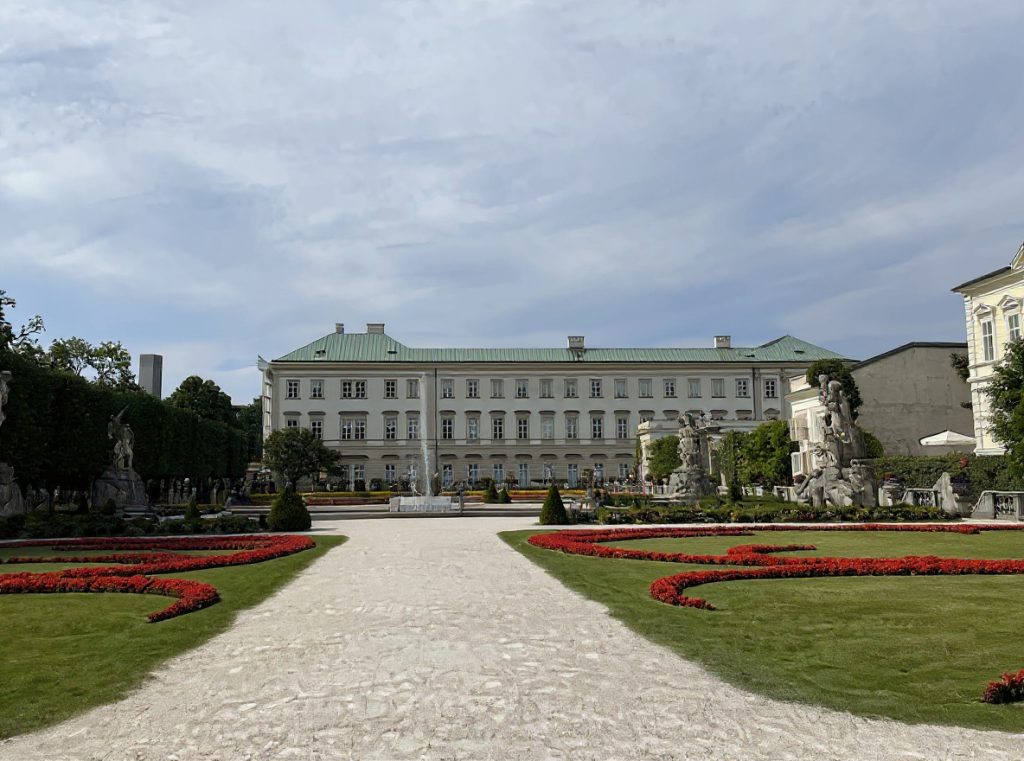
The palace has served as the office building for the city’s administration since 1947. This includes the mayor of Salzburg. The Marble Hall ranks among the finest wedding halls in the world and provides an enchanting setting for concerts. Leopold Mozart and his children Wolfgang and Nannerl performed here. Only select interior spaces open to visitors, including the remarkable Angels’ Staircase with its flowing sculpted balustrades. Cherub figures grace this staircase, as they survived the 1818 fire. The city acquired the palace gardens in 1866 and opened them to the public. The gardens display perfect Baroque symmetry with their geometric flower beds, marble statues, fountains, and carefully trimmed hedges. Film fans recognise the gardens from The Sound of Music. Visitors wander freely through these celebrated grounds at no charge. The Pegasus Fountain, Dwarf Garden, and Hedge Theatre draw photographers and history enthusiasts throughout the year. The palace remains a living monument where municipal work, cultural concerts, and public enjoyment blend harmoniously against the Alpine backdrop.
Castles near Mirabell Palace
Frequently asked questions
Is Mirabell Palace free to visit?
Yes, admission to Mirabell Palace and Gardens is completely free. The Baroque gardens, Angel Staircase and palace grounds are accessible at no charge, though some areas like the Marble Hall may be closed during weddings or official events.
Can you visit the Marble Hall inside Mirabell Palace?
The Marble Hall has limited public access as it's used for weddings and city administration. It's typically open Mon, Wed, Thu 8:00–16:00 and Tue, Fri 13:00–16:00, but is closed during events and on Sundays.
What was filmed at Mirabell Palace?
The Mirabell Gardens featured prominently in The Sound of Music, where Maria and the von Trapp children sang 'Do-Re-Mi' on the steps around the Pegasus Fountain. The gardens remain one of Salzburg's most popular filming locations.
Are parts of Mirabell Palace closed in winter?
The main gardens remain open year-round, though the Dwarf Garden and Hedge Theatre close during winter months. The gardens have reduced hours from October to March (7:00–22:00) compared to summer (5:00–23:00).
How do you get to Mirabell Palace from Salzburg city centre?
Mirabell Palace is about 1 km from the Old Town and easily walkable in 10–15 minutes. Trolleybus lines 1, 2, 3, 5, 6, 14, 22 and 25 stop at Mirabellplatz directly in front of the palace.
Featured listings