Kufstein Fortress commands a rocky hill above the Tyrolean town of Kufstein, where the Inn River cuts through the mountains between Austria and Bavaria. At 507 metres above sea level, this formidable complex sprawls across 24,000 square metres of fortified terraces and towers. Its ramparts shelter the world’s largest open-air organ, the Heroes’ Organ, which features 4,307 pipes. For eight centuries the fortress guarded a contested alpine gateway. Today visitors reach its heights by funicular railway or covered stair.
Plan your visit to Kufstein Fortress
Location of Kufstein Fortress
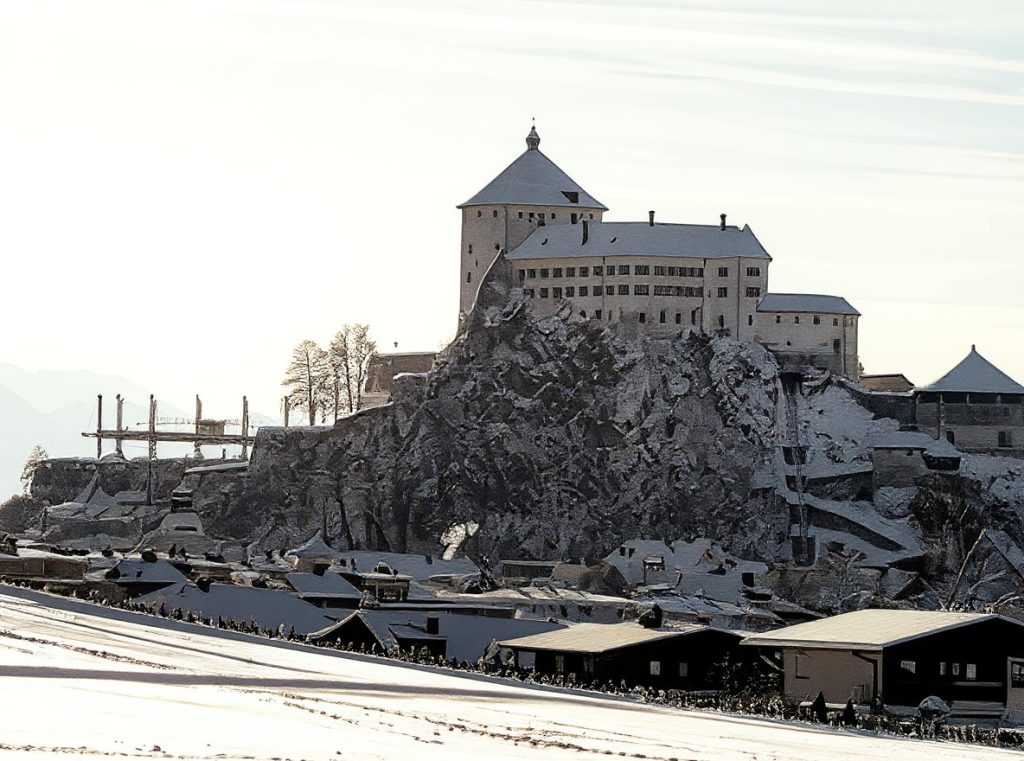
The fortress sits in Kufstein, a town in Tyrol, Austria, close to the German border. It rises on a hill commanding Kufstein proper, directly above the town centre where the Inn River flows past. The fortress occupies the Festungsberg, a 90-metre-high rock that towers over the valley floor. Kufstein lies east of Innsbruck along the main Inn valley route. Visitors arriving by rail find Kufstein station just ten to fifteen minutes’ walk downhill from the fortress entrance. Regional trains connect the town with Munich, Innsbruck and other Tyrolean destinations. By road, the A12 Inntal Autobahn serves Kufstein with its own exit. Short-term parking sits at the base of the fortress hill. Once you reach the foot of the complex, the Kaiser Maximilian panorama funicular carries passengers up the steep slope. A covered staircase offers an alternative ascent though.
History of Kufstein Fortress
The fortress received its first documentary mention in 1205 when it belonged to the bishops of Regensburg. Though earlier fortifications likely stood on the site, written records begin with that date. From 1415 onwards, Duke Louis VII of Bavaria had the fortress largely rebuilt and expanded. The strategic border position made Kufstein a constant prize in the struggles between Bavaria and Tyrol. In 1504 Emperor Maximilian I besieged and conquered the city and fortress. He battered the walls with iron cannonballs from heavy artillery. After his victory Maximilian set about transforming the site. He ordered the construction of the prominent Kaiserturm tower, which builders finished in 1522. This massive round tower, completed shortly after Maximilian’s death, dramatically strengthened the fortress and gave it its defining silhouette.
Ownership swung between Austria and Bavaria over the following centuries. From 1703 to 1805 Bavaria held it as a possession before it returned to Austria in 1814. The fortress evolved from pure military stronghold to state prison. From the end of the 18th century and especially in the 19th century, authorities used Kufstein Fortress as a prison. The Kaiserturm held political dissidents during the Austro-Hungarian Empire, and Hungarian revolutionaries numbered among its most famous inmates. Military importance gradually gave way to penal and administrative uses as artillery technology rendered medieval walls obsolete.
Current status
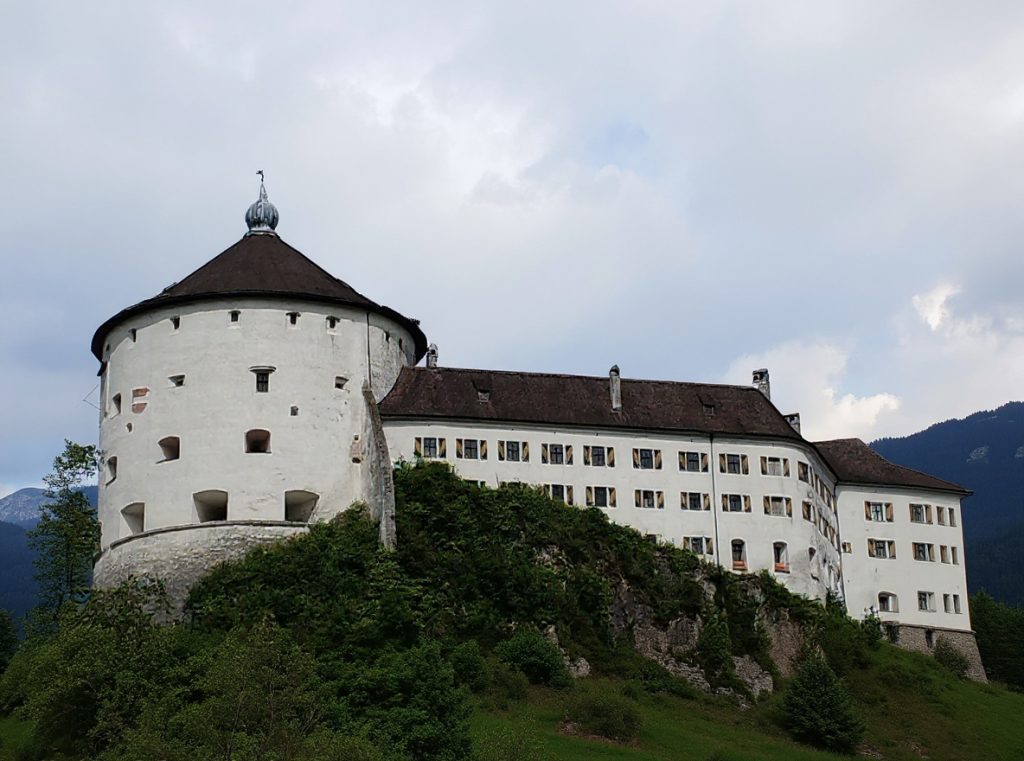
The city of Kufstein has held possession of the fortress since 1924. In 1996 officials founded the current fortress operating company, which has run, marketed and revitalised Kufstein Fortress ever since. The fortress now houses the City Museum of Kufstein, with exhibitions spread across the historic buildings. The local-history museum occupies former barracks, while the Kaiserturm occasionally hosts art exhibitions. Visitors explore 21 stations across the outdoor area, including the Elisabeth Battery with its cannon collection. The nearly 60-metre Deep Well and subterranean rocky passages also draw crowds. The open-air arena Josefsburg provides state-of-the-art technique that enables performances even in bad weather, as a huge umbrella opens. The fortress stages concerts, the annual Operetta Summer festival, and medieval knights’ events throughout the year.
The complex opens daily to the public and draws hundreds of thousands of visitors annually. It ranks among Tyrol’s most popular destinations as a result. Admission fees support ongoing conservation and interpretation. The fortress remains protected as cultural property under the 1954 Hague Convention. Stone ramparts, vaulted halls and towers echo with footsteps where soldiers once drilled and prisoners languished. From the high terraces the panorama sweeps across the Inn valley to the jagged peaks of the Brandenberg Alps. Below, the red roofs of Kufstein cluster along the green river. History and landscape meet on this ancient rock.
Castles near Kufstein Fortress
Frequently asked questions
What is included in a Kufstein Fortress ticket?
The ticket includes ascent and descent on the panoramic funicular railway, entry to all museums and exhibitions (local history museum, state prison museum, Tyrolean Infantry museum), the Heroes' Organ, and access to courtyards, gardens and viewpoints. An audio guide app is available free for download.
How long does it take to visit Kufstein Fortress?
Most visitors spend 1.5 to 2 hours exploring the fortress. This allows time for the funicular ride, visiting the main museums, seeing the Heroes' Organ (played daily at noon), and walking through the courtyards and battlements.
Can I walk up to Kufstein Fortress or must I take the funicular?
You can either walk up via a covered staircase or take the panoramic funicular, which is included in your ticket. The walk takes about 10 minutes and offers views of the old town, while the funicular provides a quick glass-walled ride to the top.
What are the opening hours for Kufstein Fortress in winter?
Winter opening hours (early November to late March) are 10:00–17:00 daily, with last admission at 16:00. Note that the local history museum is closed during winter months to protect the exhibits.
How do I get to Kufstein Fortress by train?
Kufstein station has direct regional trains from Munich (about 1h 20min) and Innsbruck. From the station, it's a 10–15 minute uphill walk through the old town to the fortress entrance, or you can take local buses that run every 20 minutes to the fortress base.
Popular right now
Featured listings