
Rising on a commanding hilltop above Newport, Carisbrooke Castle has defended the Isle of Wight for more than a thousand years. The Normans built a motte-and-bailey castle at Carisbrooke in about 1100. Yet evidence of earlier fortifications dates the site back to Saxon times. The castle’s most famous resident was Charles I. Parliamentarians imprisoned him here after his Civil War defeat. Today visitors climb the towering shell keep and walk the medieval ramparts. They also meet the working donkeys who still draw water from the deep well.
Plan your visit to Carisbrooke Castle
Sat–Sun 10:00–16:00Currently open Sat–Sun 10:00–16:00 (last entry 15:00); check official site for seasonal changes.
Location of Carisbrooke Castle
Carisbrooke Castle sits on the Isle of Wight 1 1/4 miles southwest of Newport. The castle stands high on Castle Hill, so it dominates the surrounding landscape. Castle Hill, Newport, Isle of Wight, PO30 1XY marks the full address. Regular ferry services connect the Isle of Wight to the mainland at Portsmouth and Southampton. From either ferry terminal, visitors can reach Newport by bus or car. The castle has clear signposting from Newport’s town centre. A large dedicated car park serves visitors arriving by road. The hilltop location provides sweeping views across the island and beyond.
History of Carisbrooke Castle
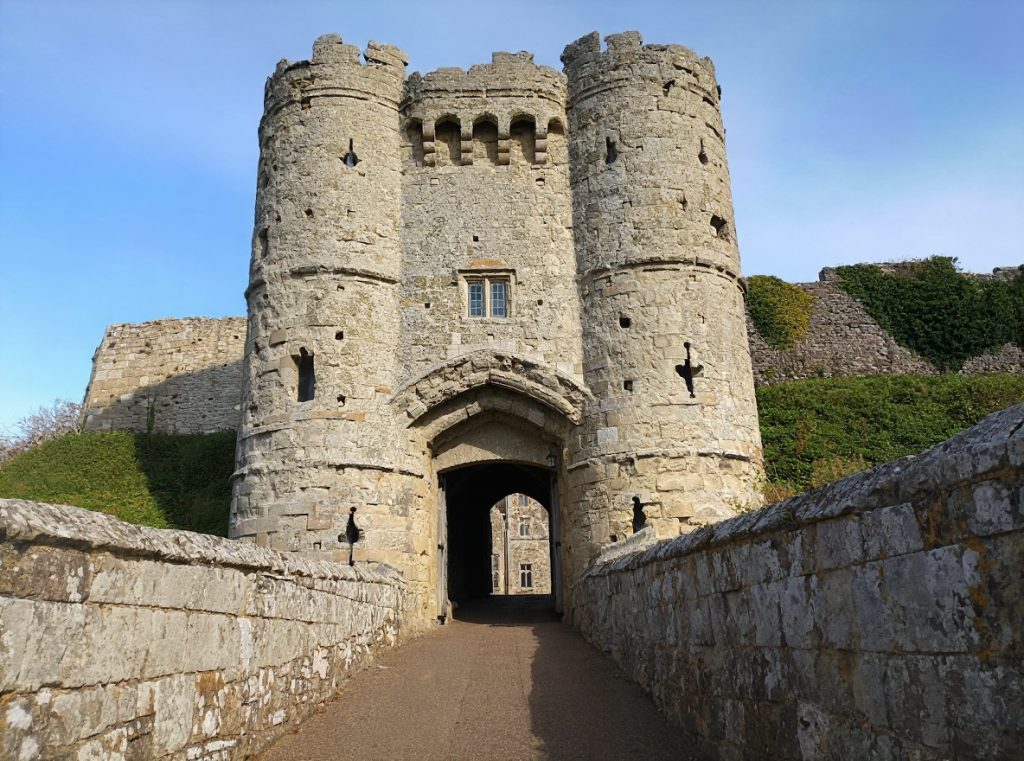
In around 1000 an Anglo-Saxon burh, or fortress, likely sat at the site of Carisbrooke Castle. This fortress protected the island from Viking raids. After the Norman Conquest, William fitzOsbern established the first Norman fortifications. The present castle began in c1100 when Henry I granted the Isle of Wight to the de Redvers family. Baldwin likely built the present motte-and-bailey castle in stone. The de Redvers family strengthened the castle over successive generations. In 1293, Countess Isabella de Fortibus, the last Redvers owner, sold the castle to King Edward I. It has remained Crown property ever since.
The castle experienced its only siege in 1377. Defenders beat off a French raiding force. The strategic importance of the castle grew during the Hundred Years’ War. The Isle of Wight, and thus Carisbrooke Castle, became an important stronghold to control access to the Solent and central-southern England. After the Spanish Armada passed alarmingly close in 1588, engineers updated Carisbrooke as an artillery fortification. Elizabeth I appointed her cousin George Carey as captain of the island. He oversaw the construction of the distinctive outer bastions.
During the English Civil War, Parliamentarians held Carisbrooke Castle. They used it as a prison for their most important Royalist prisoners – including King Charles I himself in 1647-8. The king arrived at Carisbrooke Castle in November 1647 after escaping from house arrest at Hampton Court Palace in Surrey. Charles attempted to escape twice. In March 1648 he tried to squeeze through the window bars of his bedchamber but became stuck. He remained at Carisbrooke until September 1648 before his final journey to trial and execution. Other Royalist prisoners stayed at Carisbrooke until the Restoration in 1660. Charles II then turned the castle into a prison for Parliamentarians.
Current status
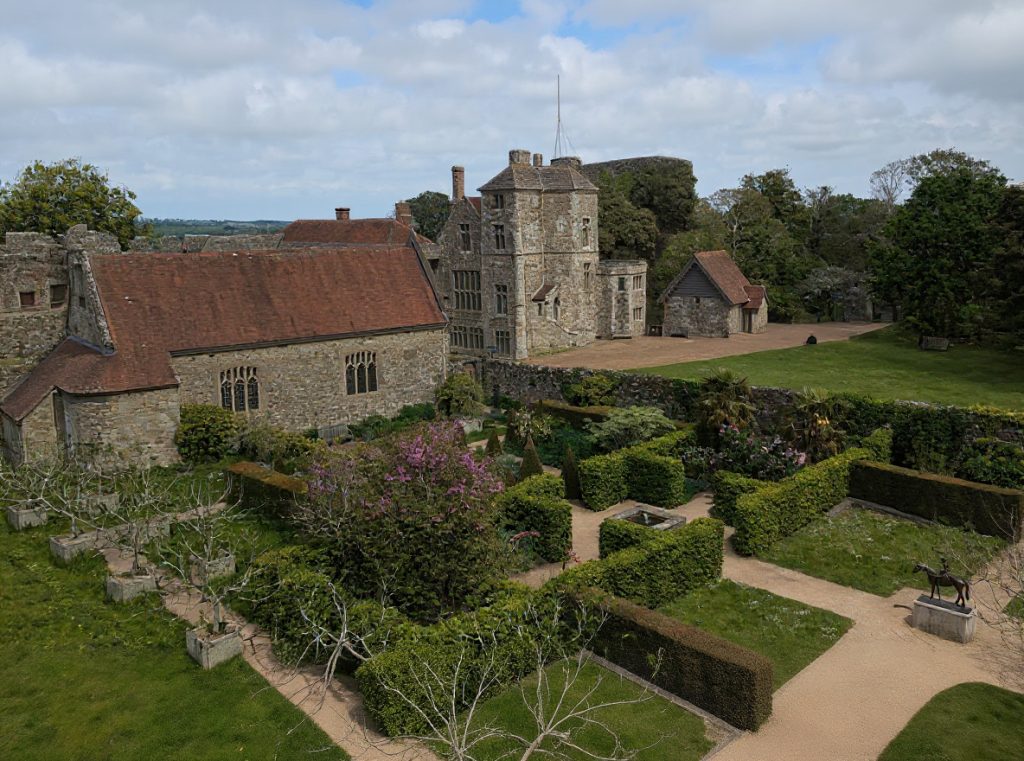
Carisbrooke Castle stands on a hilltop above the town of Newport in the centre of the Isle of Wight. English Heritage manages the castle, which opens year-round. The medieval buildings inside the castle date primarily from the thirteenth century, with sixteenth-century additions from the Elizabethan period. Bastioned outer earthworks surround it and remain impressively visible today. Visitors can walk the ramparts and climb the Norman motte to the shell keep for panoramic island views. The famous Carisbrooke donkeys continue the centuries-old tradition of drawing water from the castle’s 49-metre-deep well.
Carisbrooke Castle Museum is an independent charity museum within Carisbrooke Castle. An independent Charitable Trust manages it. HRH Princess Beatrice, Queen Victoria’s youngest daughter, founded it in 1898 as a memorial to her husband, Prince Henry of Battenberg. Princess Beatrice used part of Carisbrooke as a residence from 1912 onwards. The museum displays exhibits on the castle’s history and the island’s heritage. Admission to the museum comes with the English Heritage entrance fee. The castle hosts educational programmes, special events, and exhibitions throughout the year. The recently created Princess Beatrice Garden offers a tranquil space within the castle grounds.
From Saxon burh to Norman stronghold, from royal prison to summer residence, Carisbrooke Castle embodies over a millennium of English history. The medieval walls stand complete and the well still functions. The fortress continues to watch over the Isle of Wight from its hilltop perch.
Castles near Carisbrooke Castle
Frequently asked questions
What is Carisbrooke Castle famous for?
Carisbrooke Castle is famous as the prison of King Charles I, who was held here for 14 months before his execution in 1649. The castle also features working donkeys that demonstrate the 16th-century treadwheel used to draw water from the well.
How do I get to Carisbrooke Castle from the mainland?
Take a ferry from Portsmouth (Wightlink or Hovertravel) to either Fishbourne or Ryde on the Isle of Wight, then catch a Southern Vectis bus (routes 1, 5, or 9) to Newport. The castle is about 1 mile south-west of Newport and well signposted.
Is parking available at Carisbrooke Castle?
Yes, there is free on-site parking for around 100 cars, located approximately 50 metres from the entrance. Disabled parking is available in the main castle car park.
Can I visit Carisbrooke Castle for free?
English Heritage members can visit Carisbrooke Castle for free, along with up to six children in their family group. Non-members pay between £13.60 and £20 for adults depending on the season, with children aged under 5 entering free.
What can I see inside Carisbrooke Castle?
You can climb the Norman keep for panoramic views, walk the battlements, see Charles I's bedchamber and the window he tried to escape through, visit the castle museum, watch donkey demonstrations at the well house, and explore the Princess Beatrice Garden. The castle museum is included in your admission ticket.
Popular right now
Featured listings