
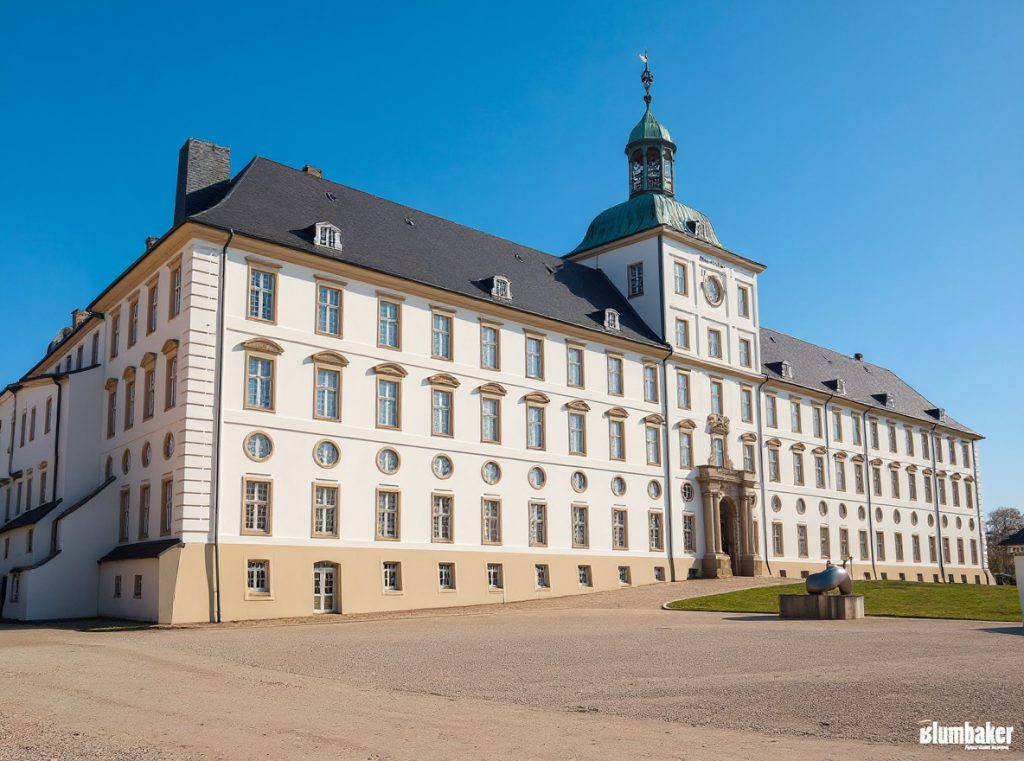
On a small island in the Schlei inlet near Schleswig, Gottorf Castle commands attention as one of northern Germany’s most important secular buildings. Over more than eight centuries this ancestral seat of the Holstein-Gottorp dynasty evolved from medieval stronghold to Renaissance fortress and finally to a grand Baroque palace. The dynasty produced four Swedish kings and several Russian emperors along the way. Today the castle houses the State Art and Cultural History Museum and the State Archaeological Museum in architect Nicodemus Tessin the Younger’s work. The castle occupies its strategic position in the Schlei, roughly 40 kilometres from the Baltic Sea.
Plan your visit to Gottorf Castle
Tue–Sun 11:00–16:00Apr–Oct: Tue–Sun 11:00–17:00; Nov–Mar: Tue–Sun 11:00–16:00; Sat–Sun 10:00–17:00 in Jul–Aug
Location of Gottorf Castle
Gottorf Castle sits at Schlossinsel 1 in the city of Schleswig, 24837 Schleswig-Holstein. The castle occupies an island in the Schlei, about 40 kilometres from the Baltic Sea. Schleswig lies in the northeastern part of Schleswig-Holstein, so visitors can reach the museum island easily from the town centre. The castle grounds extend across the entire island. The reconstructed Neuwerkgarten baroque terraced garden spreads to the north. This garden ranked as one of the first such gardens in Northern Europe. The site sits at the western end of the Schlei inlet, where it narrows before meeting the headwaters of the Treene river. Major cities Hamburg and Kiel provide convenient access points for travellers. The Museums Island ranks as the largest museum experience between Hamburg and Copenhagen. The castle’s island location creates a distinctive setting that reflects its medieval origins as a fortified stronghold controlling land routes into Denmark.
History of Gottorf Castle
Bishop Occo of Schleswig first settled the estate in 1161 when invaders destroyed his former residence. The Danish Duke of Schleswig acquired the property through purchase in 1268. In 1340 it transferred to the Count of Holstein at Rendsburg of the House of Schauenburg. The castle’s architectural transformation began when Duke Frederik acquired it in 1530 as his main residence. Builders raised the western wing in early Renaissance style in 1530. This was the first such building north of the Elbe river. Decades later builders added the eastern and northern wings. Workers completed the Deer Hall in 1595, and it became one of the finest Renaissance banqueting halls in Europe. The hall maintains its original design to this day. The estate flourished as a European cultural centre during the reign of Frederick III, Duke of Holstein-Gottorp, from 1597 to 1659. Between 1697 and 1703, renowned Swedish architect Nicodemus Tessin the Younger built the magnificent Baroque palace. After the ducal lineage fled in 1702, Danish occupiers let the palace fall into disuse and disrepair by 1713 under Frederick IV of Denmark. They gradually removed furniture and art while the structures served as Danish and Prussian barracks throughout the 19th century. During World War II, authorities used the estate as a displaced persons camp. Restoration crews reached completion in 1996.
Current status
A foundation of the State of Schleswig-Holstein now owns the palace and houses both the State Art and Cultural History Museum and the State Archaeological Museum. Gottorf Castle itself remains closed for renovation and modernisation works, though the Schleswig Museum Island stays open. Both museums continue hosting exhibitions in the historic buildings surrounding the castle during the renovation period. The museums showcase centuries of regional art, archaeology, and cultural heritage, with particular strength in medieval and Viking exhibits. The lavishly decorated chapel from the Renaissance period houses an early-Baroque organ and the ducal prayer room with intricate carvings and inlays. Terraces feature a magnificent pavilion that displays the famous 17th-century Globe of Gottorf. The complex serves as the largest museum island between two major cities and attracts scholars and visitors interested in northern European Renaissance architecture and Holstein-Gottorp dynastic history. The P-shaped layout with four irregular wings surrounding a central courtyard preserves the castle’s centuries of architectural evolution. The island setting enhances the experience, because water on all sides creates reflections of the palace’s ornate façades. Visitors enjoy peaceful walks through the baroque gardens when they reopen seasonally.
Castles near Gottorf Castle
Frequently asked questions
Is Gottorf Castle open to visitors?
The castle building is closed for renovation until further notice. The two state museums (archaeology and art/cultural history) on Museum Island remain open in separate buildings on the grounds.
How much does it cost to visit Gottorf Castle museums?
The Museum Island combination ticket costs €19 for adults, €7 for children aged 7–17, and €39 for a family ticket. Children under 7 enter free.
What can I see at Gottorf Castle?
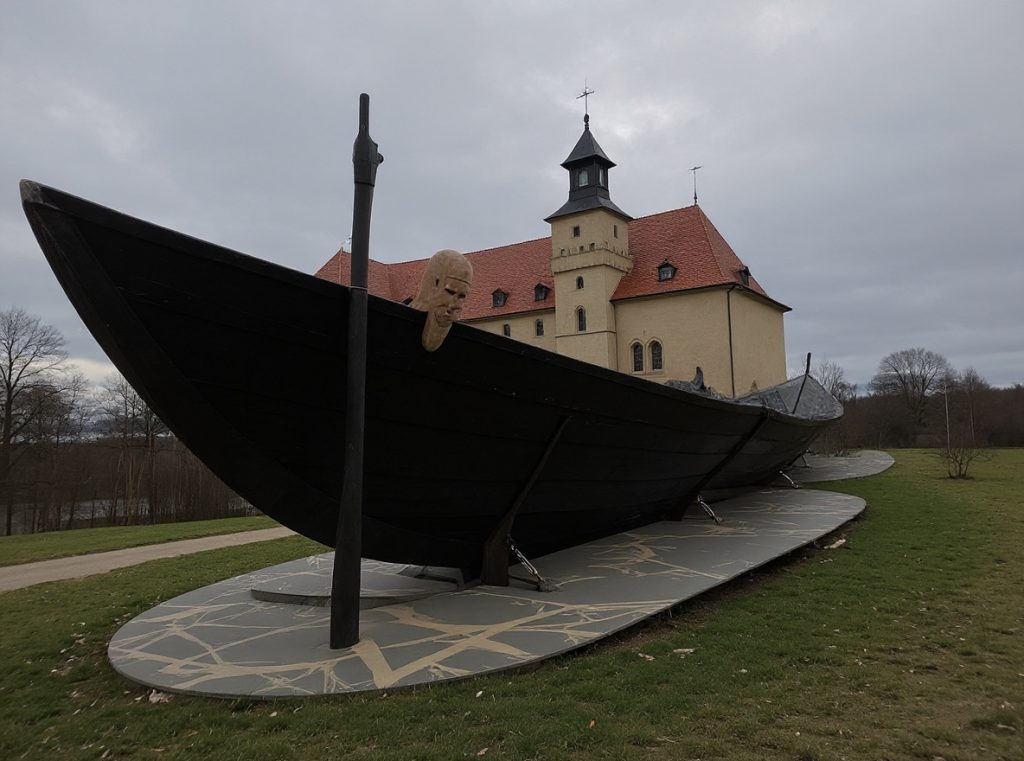
The site includes the Museum of Archaeology with the famous Nydam Boat, the Museum of Art and Cultural History, baroque gardens, and the historic Gottorf Globe (separate ticket €8). The grounds and park are free to explore.
How do I get to Gottorf Castle from Hamburg?
Take a direct regional train (RE7) from Hamburg Hbf to Schleswig, taking around 1h 30m. From Schleswig station it's a 15-minute walk to the castle island.
What are the opening hours for Gottorf Castle?
Museum Island opens Tuesday to Sunday, 11:00–17:00 (April–October) and 11:00–16:00 (November–March). In July and August, Saturday and Sunday hours extend from 10:00–17:00.
Popular right now
Featured listings