
Commanding the tip of Birgu’s peninsula across from Valletta, Fort St. Angelo rises above the Grand Harbour as Malta’s most storied bastion. The medieval stronghold evolved through centuries of fortification into the bastioned fortress that withstood the Ottoman onslaught in 1565. This layered monument preserves the architecture of Norman, Hospitaller and British eras within its limestone ramparts.
Plan your visit to Fort St. Angelo
Location of Fort St. Angelo
Fort St. Angelo sits at the end of the Birgu waterfront in Malta’s historic Three Cities district. The fortress occupies a natural promontory that projects into the Grand Harbour, directly opposite Valletta. Visitors reach Birgu by bus number 2, which stops at Birgu Centre in the city’s main square. From there, an 800-metre walk down towards the marina leads to the fort entrance in about ten minutes. The fort’s position on a slight hill offers sweeping views across the harbour to Valletta and the surrounding fortified cities. Ferry services also connect the Three Cities with Valletta, so travellers can approach by water and see the fortress from its most dramatic angle.
History of Fort St. Angelo
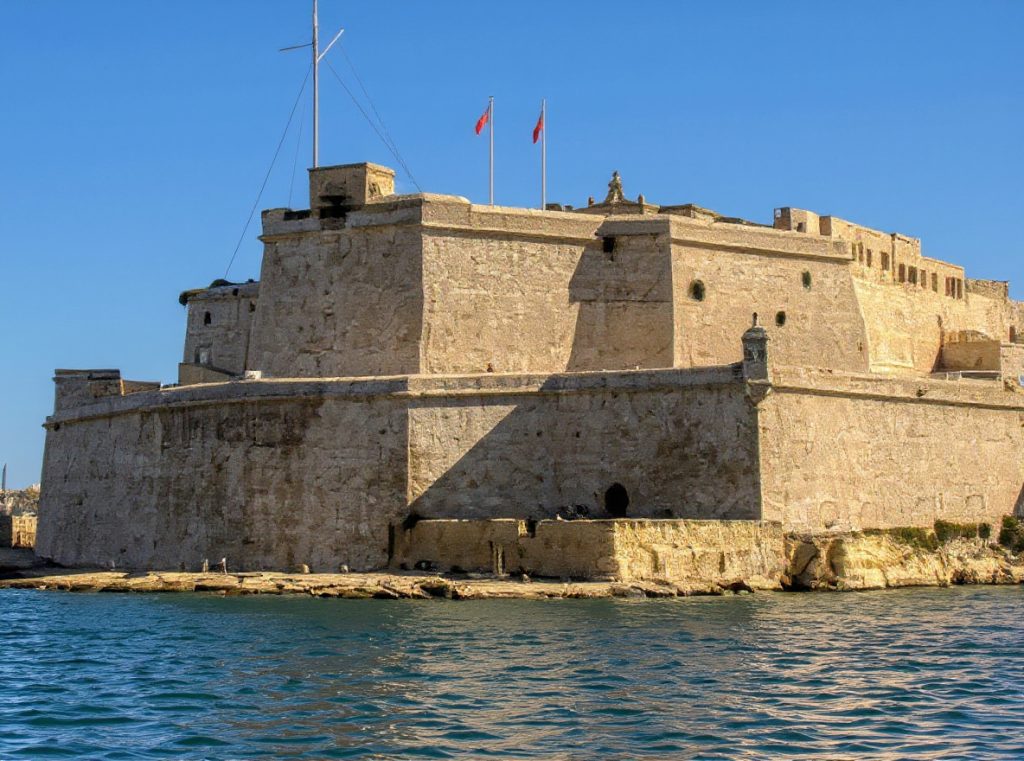
Documents from 1241 provide the earliest known reference to a fortification on this site. By 1274, the medieval castle known as Castrum Maris – the castle by the sea – consisted of two walled enclosures strengthened by round towers. Sicily’s overlords administered the stronghold through appointed castellans who controlled this strategic harbour gateway. When the Order of St John arrived in Malta in 1530, they found the castle partially abandoned and crumbling. The Knights chose Birgu as their base and christened the fortress Fort St. Angelo, then set about transforming it into their headquarters.
Between the 1530s and 1560s, the Order rebuilt the medieval castle as a bastioned gunpowder fortress. Engineers added artillery platforms and reinforced the walls to meet the demands of modern warfare. These preparations proved vital when Ottoman forces besieged Malta in 1565. Fort St. Angelo served as the Knights’ command centre throughout the four-month siege. The fortress successfully repulsed a seaborne assault on neighbouring Senglea on 15 August 1565, a turning point in the defence. After the siege ended, the Knights moved their administrative centre to newly built Valletta, yet St. Angelo remained militarily important.
In the 1690s, Flemish engineer Carlos de Grunenbergh directed major alterations to the fort. He designed and personally financed the construction of gun batteries that form much of the fortress we see today. French forces used Fort St. Angelo as their headquarters during their brief 1798–1800 occupation. The British then took control and maintained a military presence for 179 years. In 1906, the Royal Navy’s Mediterranean Fleet relocated its command hub inside the fort and designated it as the shore establishment HMS St. Angelo. The fortress endured 69 direct bomb hits during World War II yet stayed operational.
Current status
The Government of Malta owns Fort St. Angelo while Heritage Malta manages most of the site as a public museum. In 1998, the Maltese government granted the Sovereign Military Order of Malta a 99-year lease on the upper fort, including the Grand Master’s palace and the Chapel of St. Anne. This arrangement gives the Order sovereign jurisdiction over that section, similar to the Vatican’s status in Rome. Between 2012 and 2015, an extensive restoration programme transformed the fortress into a major visitor attraction with funding from the European Regional Development Fund. The fort hosted the 2015 Commonwealth Heads of Government Meeting during this period.
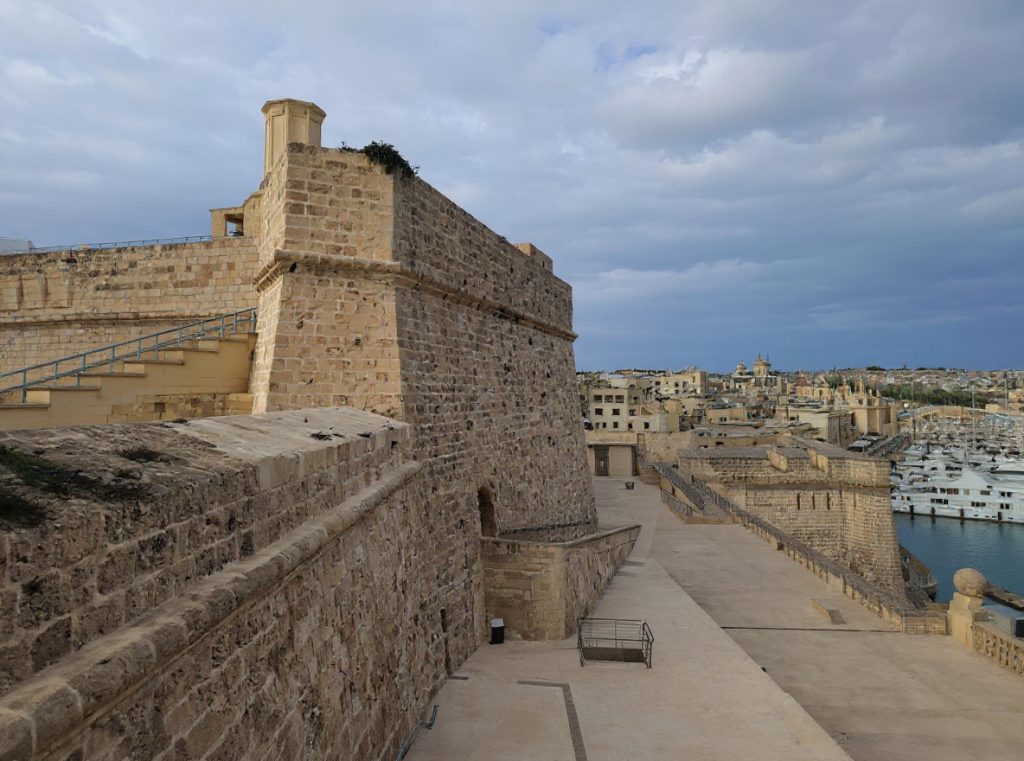
Fort St. Angelo opened to the public as a museum in 2018 after centuries of restricted military access. Visitors can now explore the medieval castral enclosure, the Knights’ artillery bastions, British naval facilities and World War II shelters. The Chapel of St. Anne, originally dedicated to St. Michael the Archangel, retains features from various periods including 15th-century Maltese architectural elements. Interactive exhibitions document the fort’s evolution from castle to modern naval base. Electric vehicles and chairlifts make the two levels wheelchair accessible. Heritage Malta operates the site daily, and visits require about 90 minutes to fully appreciate the ramparts, batteries and harbour viewpoints.
The fort stands on Malta’s tentative list for UNESCO World Heritage designation as part of the Knights’ fortifications around the harbours. From its upper bastions, the limestone walls and gun platforms frame views across the water to Valletta. Below, the Grand Harbour’s blue expanse stretches towards the Mediterranean, much as defending knights once surveyed it.
Castles near Fort St. Angelo
Frequently asked questions
What is Fort St. Angelo famous for?
Fort St. Angelo played a pivotal role in the Great Siege of 1565 when the Knights of St John defended Malta against the Ottoman Empire. It served as the headquarters of the Knights and later as a Royal Navy shore establishment until 1979.
Can you visit the upper part of Fort St. Angelo administered by the Sovereign Military Order of Malta?
Yes, the upper section of Fort St. Angelo is administered by the Sovereign Military Order of Malta under a 99-year agreement. This area is included in the standard Heritage Malta ticket as part of the visitor experience.
Are guided tours available at Fort St. Angelo?
Fort St. Angelo offers self-guided visits with informative displays and audio guides available. The fort features video presentations throughout that explain its military history and strategic importance.
How do I get to Fort St. Angelo from Valletta?
Take bus 2 or 4 from Valletta to Birgu (15-minute journey), then walk 10 minutes to the waterfront. Alternatively, take the scenic ferry from Valletta waterfront to Cospicua (€2), followed by a 1 km walk.
What views can you see from Fort St. Angelo?
Fort St. Angelo offers spectacular panoramic views across the Grand Harbour, Valletta, and the surrounding fortified towns of the Three Cities. On clear days, you can see as far as Mdina's citadel to the west.
Popular right now
Featured listings