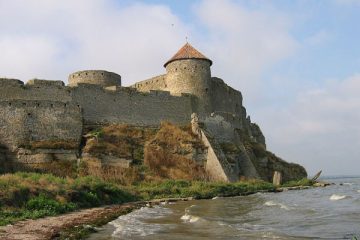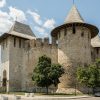

On the banks of the Dniester River in northern Moldova, Soroca Fortress rises with its distinctive circular design and five defensive towers. Stephen the Great originally built the fortress of wood in the 15th century, and Petru Rareș later rebuilt it in stone in the 16th century. The fortress ranks as Moldova’s best preserved late-medieval and Renaissance era fortress. With walls over 3 metres thick and a height of 21 metres, it played a key strategic role in Moldova’s defence.
Plan your visit to Soroca Fortress
Location of Soroca Fortress
Soroca Fortress sits on the banks of the Dniester River in the town of Soroca. Soroca is a city in northern Moldova, located about 160 km north of Chișinău. Its location lies only a few kilometres from the Moldova–Ukraine border. The fortress occupies high ground on the right bank, so visitors approach it through the town centre. Regular buses connect Soroca with Chișinău and other regional centres. The site commands views across the river into Ukrainian territory and down to the historic ford below.
History of Soroca Fortress
Stephen the Great built the fortress in 1499, though earlier fortifications may have stood here. Before the stone fortress came a wooden and earthen fortress mentioned only in 1499. Stephen erected Soroca against the Tartar raids, which made their way to Moldova through the fords of the Dniester. The original wooden fort defended a ford over the Dniester and formed an important link in the chain of fortifications. This chain comprised four forts on the Dniester, two forts on the Danube and three forts on the north border of medieval Moldova.
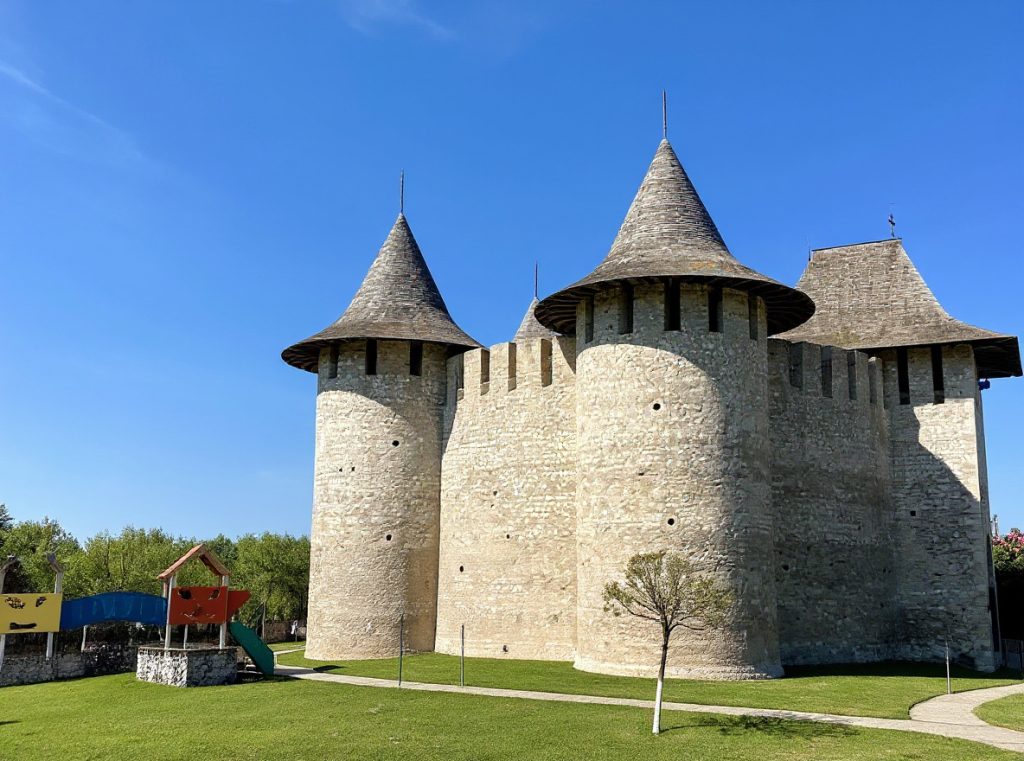
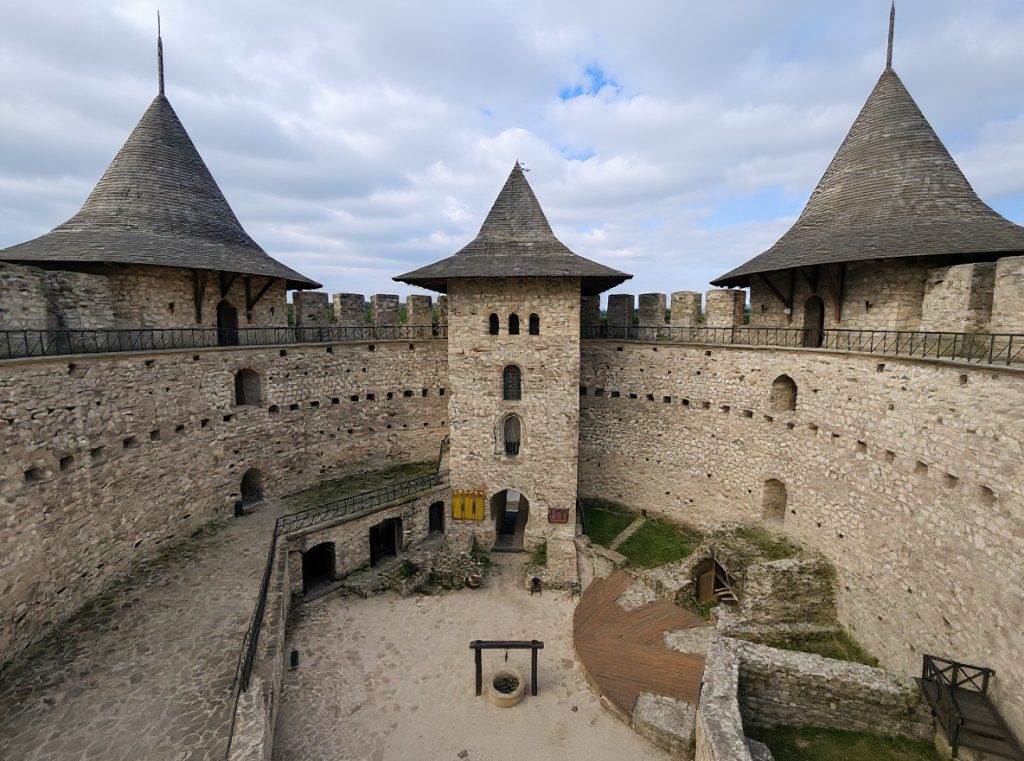
Between 1543 and 1546 under the rule of Petru Rareș, builders rebuilt the fortress in stone as a perfect circle with five bastions. A group of masons from Transylvania, led by the craftsman Iacob, constructed the stone fortress. The circular plan reflected European Renaissance military architecture. The fortress has a circular shape with an inner courtyard diameter of 30.5 m and 5 towers located at equal distances. Walls 3.05 m thick rise to a height of 21 m. The walls curve to better resist projectiles, as do the four outer towers.
The fort held a garrison of 200 to 250 men. During the Great Turkish War, John Sobieski’s forces successfully defended the fortress against the Ottomans. The Russians sacked the stronghold in the Russo-Turkish War (1735–1739). Russian forces captured it again in 1738, and the 1738 capture inflicted heavy damage. The damage never received full repairs, so the fortress’s military importance declined thereafter. The structure passed between various regional powers over the following centuries.
Current status
In the modern era conservation and rebuilding began in 1968 and the site reopened to visitors in 1970. Between 2013 and 2015, the castle underwent renovation works within the international project ‘Medieval Gems’. This project covered the medieval castles of Suceava, Khotin and Soroca, supported by European Union funds. Officials formally reopened the fort on 16 May 2015. The fortress now draws major tourist attention after restoration with support from the European Union. It opens to the public and offers modern visitor facilities.
The fortress operates as a branch of the Museum of History and Ethnography Soroca, a historical monument of national importance dating back to the 15th century. The fortress opens Wednesday to Sunday from 9:00 to 18:00, with a break from 13:00 to 14:00. Visitors explore the towers, walk along the ramparts and examine the inner chambers. The circular courtyard preserves medieval inscriptions and architectural details. The fortress preserves medieval Moldavian inscriptions together with a restored aurochs head, the old Principality emblem, above the gateway portal. From the upper levels, the ramparts offer sweeping views across the Dniester valley to Ukraine.
Today the Soroca Fortress holds status as a national monument protected by the state. The state includes it in the Register of Monuments of Moldova Protected by the State. The stone walls and towers stand much as Petru Rareș built them five centuries ago. The fortress forms a rare surviving example of circular Renaissance military architecture in Eastern Europe. Its silhouette remains a defining image of Soroca.
Castles near Soroca Fortress
Frequently asked questions
What makes Soroca Fortress architecturally unique?
Soroca Fortress is the only perfectly circular medieval fortress in Moldova, with five defensive towers arranged symmetrically around the perimeter. Built in stone by Petru Rareș in 1543 on the foundations of an earlier wooden fortress by Stephen the Great, its distinctive round design and riverside position made it a key defensive stronghold along the Dniester.
Can I visit Soroca Fortress in winter?
No, Soroca Fortress is closed during winter months for maintenance and typically reopens in April. During the open season (April to November), it operates Wednesday to Sunday from 10:00 to 17:30, and is closed on Mondays and Tuesdays year-round.
What can I see inside Soroca Fortress?
Inside the fortress you can climb the five towers for panoramic views over the Dniester River and Ukraine beyond, explore the courtyard and multiple levels open to visitors, see the small military chapel, and walk along the thick defensive walls. The fortress has been restored with accessible infrastructure including lifts in some towers.
How do I get from Soroca bus station to the fortress?
The fortress is about a 15-20 minute walk from Soroca bus station, heading south along Strada Independenței. Local taxis are available for around 30-50 lei, or you can take a local minibus (marshrutka) towards 'Cetatea Soroca' for about 6 lei.
What other attractions are near Soroca Fortress?
The Candle of Gratitude monument on the nearby hill offers views over the town and is free to visit, though the climb is steep. Roma Hill (Dealul Țiganilor) features distinctive mansions and is a short drive from the fortress; the Soroca History and Ethnography Museum is also worth visiting if time permits.

Top Rated Castle 2026
Soroca Fortress is one of the best rated castles in Europe: 4.7 stars from 5,327 visitors on Google. See all winners.
Is this your castle? Show the award on your website
Copy this code into your website:
Popular right now
Featured listings