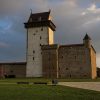
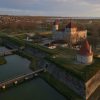
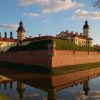
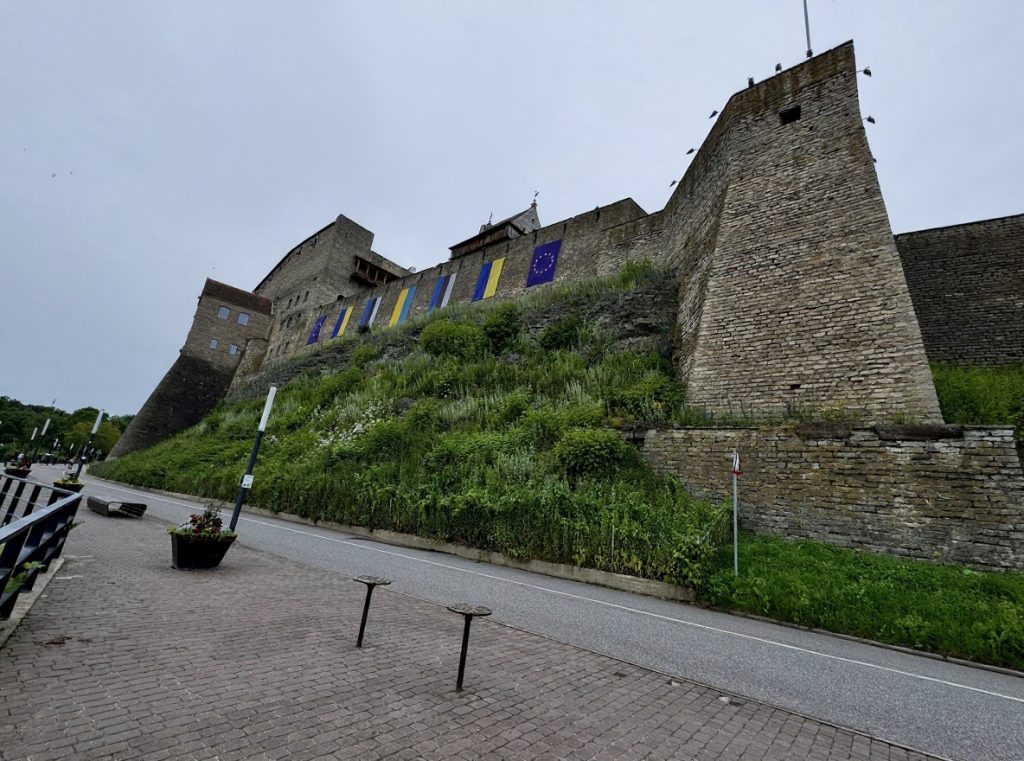
On the western bank of the Narva River, Hermann Castle commands Estonia’s easternmost frontier with stone walls and a 51-metre tower. The medieval fortress rises in the city of Narva, in northeastern Estonia, and faces the Russian fortress of Ivangorod across the river. It serves as both a historical landmark and a symbolic gateway between East and West. The castle ranks as the most diverse and best preserved defence structure in Estonia. For more than seven centuries, Danes, Germans, Swedes and Russians claimed this strategic stronghold before it finally passed to Estonian hands.
Plan your visit to Hermann Castle
Location of Hermann Castle
Hermann Castle sits in Ida-Viru County, at the eastern extreme point of Estonia, on the west bank of the Narva river. The river forms the Estonia–Russia international border. Narva ranks as Estonia’s third-largest city after Tallinn and Tartu. The castle occupies Peetri plats in central Narva, where the intersection of the Narva river and an old road made it a vital crossing point. This favorable location at the intersection of both trade routes and the Narva River prompted the founding of the castle. As a result, the surrounding urban settlement developed. Visitors arriving from Tallinn travel approximately 210 kilometres east, while the Russian city of St Petersburg lies only 140 kilometres to the east.
History of Hermann Castle
Danes established the castle around 1256, when the area belonged to the Danish Realm. The Kingdom of Denmark had conquered northern Estonia in the 13th century. In the mid-13th century, Danes built a border stronghold, initially of wood, at the intersection of the Narva river and an old road. The earlier settlement developed into the town of Narva under the protection of the stronghold, which first appears in writing in 1256. Narva obtained the Lübeck town rights in the first half of the 14th century. After several conflicts with the Russians, the Danes started building a stone stronghold at the beginning of the 14th century. Builders completed the first entirely stone fortifications in the beginning of the 14th century.
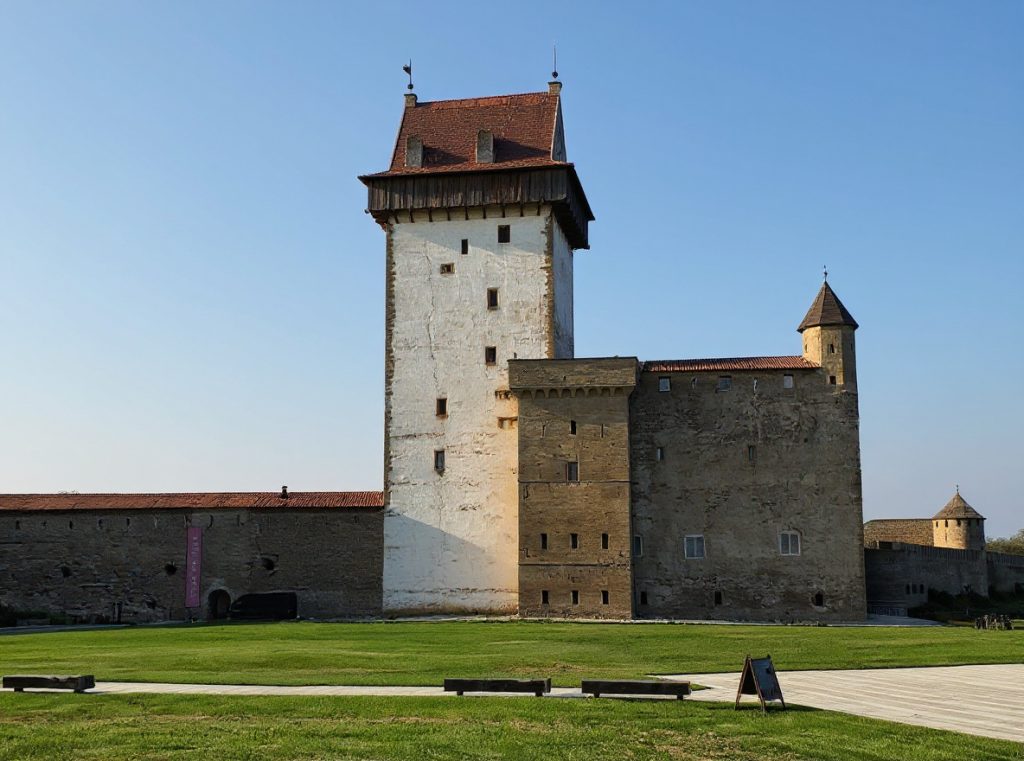
The structure formed a small castellum-like building with 40-metre sides and a tower at its north-western corner. This tower served as the predecessor of today’s Herman Tower. At the beginning of the 14th century, workers established a small forecourt at the north side of the stronghold. Then, in the middle of the century, they added a large forecourt to the west side. Citizens could hide there in case of wars because the town of Narva had no wall during the Danish rule. In 1347 the Danish king sold Northern Estonia, including Narva, to the Livonian Order. The Order rebuilt the building into a convent according to their needs. The Livonian branch of the Teutonic Order purchased the castle in August 1346 and owned it for much of its later history.
The Order also completed the Herman Tower at that time. The Russians established Ivangorod Castle on the opposite side of the Narva River in 1492, which made the tower necessary.
Current status
The Narva Museum occupies Peterburi maantee 2, 20308 Narva, Estonia. The museum comprises the Narva Castle, the Northern Yard, and the Narva Art Gallery. The castle houses the Narva Museum, which displays the region’s rich history, culture, and art. In summer 2020, a new exhibition opened in Narva Castle. It gives an overview of Narva from the 13th century to the beginning of the 20th century. The castle covers an area of 3.2 hectares, and its highest point reaches 51 metres at the Tall Hermann Tower. Concerts and conferences take place in the castle’s vaulted knights’ meeting and banquet hall. Events also occur in the slightly smaller hall in the north wing, while the 51-metre-high Tall Hermann Tower offers views over Narva. Visitors can see the Kreenholm factory and Ivangorod Fortress across the river in Russia.
The Northern Yard depicts the district of artisans, who worked in Narva since the 17th century. Visitors can explore handicraft workshops where blacksmiths, potters and other craftspeople demonstrate traditional techniques. The outer walls enclose the large Northern Yard, which remains freely open to the public. It contains what must be one of Estonia’s last remaining public statues of Lenin. The museum opens Wednesday through Saturday from 10:00 to 18:00 and Sunday from 10:00 to 16:00. Admission costs €16 for adults.
The castle stands as a powerful monument to centuries of border conflict and cultural exchange. From its ramparts, visitors gaze directly across the narrow river at Ivangorod Fortress. The two medieval strongholds remain locked in their ancient standoff and now mark the boundary between the European Union and Russia.
Castles near Hermann Castle
Frequently asked questions
What can you see from Hermann Castle's tower?
The Hermann Tower offers a direct view across the Narva River to Ivangorod Fortress in Russia, less than 150 metres away. It is one of Europe's most striking border views, with two medieval fortress systems facing each other.
Is entry to Hermann Castle free?
The castle courtyard and ramparts are free to enter. The Narva Museum inside the castle, including access to Hermann Tower and the permanent exhibitions, costs €16 for adults.
How do I get from Tallinn to Hermann Castle?
Take a direct Elron train from Tallinn to Narva (2h 45m–3h) or a Lux Express bus (3–3.5h). From Narva station, the castle is a 15-minute walk, or get off the bus at Peetri plats stop, which is right at the castle entrance.
What is Hermann Castle known for?
Hermann Castle is a 13th-century Danish-founded fortress on the EU–Russia border. The castle houses the Narva Museum, with exhibitions covering 700 years of history from the Teutonic Order through Swedish and Russian rule to World War II.
Are guided tours available at Hermann Castle?
Yes, guided tours covering the castle's history are available in Estonian, English, Russian and Ukrainian for €50 plus tickets, lasting 90 minutes. Book through the Narva Museum in advance.
Featured listings