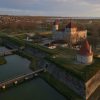
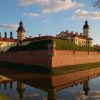
On the southern coast of Saaremaa island, where the Baltic Sea meets the Gulf of Riga, Kuressaare Castle rises from its artificial island surrounded by a water-filled moat. Builders constructed this late Gothic episcopal fortress from local dolomite stone. The complex remains the only completely preserved medieval castle in the Baltic States. The stone-faced bastions and massive walls tell the story of crusading bishops, shifting empires, and centuries of Baltic power struggles. These forces shaped this westernmost corner of Estonia.
Plan your visit to Kuressaare Castle
Wed–Sun 11:00–18:0015 May–15 Sep: Mon–Sun 10:00–18:00; 16 Sep–14 May: Wed–Sun 11:00–18:00
Location of Kuressaare Castle
The castle sits in Kuressaare on Saaremaa island, in western Estonia. Kuressaare occupies the southern coast of Saaremaa, facing the Gulf of Riga of the Baltic Sea. The castle occupies Lossihoov 1, right in the city centre. Visitors can reach it from Tallinn by comfortable intercity bus or car in approximately 4–5 hours. The journey includes a mandatory ferry crossing across the strait to Saaremaa. Reaching Kuressaare becomes part of the experience, as the journey from Tallinn takes three to four hours. Travellers drive to the ferry port at Virtsu, then take a 25-minute crossing to Kuivastu on Muhu Island before crossing the causeway. Kuressaare Airport also serves the island for those flying from mainland Estonia. Parking areas lie near the fortress, just minutes from the main gates.
History of Kuressaare Castle
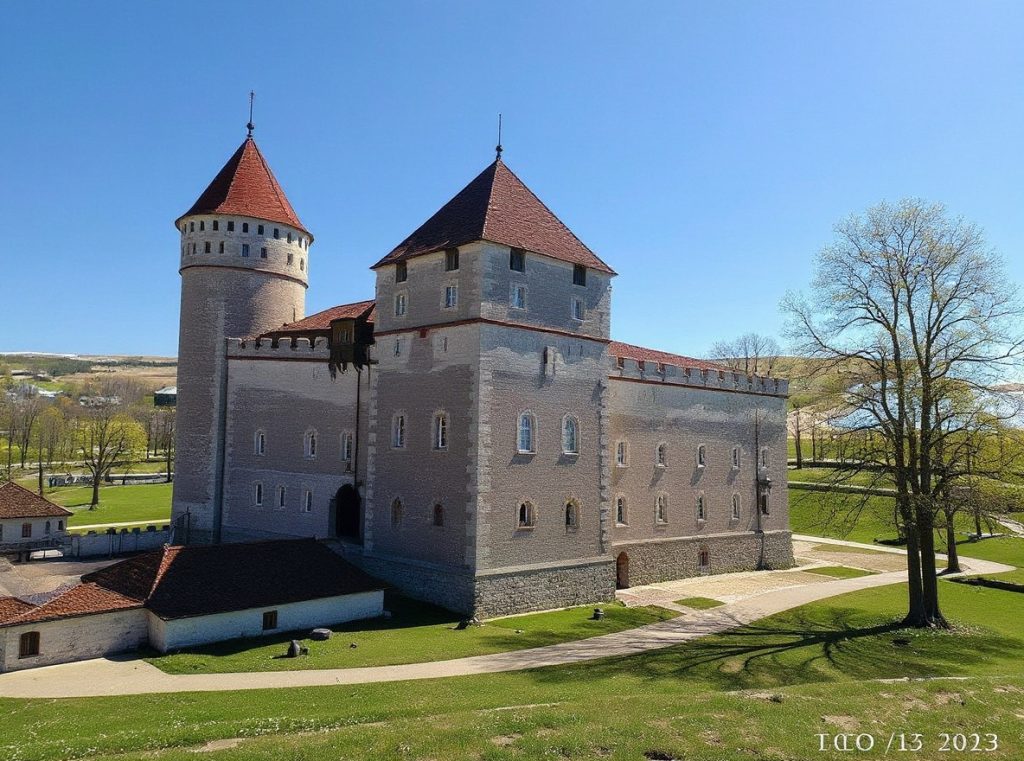
In 1227 the last Estonian county, Saaremaa, surrendered to the German crusaders. A small feudal state formed in the years 1228-1234: the Saare-Lääne (Ösel-Wiek) Bishopric with the territory of about 7,600 square kilometres. The bishop’s main early-13th-century residence stood in Haapsalu, on the mainland. Around 1338, the Haapsalu bishop began building Kuressaare Castle. Saaremaa’s population resisted Christian conquest longer than almost any other community in the eastern Baltic. They held out until the late 13th century. Once subdued, the island came under the authority of the Bishopric of Ösel-Wiek. The bishopric began construction of a fortified episcopal seat around 1338. Records first mentioned it in 1381.
The Teutonic Order began its construction for the bishops of Ösel-Wieck. The construction of the castle took 40 years. Builders followed the classic Livonian “convent building” plan — four ranges enclosing a central courtyard. The castle served as the Bishop’s administrative and military centre across the medieval period. Late Gothic style defines the castle, characterised by simplicity in forms. The central convent building forms a square around a central courtyard. The defence tower, in the northern corner, reaches 37 metres (121 feet). One of the cannon towers that dotted the wall has now undergone restoration. Builders originally raised it in the 1470s.
In 1559, Denmark-Norway seized control over Saaremaa and Kuressaare castle. During this time, engineers modernised the fortifications. Following the Peace of Brömsebro, which ended the 1643-1645 war between Sweden and Denmark-Norway, Saaremaa passed into Swedish hands. The Swedes continued modernising the fortress until 1706. After the secularisation of the Ösel–Wiek bishopric in the 16th century, Saaremaa moved through the hands of Denmark, Sweden (1645), and Russia (1710). Every new regime fortified, repaired, or updated the structure—but none dismantled its medieval core. During the Great Northern War (1700-1721), which pitted Russia against Sweden, Kuressaare Castle suffered extensive damage. Decades passed before anyone repaired it. After the end of Finnish War and the Third Partition of Poland, the Russian empire headed further west. In 1836, they withdrew their military troops from Kuressaare. The castle eventually lost the importance it had received since its inception. By the 19th century, authorities used it as a shelter for the poor.
Current status
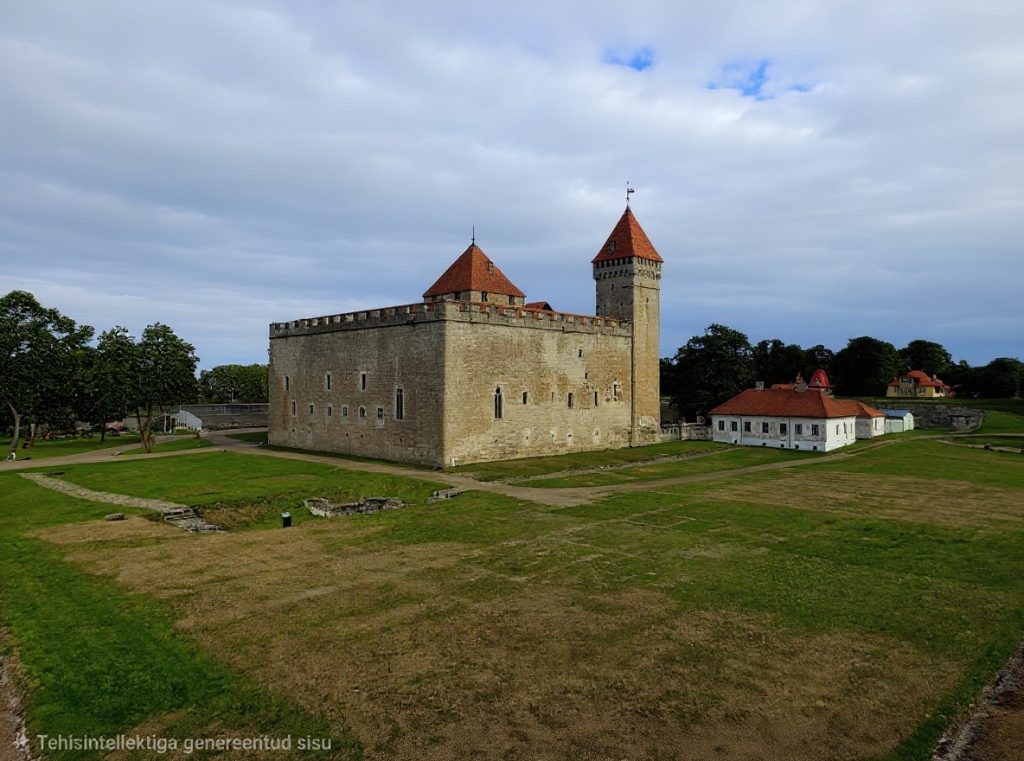
Today the castle houses Saaremaa Museum, which locals founded in 1865. Founded in 1865, Saaremaa Museum is one of the oldest and most visited museums in Estonia with long traditions of collecting and research. It consists of the Kuressaare Castle, the Mihkli Farm Museum, and the Johannes and Joosep Aavik House Museum. The castle opens Wednesday to Sunday from 11:00 to 18:00, with entrance until 17:30. A history museum in the castle tells stories of the distant past and of the recent history of Saaremaa. The exhibits share the lives of its locals through permanent and travelling exhibitions. Activities for children and adults range from treasure hunts to archery!
In the 20th century workers repeatedly restored the fortress. The last and most capacious period of restoration ran from 2010 to 2015. During this time, workers cleaned out and conserved most walls of the fortress that refuse had buried. This work gave the fortress back its earlier architecture. Different pages of the long and complicated development story became visible to interested parties. The castle grounds open to the public at all times. To visit the keep visitors need to buy a ticket to the castle’s branch of the Saaremaa Museum. Workers laid out the shady park around the castle moat in 1861. Some fine wooden resort buildings stand in and around it.
The fortress stands today not as a ruin but as a complete architectural body. Its thick dolomite walls, deep moat, and towering battlements continue to command the southern edge of Kuressaare. Within the courtyard medieval stonework reveals the religious and military character of episcopal rule. Summer brings outdoor concerts to the castle yard. Visitors walk the same halls where bishops once governed their island realm.
Castles near Kuressaare Castle
Frequently asked questions
Is Kuressaare Castle suitable for children?
Yes, the castle is family-friendly with engaging exhibitions suitable for all ages. Family tickets are available for up to 2 adults and their children.
Can I visit Kuressaare Castle without entering the museum?
Yes, the castle grounds including bastions and moats are free to explore. Museum entry requires a ticket (€13 adults).
How do I reach Kuressaare Castle from mainland Estonia?
Take a direct bus from Tallinn (4 hours including ferry) or drive with a ferry crossing from Virtsu to Kuivastu. The journey includes scenic views of the Baltic Sea and Estonian islands.
Are guided tours available at Kuressaare Castle?
Yes, guided tours in Estonian, English, Russian, Swedish, German and Finnish can be booked at least 5 working days in advance via email (linnus@samu.ee). Tours cost €90 plus tickets.
What makes Kuressaare Castle historically significant?
Built in the 14th century, it is one of the best-preserved medieval fortifications in the Baltic region. The castle has survived numerous rulers and now houses the Saaremaa Museum, founded in 1865.
Featured listings