The Alcazaba of Málaga rises above Málaga’s port and historic centre from its strategic hilltop position. Berber king Badis ibn Habús ordered its construction between 1057 and 1063, so this palatial fortress represents one of Spain’s best-preserved examples of Moorish military architecture. Architects designed the double-walled enclosure as impregnable both from seaborne pirate attacks and from internal rebellions within the city itself. For nearly nine centuries, the Alcazaba has witnessed the rise and fall of dynasties, the clash of civilisations, and the transformation of Andalusia.
Plan your visit to Alcazaba of Málaga
Location of Alcazaba of Málaga
The Alcazaba of Málaga sits on a hill in the centre of the city and overlooks the port. It comprises two walled enclosures, one contained within the other. This Muslim citadel occupies a strategic position at the foot of Mount Gibralfaro. The fortress sits adjacent to the Moorish defensive castle, and La Coracha connects them through a sheltered corridor of walls. Remnants of a Roman theatre dating to the 1st century AD stand next to the entrance of the Alcazaba. Visitors reach the fortress entrance at Calle Alcazabilla, 2, just steps from Málaga’s cathedral and old town. The Alcazaba sits on the hillside right above Málaga’s historic centre, across from the port and the leafy Paseo del Parque. Once you’re in the city, you can easily reach it on foot. The site commands sweeping views across the Mediterranean and the city below, a position that has held strategic value since Phoenician times.
History of Alcazaba of Málaga
The Phoenicians settled here around 600 BC, followed by the Romans. The Romans built the Roman Theatre on the western slope. Muslim builders constructed the Alcazaba in the 11th century and used the already-abandoned Roman theatre as a convenient quarry for building materials. In 1057, Badis ibn Habús seized Málaga. He was the king of the Taifa of Granada, and he immediately ordered the construction of a formidable fortress to protect his acquisition. The result was a palatial citadel that served both defensive and residential functions.
Each conquering dynasty of Málaga reshaped and strengthened the Muslim fortification. The Almoravids arrived in 1092, then the Almohads in 1146, and the Nasrids in 1279. Over time, various dynasties ruled the Alcazaba, from the Almoravids to the Almohads. Muhammad II Ben al-Ahmar incorporated it into the Nasrid kingdom in 1279. At its peak it had over 110 principal towers. The Alcazaba overcame its first baptism of fire during a siege in 1487. Ferdinand and Isabella besieged it between May and August 1487, when they captured Málaga from the Muslims.
Starting in the 18th century, the Alcazaba’s military function ceased. After its military role declined, the fortress became a residential neighbourhood until 1933. Authorities relocated its inhabitants that year. The fortress then underwent extensive restoration to recover its original splendour.
Current status
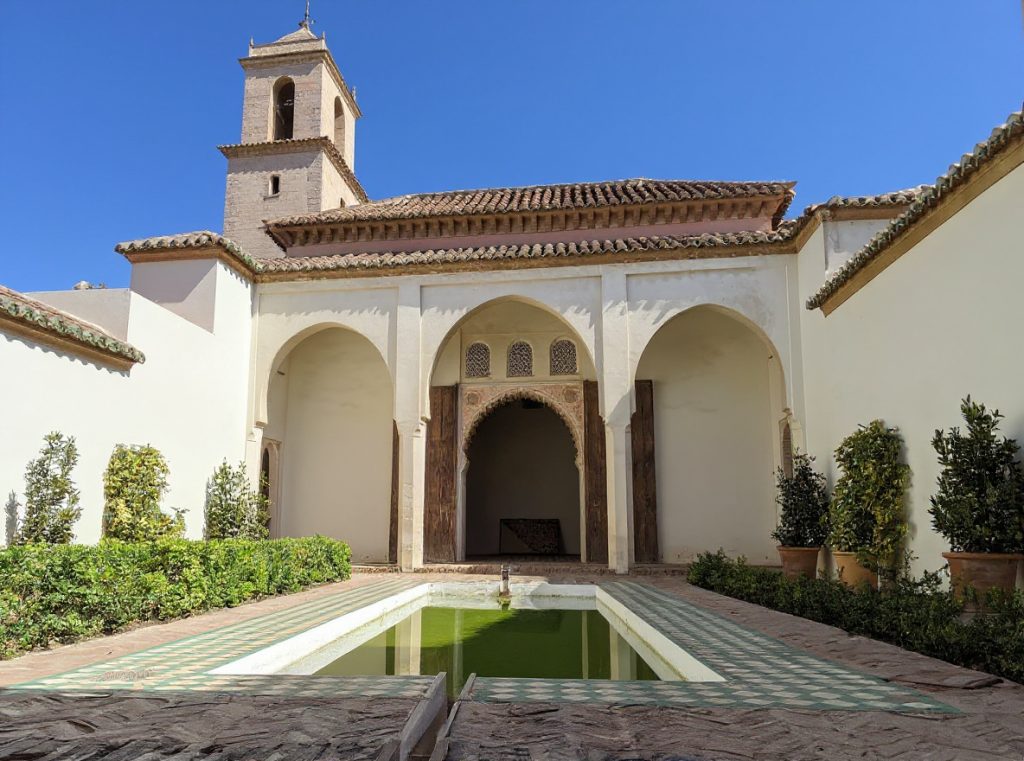
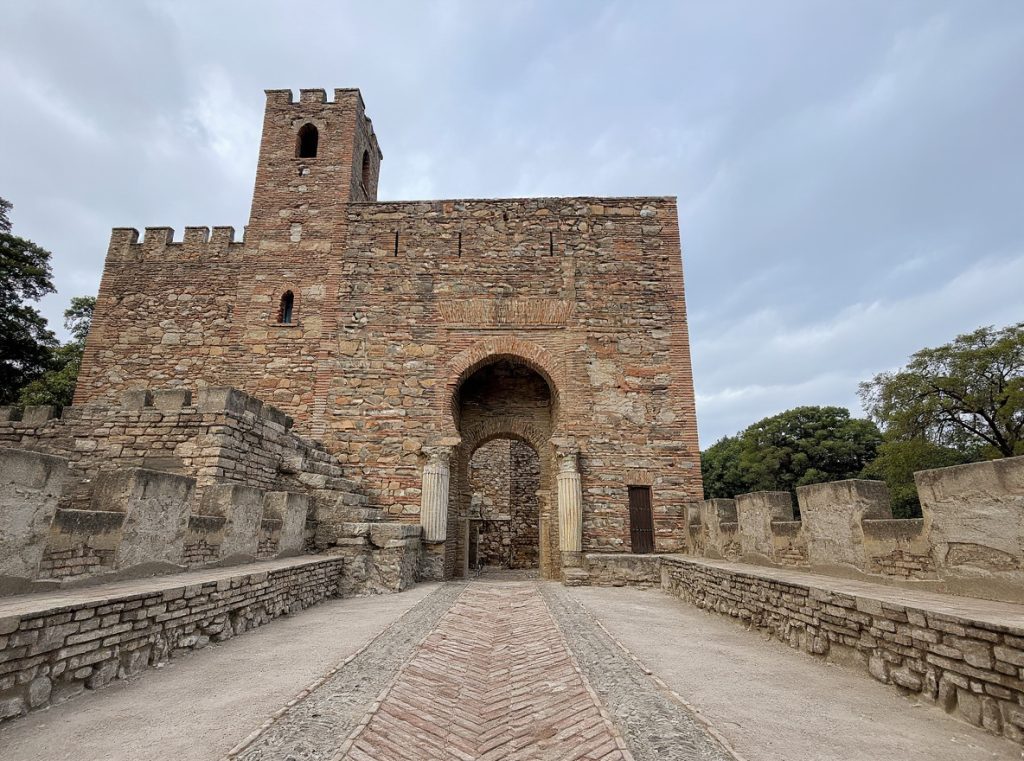
Today the Ayuntamiento de Málaga manages the fortress and welcomes thousands of visitors annually. Its Nasrid architecture combines defence and aesthetics through rectangular courtyards, gardens and ponds. The design shows how masterful the Arab architects were at manipulating light and shadow in their interior spaces. Visitors explore a complex covering approximately 15,000 square metres. They ascend through fortified gates, ramps and walled passages. The Arab arches sit directly on top of Roman marble column capitals and shafts. Builders pulled these from the theatre ruins below, creating a visible dialogue between civilisations.
The fortress opens daily with winter hours from 9am to 6pm. Summer hours extend to 8pm. Admission charges apply, with combination tickets available for the nearby Gibralfaro Castle. Audio guides offer information in multiple languages for international visitors. The site regularly hosts cultural events and educational programmes, bringing its medieval history to life. This Muslim military landmark has been preserved as one of the most significant works in Spain. It integrates defensive elements such as machicolations, watchtowers with arrow slits and crenellated walls. The fortress takes advantage of its strategic location to visually dominate the city and the bay from its balconies.
The Alcazaba remains a living monument where history unfolds in stone and shadow. From its terraces, the same Mediterranean light that once guided Phoenician sailors now illuminates visitors discovering layers of Iberian heritage. The fortress endures as a monument to the architects and dynasties who shaped southern Spain’s cultural landscape.
Castles near Alcazaba of Málaga
Frequently asked questions
How much does it cost to visit the Alcazaba of Málaga?
General admission is €7, or €10 for a combined ticket with Gibralfaro Castle. Entry is free every Sunday from 14:00, though this is the busiest time to visit.
What are the opening hours of the Alcazaba of Málaga?
The fortress opens daily from 09:00 to 20:00 (April to October) and 09:00 to 18:00 (November to March). Last admission is one hour before closing.
How long does it take to visit the Alcazaba of Málaga?
Allow 1.5 to 2 hours to explore the fortress properly, including the gardens, courtyards and upper palace areas. Add another 90 minutes if visiting Gibralfaro Castle as well.
Is the Alcazaba of Málaga worth visiting?
Yes, it is the best-preserved Muslim palace-fortress in Spain after the Alhambra. The 11th-century complex features beautiful gardens, Islamic architecture and excellent views over Málaga and the Mediterranean.
Can you walk from Málaga city centre to the Alcazaba?
Yes, the Alcazaba is located just above the Roman Theatre on Calle Alcazabilla, about a 10-minute walk from the city centre. There is also a lift (ascensor) from Calle Guillén Sotelo to reduce the uphill walk.
Popular right now
Featured listings