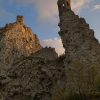
Towering above the confluence of two great rivers on a 212-metre rock cliff, Devín Castle commands one of Central Europe’s most strategic positions. The ruins of this ancient fortress watch over the meeting point of the Danube and Morava, where Slovakia and Austria now share a border. Archaeological evidence shows humans settled this dramatic site 7,000 years ago because its natural defences controlled vital trade routes. The castle’s weathered stones tell stories of Celts and Romans, Great Moravian princes and Hungarian kings. Then French explosives shattered its walls in 1809.
Plan your visit to Devín Castle
Tue–Sun 10:00–17:00
Location of Devín Castle
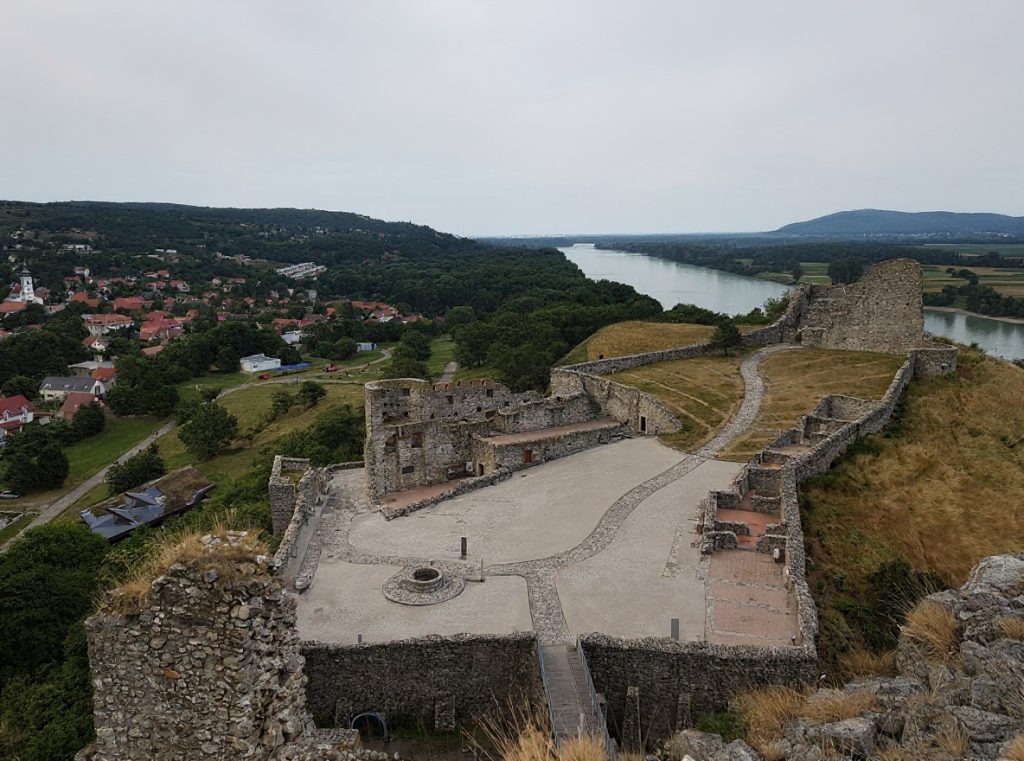
Devín Castle sits in the borough of Devín, 12 kilometres west of Bratislava’s historic centre. The fortress occupies a rocky outcrop where the Morava River flows into the Danube, forming the natural frontier with Austria. From the north, the Little Carpathian mountains protect the site. Devínska Kobyla peak rises to 514 metres nearby. Visitors reach the castle easily by bus number 29 from Bratislava’s Most SNP bridge, a journey of roughly 20 minutes. The route passes through the small village of Devín before arriving at the base of the cliff. Alternatively, seasonal boat services depart from Bratislava’s riverfront twice daily. These boats offer scenic passage along the Danube. Cyclists enjoy dedicated paths leading directly to the castle entrance, while drivers find parking below the rock.
History of Devín Castle
Slavic settlers built the fortress known as “Dowina” by the 9th century, when written records first mention it in 864. Prince Rastislav ruled from here during the Great Moravian period. Builders erected a church with painted interior walls on the castle grounds then. The confluence served as a crossing point for the Amber Road running north-south and the Danube Road stretching east-west. This made Devín a vital commercial hub. Romans had fortified the site centuries earlier, leaving behind brick structures that archaeologists still study today. Throughout the Middle Ages, Hungarian kings maintained the castle as a western border fortress. Its ownership passed between noble families including the Báthorys, who constructed a Renaissance palace wing in the 16th century.
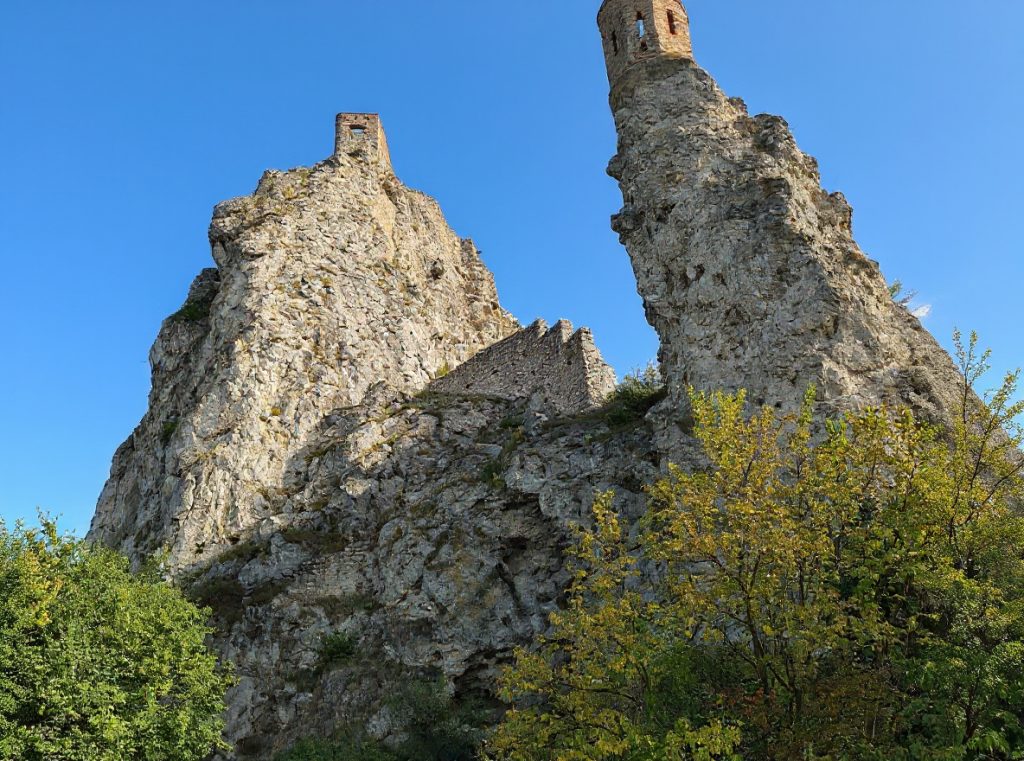
The 13th century saw the construction of a stone castle to guard the Hungarian Kingdom’s frontier. Records from 1271 document this work. Gothic builders added the Garay palace with two storeys in the 15th century. The Báthory family built the distinctive Virgin Tower on a steep promontory overlooking the river confluence. This polygonal bastion with crenellations inspired numerous legends. The Pálffy family acquired Devín in 1635 and held it for nearly two centuries, though they made few architectural changes. During the Baroque period, administrators used the castle primarily for economic purposes rather than military defence. When Napoleon’s armies swept through the region in 1809, French soldiers planted explosives and demolished the fortress deliberately. This ended its active military role.
After the destruction, the Pálffy family abandoned the ruins, which deteriorated throughout the 19th century. Romantic poets and Slovak nationalists, including followers of Ľudovít Štúr, gathered at the evocative site in 1836. They transformed it into a symbol of Slavic heritage and national identity.
Current status
The Bratislava City Museum manages Devín Castle today. It operates the site as one of Slovakia’s most important national cultural monuments. Visitors explore vaulted exhibition spaces displaying archaeological findings from Roman tombs, Great Moravian church foundations, and medieval residential quarters. The 55-metre-deep castle well stands in the Middle Castle courtyard, surrounded by conserved palace walls and Gothic fortifications. A terrace near the well offers panoramic views across the Danube to Austria’s Braunsberg mountain. Since 2008, authorities closed the Upper Castle section because of unstable foundations, though reconstruction work continues. The remaining castle grounds stay open to the public. Information boards featuring QR codes provide multilingual historical details. Seasonal opening hours vary, with the castle welcoming visitors from Tuesday to Sunday throughout most of the year. It closes only on Mondays.
Educational programmes bring school groups to learn about the site’s role in Great Moravian history and its connection to Saints Cyril and Methodius. The castle hosts cultural events, including the annual Sútok Festival celebrating the region’s heritage. Natural pastures surround the fortress, supporting conservation efforts for local flora and fauna. Hiking trails connect the castle to the Little Carpathians. These paths attract walkers who combine historical exploration with outdoor recreation. The Virgin Tower remains the most photographed feature. Its solitary silhouette perches above the bicoloured confluence where the Morava’s clear waters meet the Danube’s darker current.
During the Cold War, the castle stood just inside the Iron Curtain. Soldiers heavily fortified the riverbanks then to prevent escapes to Austria. After the Velvet Revolution in 1989, authorities dismantled the border fortifications, opening free access to the water’s edge. Today, visitors stand at this former boundary between socialist and capitalist worlds.
Castles near Devín Castle
Frequently asked questions
Can you visit Devín Castle year-round?
Yes, Devín Castle is open Tuesday to Sunday throughout the year, closed Mondays. The interior exposition and exhibitions are only open in the summer season (April–October); in winter the grounds remain accessible but admission is reduced.
How do I get to Devín Castle from Bratislava?
Take bus 29 from the Most SNP stop beneath the UFO Bridge; the journey takes about 20 minutes to Devín village. From the bus stop it's a 10–15 minute walk to the castle entrance.
What are Devín Castle's opening hours?
Hours vary by season: June–August 10:00–19:00, April–May and September 10:00–18:00, October and March 10:00–17:00, November–February 10:00–16:00. Last entry is always 45 minutes before closing.
Is Devín Castle suitable for children?
Yes, children enjoy exploring the ruins and climbing to the upper ramparts for river views. Be prepared for uphill paths and steps, and bring water in warm weather as there is limited shade.
What can you see at Devín Castle?
The castle offers extensive ruins on a cliff above the confluence of the Danube and Morava rivers, an archaeological exposition (summer only), and panoramic views across Slovakia, Austria, and the Czech Republic. The site also includes an Iron Curtain exhibition and herb garden.
Featured listings