Rising in central Vienna, Hofburg Vienna served the Habsburg dynasty as its principal imperial palace for over six centuries. This vast complex evolved from a fortified medieval castle into an architectural ensemble spanning 18 wings, 19 courtyards, and 2,600 rooms. Each emperor added his vision to the structure, so the palace reflects shifting tastes from Gothic austerity through Renaissance splendour to Baroque grandeur. Today the palace functions as the official residence of Austria’s Federal President while opening much of its historic fabric to visitors from around the world.
Plan your visit to Hofburg Vienna
Location of Hofburg Vienna
The palace occupies the historic centre of Vienna’s Innere Stadt, between Heldenplatz, Michaelerplatz, and the Ringstrasse. Its position anchored the Habsburg seat of government since 1279, so the complex grew to embrace adjacent streets and squares. Visitors reach the main entrances easily via the U3 underground line at Herrengasse or Stephansplatz stations. The Spanish Riding School entrance opens from Michaelerplatz, while the Neue Burg museums face Heldenplatz. Within walking distance lie the State Opera, the Burggarten, and the grand Ringstrasse boulevard. The address Heldenplatz, 1010 Vienna, guides travellers to the ceremonial forecourt where two bronze equestrian statues command the square.
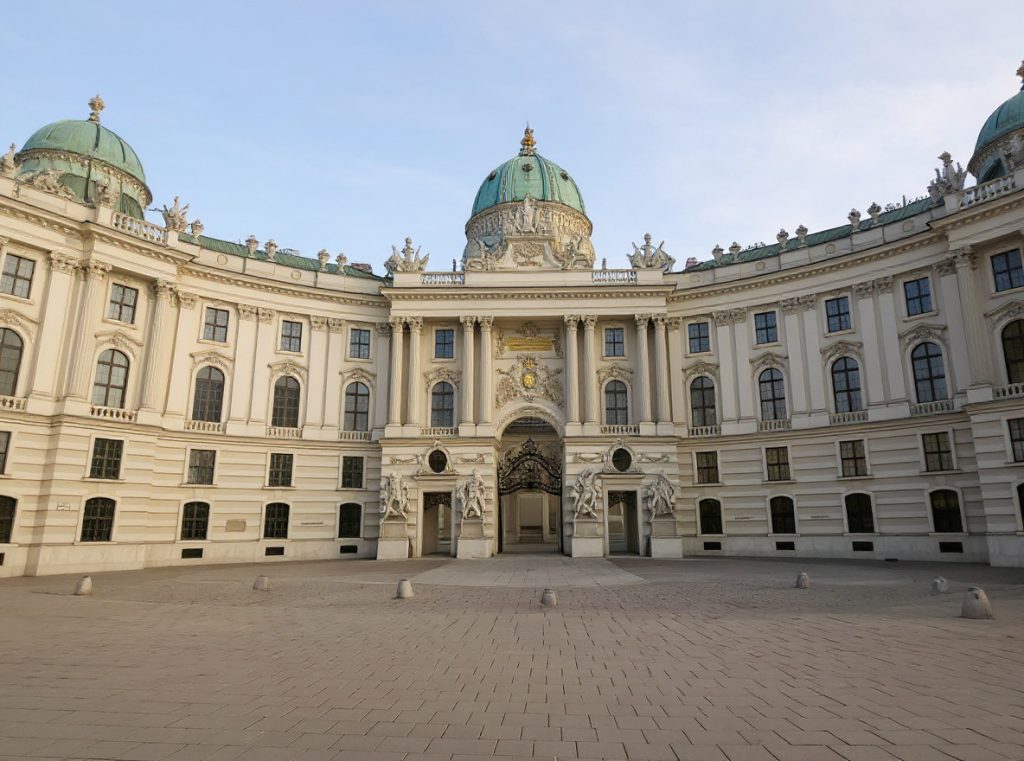
History of Hofburg Vienna
King Ottokar II of Bohemia built the original fortress in 1275, a rectangular structure with four towers, a moat, and a drawbridge. Engineers integrated it into Vienna’s city defences. Rudolf I, the first Habsburg ruler, seized the castle in 1276 and expanded it into the dynasty’s seat. For centuries the fortress remained modest, yet when Ferdinand I moved the imperial residence to Vienna in 1533, he transformed the medieval core into a Renaissance palace. Workers completed the Alte Hofburg by 1552, and craftsmen added the celebrated Schweizertor gate the following year. Ferdinand’s son Maximilian II built the Stallburg, extending the complex further.
The Thirty Years’ War halted construction, but Emperor Leopold I resumed expansion in 1660 with the Leopoldinischer Trakt. This elegant Baroque wing connected the Amalienburg to the older sections. Victory over the Ottoman siege in 1683 unleashed a building frenzy. Emperors Leopold I, Joseph I, and Charles VI commissioned monumental Baroque additions, including the imperial library. Joseph Emanuel Fischer von Erlach completed it in 1735. Maria Theresa occupied the Leopoldine Wing as her primary residence and seat of government throughout the eighteenth century, shaping policy from these chambers.
The nineteenth century brought fresh ambition. Emperor Franz Joseph, who reigned from 1848 to 1916, presided over the construction of the Neue Burg. This sweeping Neo-Baroque wing faces Heldenplatz. Architects envisioned an even grander forum, but the 1918 collapse of the monarchy left the project incomplete. The imperial family departed, yet the palace retained its role as Austria’s seat of power. Since 1946 the Leopoldine Wing has housed the offices of the Austrian Federal President, ensuring continuity in this historic setting.
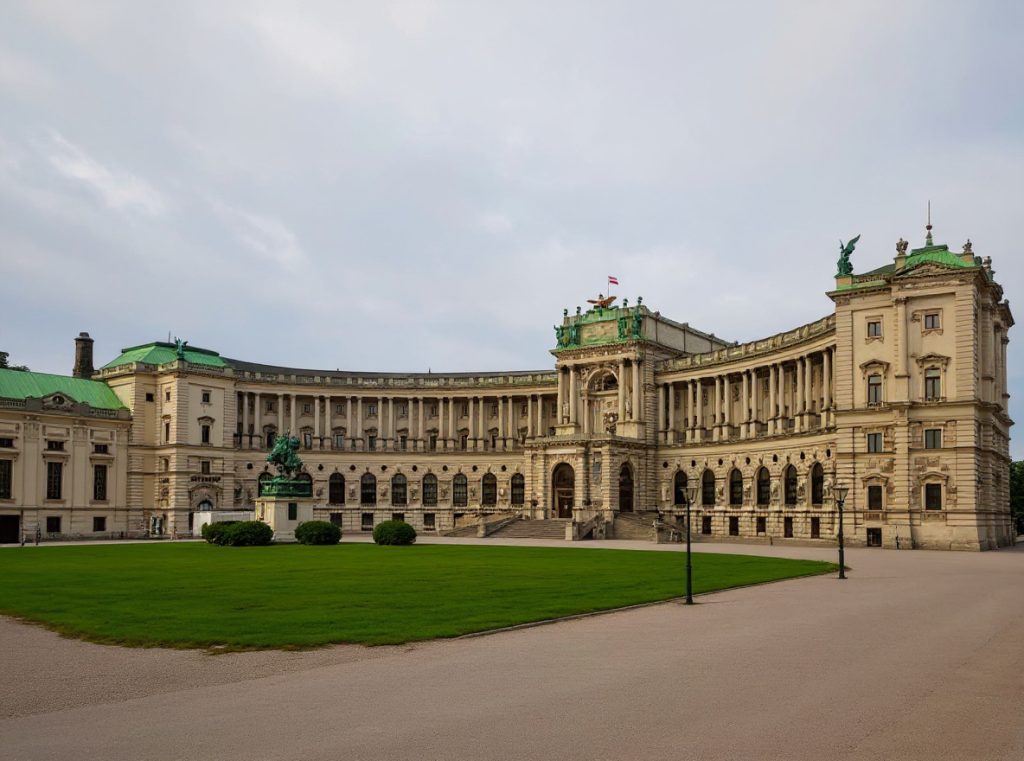
Current status
The Burghauptmannschaft Österreich manages the Hofburg complex, balancing governmental functions with cultural use. The Leopoldine Wing remains the working office of Austria’s president, while the Alte Hofburg opens as the Imperial Apartments and Sisi Museum. Visitors explore the private chambers of Emperor Franz Joseph and Empress Elisabeth, furnished in period style to evoke nineteenth-century court life. The Imperial Treasury displays the crown jewels and regalia of the Holy Roman Empire. The Austrian National Library’s Baroque State Hall, designed by Fischer von Erlach, shelters a world-renowned collection beneath frescoed ceilings.
The Hofburg Chapel hosts Sunday masses performed by the Vienna Boys’ Choir, continuing a tradition rooted in the fifteenth century. The Spanish Riding School presents classical dressage performances with Lipizzaner horses in a Baroque hall. These performances draw audiences from across the globe. The Neue Burg wing houses the Weltmuseum Wien, the Collection of Arms and Armour, and the House of Austrian History. Each museum interprets different facets of the nation’s past. The Hofburg Congress Centre occupies the Redoutensäle and adjoining state rooms, hosting up to 350 international events annually in chambers. Mozart and Beethoven once premiered their works in these same rooms.
Visitors pay admission to the Imperial Apartments, Sisi Museum, and Silver Collection. Staff sell tickets at Michaelerplatz. The Treasury, museums, and Spanish Riding School require separate entry fees. Opening hours run daily from 9:00 to 17:30 between September and June, extending to 18:00 in summer. The complex integrates seven centuries of Habsburg ambition into Vienna’s living cityscape, where emperors once commanded an empire and presidents now guide a republic.
Castles near Hofburg Vienna
Frequently asked questions
What does a ticket to Hofburg Vienna include?
The standard ticket covers the Sisi Museum and the Imperial Apartments with an audio guide. The Imperial Treasury and other Hofburg museums require separate tickets.
Can I buy Hofburg Vienna tickets at the door?
Tickets are sold online only at imperialtickets.com with timed entry slots. Admission cannot be guaranteed without a pre-booked online ticket.
How long should I spend at Hofburg Vienna?
Allow 1.5 to 2 hours for the Sisi Museum and Imperial Apartments. If visiting additional sections like the Imperial Treasury or National Library, plan 3 to 4 hours total.
Is Hofburg Vienna open every day?
Yes, Hofburg Vienna is open daily including public holidays from 09:00 to 17:30. Last admission is at 16:30.
What is the best way to reach Hofburg Vienna by public transport?
Take U3 (orange line) to Herrengasse station, which is closest. Alternatively, tram lines 1, 2, D or 71 stop at Burgring, or bus 1A or 2A stop at Hofburg.
Featured listings