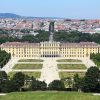
Rising from Vienna’s western landscape, Schönbrunn Palace served the Habsburg dynasty as their principal summer residence for over two centuries. This Baroque masterpiece encompasses 1,441 rooms within its yellow façade and sits surrounded by 120 hectares of formal gardens. Emperor Leopold I commissioned its construction in 1696, and successive monarchs transformed it into one of Europe’s most significant cultural monuments. UNESCO recognized the palace and gardens as a World Heritage Site in 1996.
Plan your visit to Schönbrunn Palace
Location of Schönbrunn Palace
Schönbrunn Palace sits in Hietzing, Vienna’s 13th district, approximately seven kilometres southwest of the historic city centre. The main entrance faces Schönbrunner Schloßstraße and opens directly into the palace courtyard. Visitors can reach the palace easily via the U4 metro line, which stops at Schönbrunn station just steps from the main gate. Tram lines 10 and 60 also serve the area. The palace grounds border Schönbrunner Straße to the north and Grünbergstraße to the east. Travel time from central Vienna takes roughly 15 minutes by public transport. The palace complex extends across sloping terrain, with the Gloriette monument crowning the hill behind the main building.
History of Schönbrunn Palace
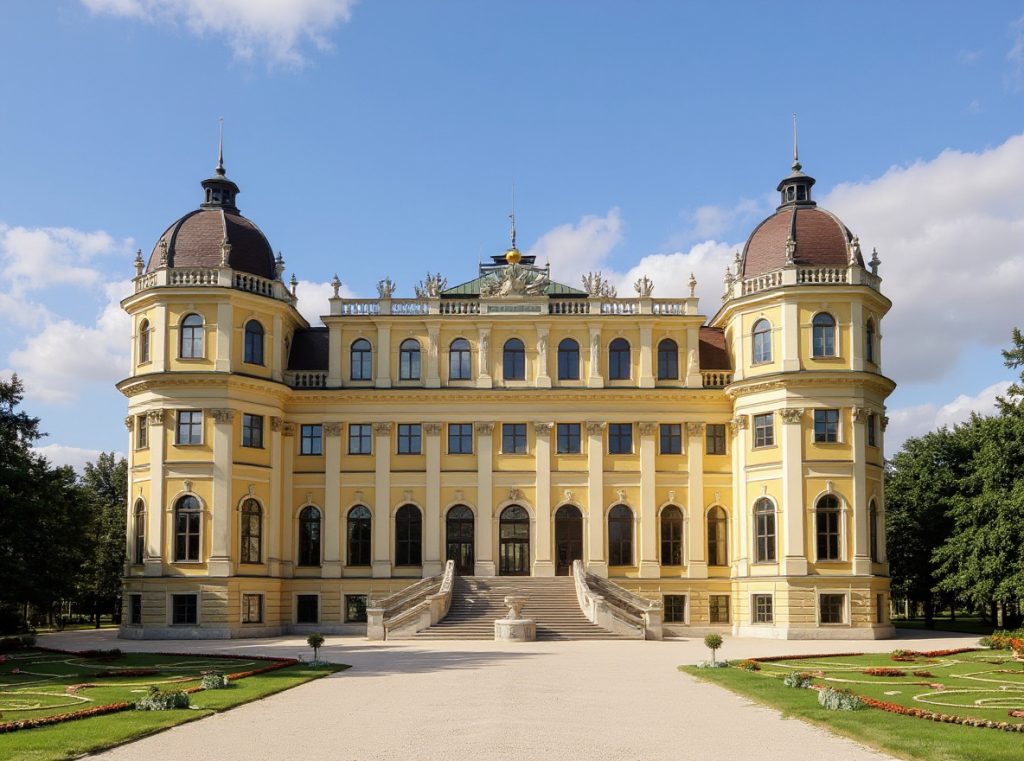
Holy Roman Emperor Maximilian II purchased the Katterburg estate in 1569, establishing it as an imperial hunting ground. The site remained a modest retreat until Ottoman forces destroyed the existing structures during the 1683 siege of Vienna. Emperor Leopold I then commissioned architect Johann Bernhard Fischer von Erlach to design a palace rivalling Versailles. Construction began in 1696, though financial constraints forced a more modest design than originally planned. The first festivities took place in 1699 within the partially completed central section.
Maria Theresa received the estate as a wedding gift and transformed it during her reign from 1740 to 1780. She commissioned architect Nicolaus Pacassi to complete and expand the palace between 1743 and 1749. A second phase of work from 1754 to 1765 created the Rococo interiors that survive today. Pacassi designed opulent state rooms including the Great Gallery and the Vieux Laque Room. The formal French-style gardens took shape between 1705 and 1706 under Jean Trehet. Ferdinand von Hohenberg redesigned portions as Baroque landscape between 1753 and 1775, adding monuments like the Neptune Fountain and the Gloriette. The palace opened its gardens to the public in 1779, just before Maria Theresa’s death.
Emperor Franz Joseph was born at Schönbrunn in 1830 and spent his final years exclusively at the palace. He commissioned neoclassical redecoration of the exterior in the early 19th century, creating the appearance visitors see today. Charles I renounced involvement in state affairs at Schönbrunn in 1918, ending Habsburg rule. The palace became property of the new Austrian Republic that same year.
Current status
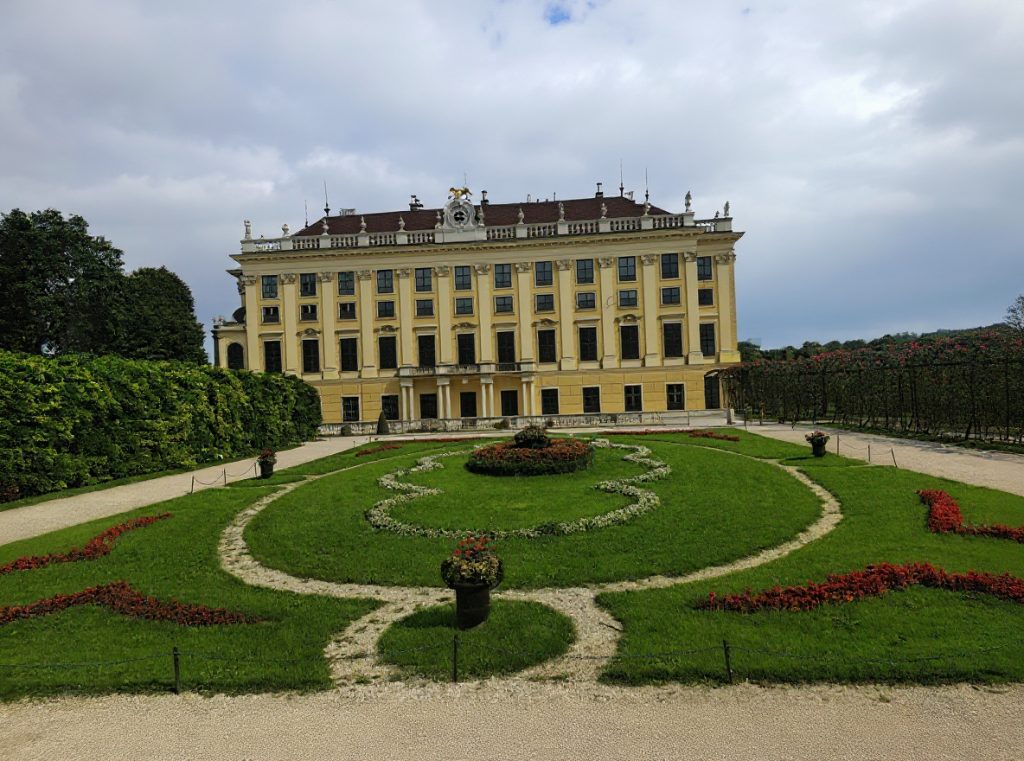
The Schloss Schönbrunn Kultur-und Betriebsges.m.b.H., a limited-liability company wholly owned by the Republic of Austria, has administered the palace and gardens since 1992. The palace operates as one of Austria’s most-visited museums, attracting millions of visitors annually. Forty-five state and private rooms remain open for tours, while others serve as rented apartments. The Imperial and Grand Tours guide visitors through authentically furnished apartments where Maria Theresa, Franz Joseph, and Empress Elisabeth once resided. Audio guides provide historical context in multiple languages.
The palace park opens daily from 6:30 am and provides a popular recreational space for Vienna residents. The 120-hectare grounds preserve their 18th-century character with geometric parterres, tree-lined avenues, and Baroque monuments. The Gloriette, built in 1775 to commemorate Austria’s victory at the Battle of Kolin, offers panoramic views across Vienna. The world’s oldest zoo, founded in 1752, continues to operate within the palace grounds. A palace theatre dating to 1747 now serves the University of Music and Performing Arts Vienna for training and performances.
The palace hosts significant diplomatic and cultural events. The 1961 meeting between President John F. Kennedy and Premier Nikita Khrushchev took place within its rooms. Conservation efforts maintain the interiors, textiles, and decorative arts to museum standards. The Children’s Museum introduces young visitors to imperial family life through interactive displays. Schönbrunn stands as a vivid testament to Habsburg power and taste, its rooms and gardens preserving the grandeur of an empire that shaped Central European history for centuries.
Castles near Schönbrunn Palace
Frequently asked questions
How much does it cost to visit Schönbrunn Palace?
The Palace Ticket (full interior tour with audioguide) costs €42 for adults and €30 for children aged 6–18. Children under 6 enter free, and the palace gardens are free to all visitors.
Do I need to book Schönbrunn Palace tickets in advance?
Advance booking is strongly recommended, especially from April to October. The palace operates timed entry and slots can sell out days or weeks ahead in summer.
What are the opening hours of Schönbrunn Palace?
The palace opens daily at 8:30am year-round. Closing time varies by season: 5:00pm from November to March, 5:30pm from April to June and September to early November, and 6:00pm in July and August.
How do I get to Schönbrunn Palace from central Vienna?
Take the U4 underground line to Schönbrunn station (about 15 minutes from the centre), then walk 5 minutes to the palace entrance. Alternatively, trams 10 and 60 or bus 10A stop directly at the palace gates.
How long does a visit to Schönbrunn Palace take?
The Palace Ticket audioguide tour takes about 75 minutes. Allow an additional hour or more if you plan to explore the extensive gardens, Gloriette, or other attractions on the grounds.
Featured listings